Biocracked
←

#metabolic syndrome

2 articles
Approach 1, macro science, with palette D, a bold color field.

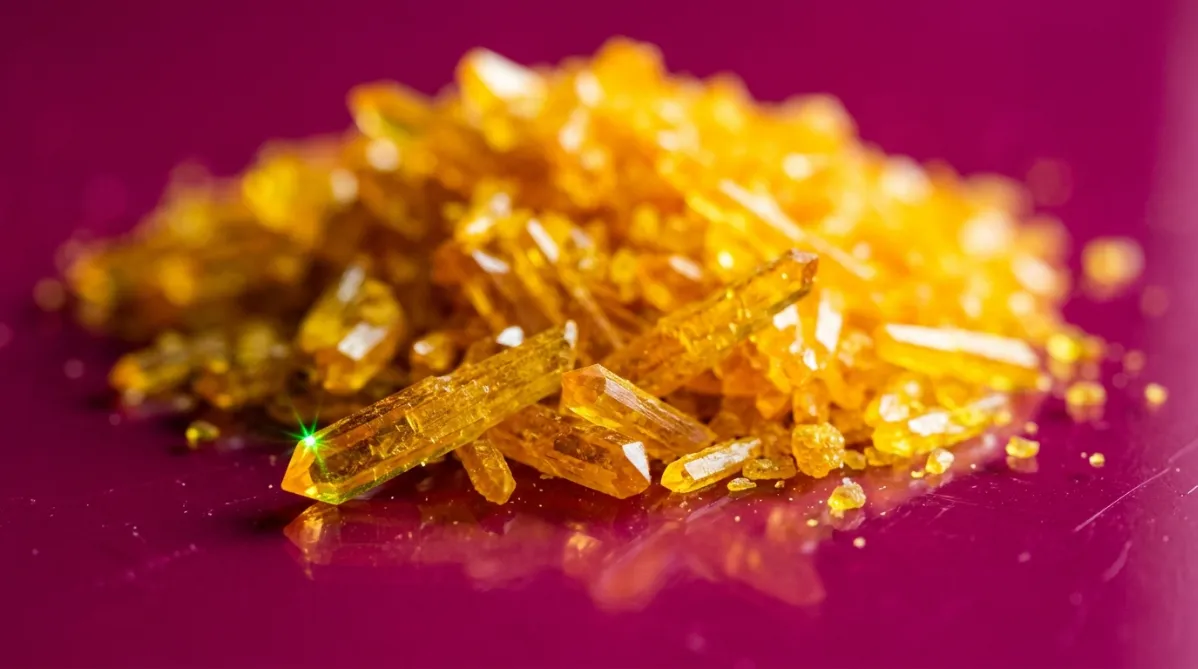
Extreme close-up photograph of raw berberine crystals, a vivid saturated yellow-orange powder of needle-like crystalline shards, heaped in a small mound on a glossy deep magenta acrylic surface. A few individual crystals are in sharp focus in the foreground, showing their faceted, translucent edges, with the rest of the pile softly blurred behind. Camera is low, about 20 degrees above the surface, with a shallow macro depth of field. Lighting is a single soft studio key from the upper left, with a crisp highlight along the crystal edges and a gentle magenta reflection beneath the mound. One tiny electric green glint of reflected light sits on a crystal tip. The mood is vivid, precise and slightly provocative, with a clear contrast between the yellow subject and the magenta field. There is no text anywhere in the frame.
supplements

“Ozempic” naturale? La berberina vince 6 su 6 test lipidici – ma ha una pecca

BY NOVA CHEN ·

I social media chiamano la berberina “Ozempic” naturale, ma cosa dice la scienza? Una panoramica del 2025 ha analizzato 54 revisioni sistematiche su 70 esiti di salute. La berberina ha migliorato tutti i 6 risultati legati al colesterolo e circa il 93 % di quelli sul diabete di tipo 2. L’obesità è stata l’area più debole, e 45 delle 54 revisioni sono state valutate di qualità molto bassa. Ecco cosa sostiene la evidenza, quali sono i dosaggi più comuni e chi dovrebbe evitarla.
Approach: Macro science. Palette: D, bold color field.

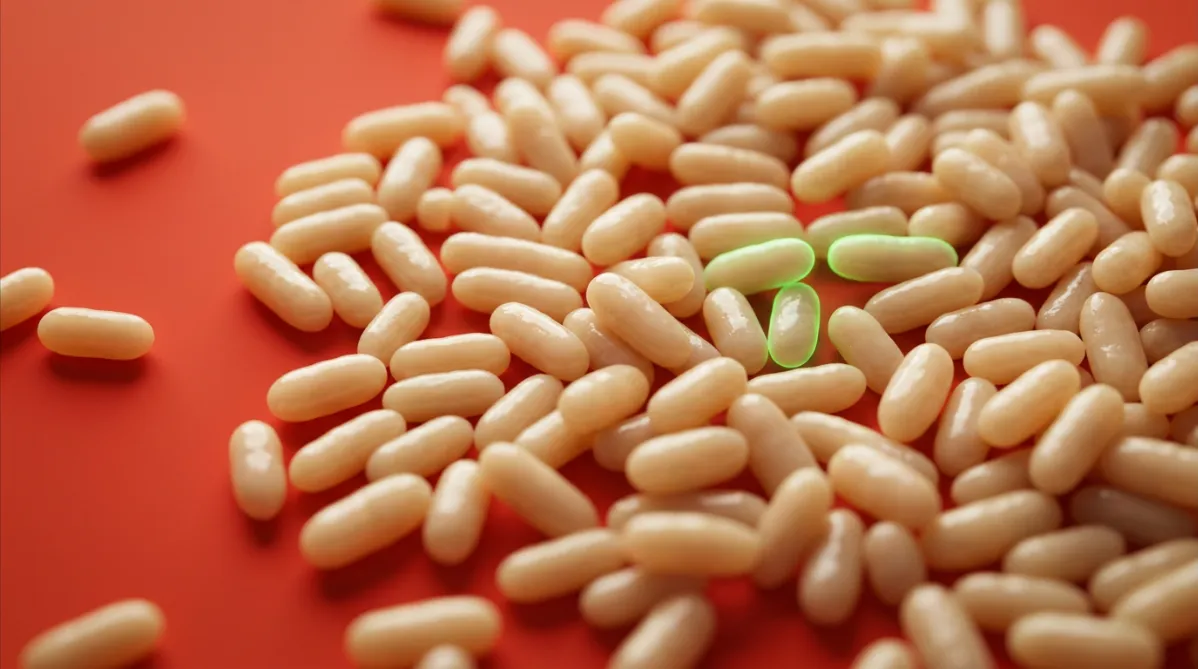
Extreme close-up microscopy-style image of a dense cluster of oval, rod-shaped bacteria with a slightly mucous, glossy membrane texture, shot from a shallow top-down angle with a razor-thin focal plane. Most of the colony sits in the sharp center, softening into creamy blur at the edges. The cells are warm ivory with subtle translucent depth, resting on a saturated tomato-red backdrop. A scattering of sparser, isolated cells on one side suggests "low baseline" and hints at the subgroup story. One or two cells carry a faint electric green (#00e676) fluorescent rim glow. Lighting is soft, directional studio light with gentle specular highlights on the cell walls and clean shadows in warm red tones. Mood: curious, precise, quietly skeptical, with a vivid but grounded look. No text and no blue cast.
supplements

Akkermansia non ha raggiunto il suo obiettivo principale — eccetto nelle persone carenti

BY NOVA CHEN ·

Un batterio intestinale pastorizzato, spesso pubblicizzato come “potenziatore naturale di GLP‑1”, ha appena superato il più grande studio clinico su di esso, ma non è riuscito a raggiungere l’obiettivo primario di migliorare la sensibilità all’insulina. Le analisi esplorative, tuttavia, hanno mostrato un aumento del GLP‑1 post‑glucosio e un miglioramento della sensibilità insulinica nei soggetti con bassi livelli basali di Akkermansia. Questi risultati di sottogruppo generano nuove ipotesi, sono al limite della significatività e provengono da uno studio con forte coinvolgimento industriale. Scopri cosa dimostrano davvero i dati, cosa non dimostrano e a chi potrebbero interessare.

This page is available in