Biocracked
←

#metabolic syndrome

2 articles
Approach 1, macro science, with palette D, a bold color field.

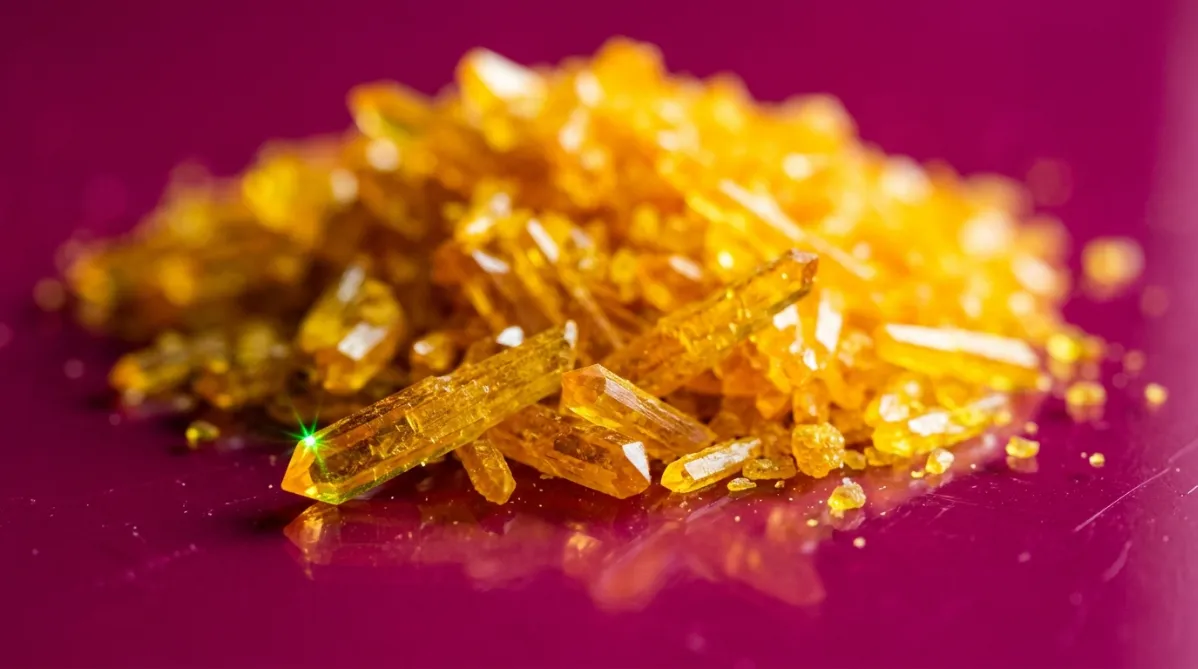
Extreme close-up photograph of raw berberine crystals, a vivid saturated yellow-orange powder of needle-like crystalline shards, heaped in a small mound on a glossy deep magenta acrylic surface. A few individual crystals are in sharp focus in the foreground, showing their faceted, translucent edges, with the rest of the pile softly blurred behind. Camera is low, about 20 degrees above the surface, with a shallow macro depth of field. Lighting is a single soft studio key from the upper left, with a crisp highlight along the crystal edges and a gentle magenta reflection beneath the mound. One tiny electric green glint of reflected light sits on a crystal tip. The mood is vivid, precise and slightly provocative, with a clear contrast between the yellow subject and the magenta field. There is no text anywhere in the frame.
supplements

« Ozempic naturel » ? La berbérine obtient 6 sur 6 tests lipidiques – avec un hic

BY NOVA CHEN ·

Sur les réseaux sociaux, la berbérine est souvent présentée comme le « Ozempic naturel ». Mais que disent réellement les études ? Une méta‑analyse de 2025, basée sur 54 revues systématiques et 70 critères de santé, montre que la berbérine améliore les 6 sur 6 indicateurs de cholestérol et environ 93 % des paramètres liés au diabète de type 2, alors que son effet sur la perte de poids reste limité. Cependant, 45 des 54 revues ont été jugées de très mauvaise qualité, ce qui impose la plus grande prudence.
Approach: Macro science. Palette: D, bold color field.

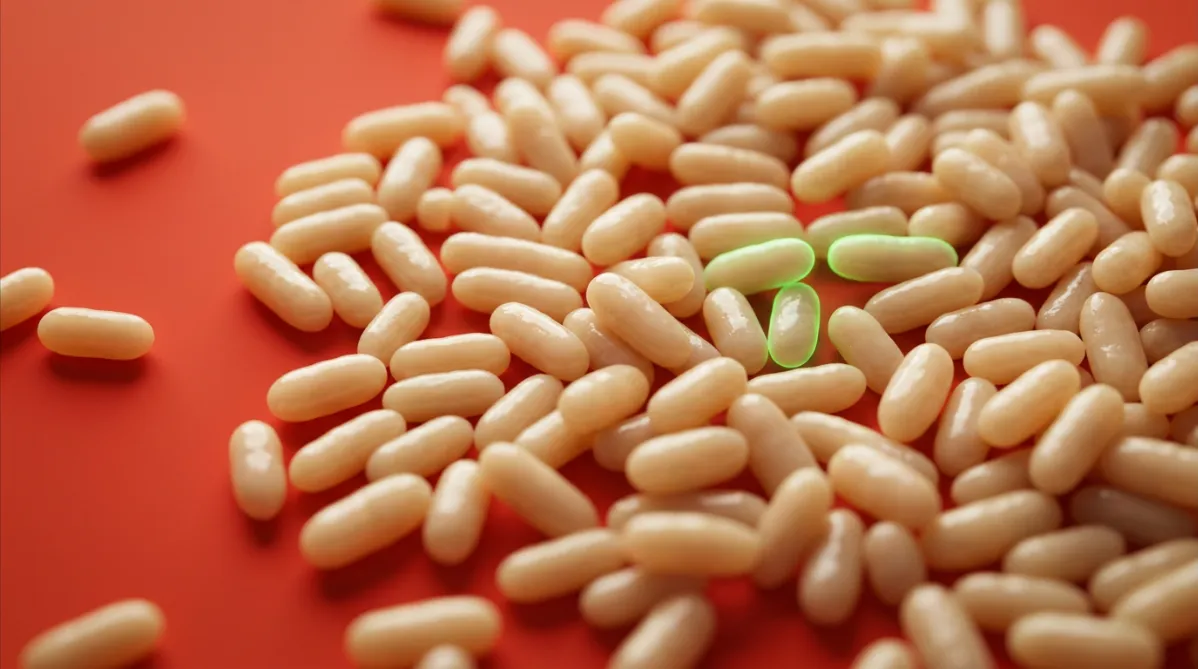
Extreme close-up microscopy-style image of a dense cluster of oval, rod-shaped bacteria with a slightly mucous, glossy membrane texture, shot from a shallow top-down angle with a razor-thin focal plane. Most of the colony sits in the sharp center, softening into creamy blur at the edges. The cells are warm ivory with subtle translucent depth, resting on a saturated tomato-red backdrop. A scattering of sparser, isolated cells on one side suggests "low baseline" and hints at the subgroup story. One or two cells carry a faint electric green (#00e676) fluorescent rim glow. Lighting is soft, directional studio light with gentle specular highlights on the cell walls and clean shadows in warm red tones. Mood: curious, precise, quietly skeptical, with a vivid but grounded look. No text and no blue cast.
supplements

Akkermansia n’a pas atteint son objectif principal – sauf chez les personnes qui en manquaient

BY NOVA CHEN ·

Une bactérie intestinale pasteurisée, souvent présentée comme un « stimulateur naturel de GLP‑1 », a été évaluée dans un essai en double‑aveugle sur 142 participants. Elle n’a pas atteint son critère principal d’amélioration de la sensibilité à l’insuline. Cependant, les analyses exploratoires ont révélé une hausse du GLP‑1 après une charge glucidique, et les sujets présentant initialement un faible niveau d’Akkermansia ont affiché une meilleure sensibilité à l’insuline et moins de graisse du tronc. Ces résultats de sous‑groupes, proches du seuil de signification, ne sont que des hypothèses et proviennent d’une étude fortement liée à l’industrie. Voici ce que les données montrent, ce qu’elles ne montrent pas, et à qui elles peuvent intéresser.

This page is available in