Biocracked
←

#nhanes

1 article
Approach: Macro science, with the human outcome as a quiet secondary cue. Palette: C (Natural).

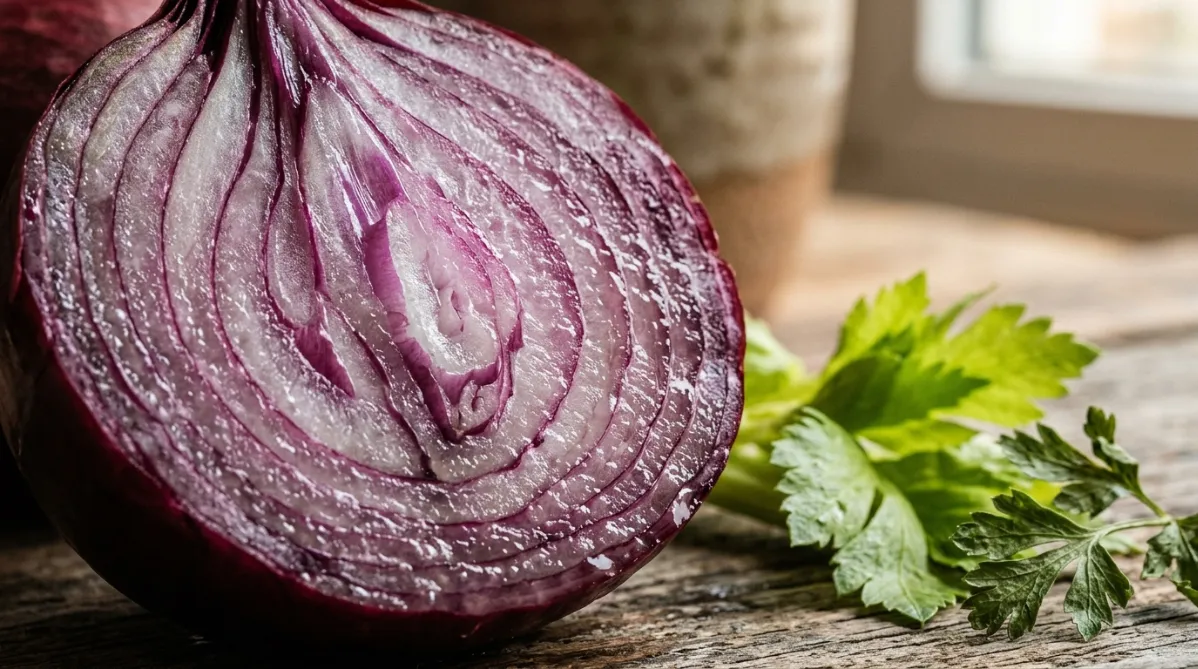
Extreme macro photograph of a halved red onion and fresh celery leaves, the real dietary sources of isorhamnetin and luteolin. The onion's glossy magenta-violet layers and translucent cell walls fill the left two-thirds of the frame, with fine droplets of juice catching the light. A few crisp green celery leaves and a sprig of dried parsley rest in soft focus to the right. Shot at a slight low angle, shallow depth of field, 100mm macro look. Soft morning daylight from a window behind and to the side gives a warm rim light and gentle translucency through the onion layers. The palette is earthy: plum, sage green, and warm wood tones, with one small electric green highlight on a celery leaf edge. The mood is calm, fresh, and quietly curious, with a hint of rest.
supplements

El flavonoide pasado por alto asociado a un mejor sueño no es la quercetina

BY NOVA CHEN ·

Todo el mundo habla de la quercetina, pero un amplio análisis de encuestas de EE. UU. señala a dos flavonoides menos conocidos asociados con un mejor sueño: isorhamnetina y luteolina. Las personas en el tercil superior de consumo de isorhamnetina tenían aproximadamente un 25 % menos de probabilidades de presentar trastornos del sueño y reportaban dormir más horas. La luteolina mostró una relación menor, alrededor de un 15 % menos de probabilidades. Pero se trata de un estudio transversal de 10 162 adultos basado en recordatorios dietéticos de alimentos, no de suplementos, por lo que no puede demostrar causalidad. Aquí vemos qué muestran los números, qué no, y cuál es la conclusión sensata.

This page is available in