Biocracked
←

#mtor

3 articles
Approach: conceptual metaphor. Palette: D, bold color field.

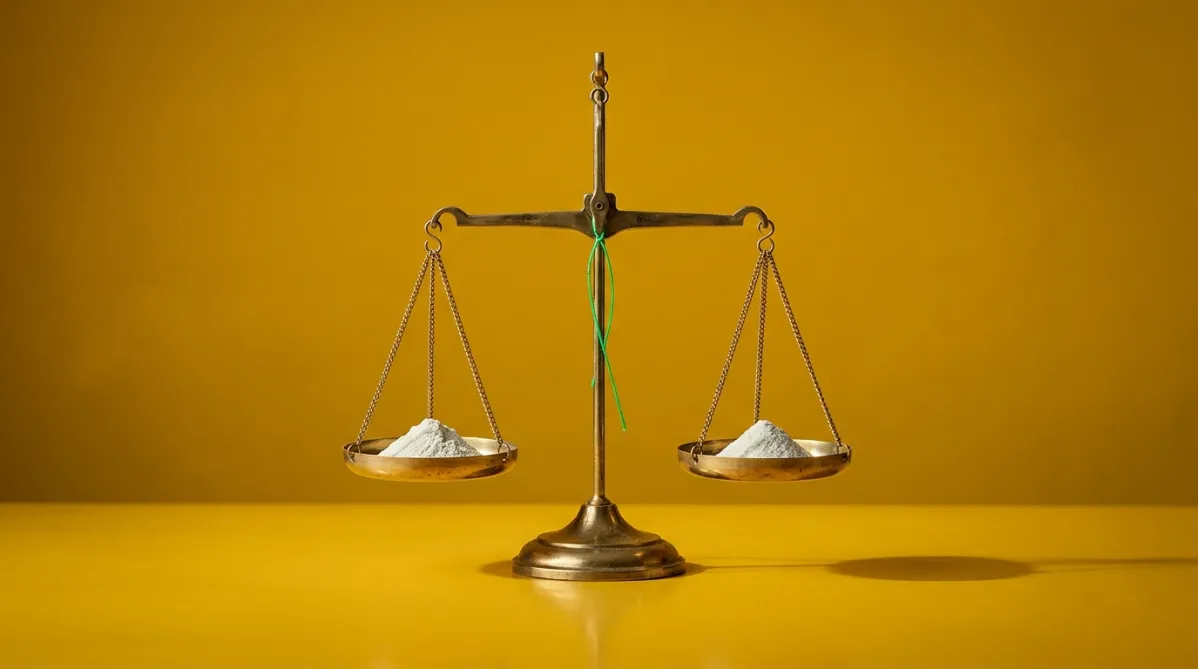
A single brass pocket-scale balance sits at the center of a saturated mustard-yellow seamless backdrop, shot straight-on from slightly below at eye level. Its two pans hang almost perfectly level. One pan holds a small pile of pale, matte white powder, and the other holds a similar pile, so the tiny, nearly equal difference reads at a glance. A thin electric green thread is tied around the balance's pointer, a subtle accent. Soft, large-window studio light comes from the left and casts a crisp, short shadow to the right on the glossy surface below. Shallow depth of field blurs the background edges. The mood is quiet, skeptical and unresolved, with a clean, editorial look. No text, numerals or markings are visible on the scale.
longevity

La rapamicina falló en una gran prueba humana de longevidad: el detalle

BY DR. SYNAPSE ·

La rapamicina es la favorita del mundo de la longevidad, pero su mayor prueba humana en la vida real acaba de resultar poco impresionante. Entre 4 885 pacientes trasplantados de riñón que recibieron rapamicina y 6 589 que no, la edad media de supervivencia fue de 64,6 frente a 64,3 años, un resultado estadísticamente similar tras el ajuste. En un seguimiento medio de 11 años y con 6 443 fallecimientos, los investigadores no observaron un aumento significativo de la esperanza de vida. Sin embargo, el estudio se realizó en pacientes trasplantados bajo regímenes inmunosupresores y es observacional, por lo que no puede decidir si una dosificación baja e intermitente funciona en personas sanas. Esto es lo que sí y lo que no nos dice.
**Approach: Macro science. Palette: D, bold color field.**

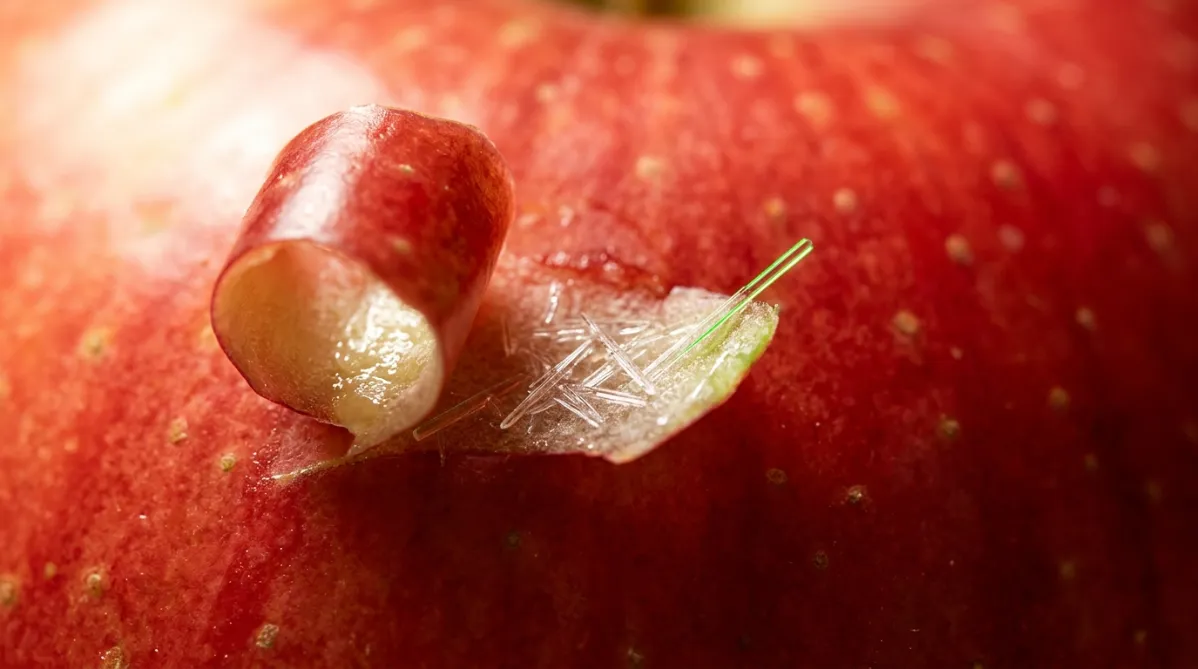
An extreme close-up macro photograph of the waxy surface of a red apple peel, with a small curl of peel lifted to show the pale, glistening underside. Fine, needle-like ursolic acid crystals sit in the wax bloom, catching the light as tiny translucent shards. The apple's skin fills the background in saturated tomato red with natural speckled lenticels. One thin electric green highlight glints along a single crystal edge. Shot at a slight 30-degree angle with a macro lens and very shallow depth of field, so the foreground crystals are razor sharp and the red falls away into soft blur. Lighting is bright, directional studio light from the upper left, with crisp specular highlights and warm, soft shadows. The mood is vivid, tactile and precise, with no text.
longevity

El ácido ursólico, presente en la cáscara de manzana, protege el músculo en ratones obesos

BY NOVA CHEN ·

El ácido ursólico, presente en la cáscara de la manzana, y su pariente el ácido oleanólico, mostraron en ratones alimentados con una dieta alta en grasa y en células musculares bajo estrés lipídico un efecto protector del músculo: mejoraron la regulación glucémica, redujeron la atrofia y potenciaron la función mitocondrial. Los autores proponen que estos efectos se deben a la reactivación de la vía IRS/AKT/mTOR, a la inhibición de la degradación mediada por FOXO1 y, posiblemente, a la modulación de PSMB1. No obstante, los hallazgos provienen exclusivamente de modelos animales y celulares, por lo que aún no se ha demostrado su eficacia en humanos ni su utilidad contra la sarcopenia.
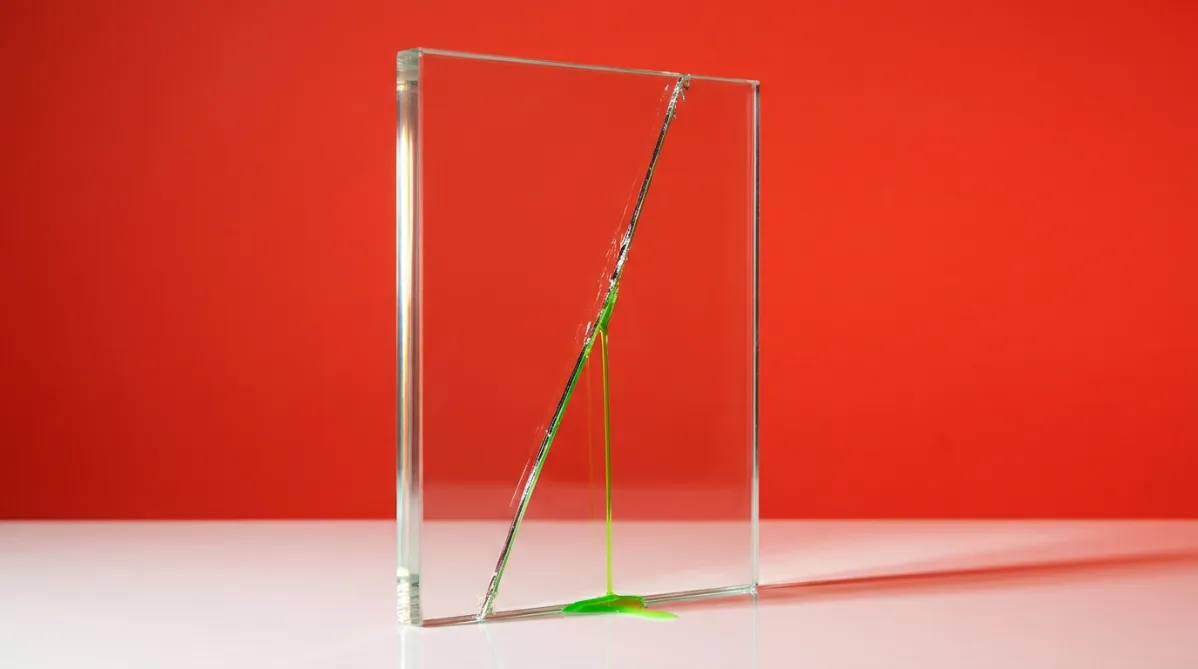
Conceptual metaphor: a sheet of thick, clear laboratory glass standing upright, with a single hairline fracture running diagonally across it. A thin ribbon of vivid electric-green liquid seeps through the crack and drips onto a glossy white surface below. The glass is photographed straight on, at a slight low angle, in crisp macro focus along the fracture edges, where tiny chips catch the light. The backdrop is a seamless, saturated tomato-red field that fills the frame. Soft, directional studio light from the left creates bright refraction lines along the glass edge and a clean, warm-red tinted shadow on the right. The mood is tense but revealing, a long-held assumption starting to give way. Empty space on the right balances the composition. No text, no people, and no blue cast.
longevity

¿Rapamicina "No Llega al Cerebro"? Por Qué Ese Mito Se Está Desmoronando

BY DR. SYNAPSE ·

«Rapamicina no llega al cerebro» es una de las afirmaciones más repetidas en los círculos de longevidad, y una nueva revisión sostiene que se basa en una medida equivocada. El fármaco rara vez se detecta en el líquido cefalorraquídeo, pero los autores explican por qué eso no implica que quede fuera del tejido cerebral. Muestras de glioblastoma humano, control de convulsiones en esclerosis tuberosa, tomografías PET en Alzheimer y flujo sanguíneo en portadores de APOE4 apuntan a una actividad real en el cerebro. El gran problema es que nadie ha medido directamente el fármaco en tejido cerebral sano de humanos a dosis terapéuticas. A continuación, lo que la evidencia respalda, lo que no, y a quién conviene ser más cauteloso.

This page is available in