Biocracked
**Approach: Conceptual metaphor. Palette: B, Warm.**

A close, slightly high three-quarter view of a single weathered hemp rope stretched horizontally across the frame, shot at a shallow depth of field. On the left the rope is thick and tightly twisted. On the right it has frayed down to a few thin strands, with a short, neat whipping of bright electric green thread binding the rope just where the fraying stops. Golden-hour sunlight enters low from the left and picks out each individual fiber in honey and copper tones. Soft amber shadows fall across a blurred, sun-warmed wooden dock in the background. The mood is quiet and cautiously hopeful, suggesting something worn down slowly but partly held in place. The image is photorealistic and has no text.
Longevity

Vitamin D3 làm chậm rút ngắn 140 cặp base của telôme trong thử nghiệm ngẫu nhiên 4 năm

Dr. Synapse · · 5 min read

Most anti‑aging supplement claims rest on mouse data, test‑tube experiments, or small studies. This one comes from a large, randomized, double‑blind, placebo‑controlled trial. Over four years, a plain vitamin D3 supplement slowed telomere shortening by about 140 base pairs compared with placebo. The effect is real in the statistical sense, but it is modest. Here is what the study found and what it does not prove.

What the Study Actually Did

The work comes from the VITamin D and OmegA‑3 TriaL (VITAL), a randomized trial of 25,871 U.S. adults: women aged 55 and older and men aged 50 and older. VITAL used a 2 × 2 factorial design, so participants were randomized to:

  • Vitamin D3 at 2,000 IU/day or placebo
  • Marine omega‑3 fatty acids at 1 g/day or placebo

The intervention ran for 5 years. The telomere analysis is a sub‑study (NCT04386577) that enrolled 1,054 participants, who were evaluated in person at the Harvard Clinical and Translational Science Center. Leukocyte (white blood cell) telomere length was measured by an absolute‑quantification qPCR method at baseline, year 2, and year 4. In total, 2,571 samples from 1,031 participants were analyzed with mixed‑effects linear regression models.

The researchers, led by Zhu H, Manson JE, and Dong Y, reported no conflicts of interest. The results were published in the American Journal of Clinical Nutrition in 2025.

Key Results: The Exact Numbers

  • Vitamin D3 vs. placebo: telomere attrition was reduced by 0.14 kb (140 base pairs) over 4 years (95 % CI: 0.007 to 0.27; p = 0.039).
  • Trend analysis: the vitamin D3 group's telomeres were about 0.035 kb longer per year of follow‑up than the placebo group's (95 % CI: 0.002 to 0.07; p = 0.037).
  • Marine omega‑3s: no significant effect on telomere length at year 2 or year 4.

The vitamin D3 supplement did not lengthen telomeres in the sense of rebuilding them. It slowed the rate of loss compared with placebo. Omega‑3s, which are often marketed alongside vitamin D for healthy aging, showed no telomere benefit here.

Why Telomeres Matter (and Why They Don't Tell the Whole Story)

Telomeres are protective caps on the ends of chromosomes. They shorten as cells divide, and critically short telomeres can push cells toward senescence, a state in which they stop dividing and can emit inflammatory signals. Because of this, telomere length is one of the most widely discussed biomarkers in aging research.

A biomarker is not an outcome, though. Telomere length is a surrogate marker. This trial did not show that slowing telomere loss makes people live longer, stay healthier, or avoid disease. The authors say only that vitamin D3 "might have a role in counteracting telomere erosion or cell senescence." That wording is cautious, and readers should be too.

Limitations: Read This Before You Get Excited

The effect is modest and borderline. A p‑value of 0.039 sits just under the conventional 0.05 threshold. The confidence interval for the main result runs from 0.007 to 0.27 kb, so the true effect could be tiny or considerably larger. A single trial with a result this close to the line should be confirmed by replication.

It is a surrogate endpoint. Telomere length in blood cells is not the same as healthspan, lifespan, or disease reduction.

The population is specific. Participants were older U.S. adults (women 55+, men 50+). The findings may not carry over to younger people, other populations, or people with different baseline vitamin D status.

Leukocyte telomeres are a proxy. They are a convenient, widely used measure, but they reflect white blood cells, not every tissue in the body.

Omega‑3 was a null result. Whatever else fish oil may do, it did not protect telomeres in this trial at 1 g/day.

What It Means for You

This study gives longevity‑minded readers a plausible, low‑cost reason to take vitamin D seriously. It is not a license to treat vitamin D as an anti‑aging drug. Think of it as one more data point for a supplement that is already inexpensive and widely studied.

Practical Takeaways

Dose used in the trial: 2,000 IU/day of vitamin D3 (cholecalciferol). This is the only dose with evidence behind the result, so there is no basis in this study for going higher.

Timing: Vitamin D is fat‑soluble. Taking it with a meal that contains some fat is a sensible way to support absorption. Consistency matters more than the time of day.

Test, don't guess: Consider checking your 25(OH)D blood level, the standard marker of vitamin D status. Testing shows whether you are low and lets you retest later instead of supplementing blindly. The study's benefit may be most relevant to people who are not already replete, though the paper does not break this down.

Avoid megadoses: More is not better. The trial used a moderate daily dose, and higher doses have not been shown to deliver bigger telomere benefits. Excess vitamin D can raise blood calcium and cause problems.

Who it may suit: Adults in the age range studied (50+) who want a evidence‑backed, modest‑dose supplement, ideally guided by a blood test.

Who should skip it or talk to a clinician first:

  • People with a history of high blood calcium, kidney stones, or kidney disease
  • People with conditions that affect calcium or vitamin D metabolism, such as sarcoidosis
  • Anyone taking medications that interact with vitamin D or calcium
  • Pregnant or breastfeeding people and anyone considering doses above the studied level

Safety: At 2,000 IU/day in a large trial with a rigorous design, vitamin D3 is generally considered a conservative intervention. Still, individual medical history matters, so get personalized advice if you are unsure.

Don't buy omega‑3 for your telomeres. Fish oil may have other reasons to be in your routine, but this trial found no telomere effect.

The Bottom Line

In a large randomized trial, 2,000 IU/day of vitamin D3 for four years was associated with about 140 base pairs less telomere attrition than placebo. That is a statistically significant but modest effect, and a surrogate one. It supports further research and gives a reasonable, low‑risk nudge to get your vitamin D status right. It does not prove that vitamin D extends life.

Source: Zhu H, Manson JE, Cook NR, Bekele BB, Chen L, Kane KJ, Huang Y, Li W, Christen W, Lee IM, Dong Y. "Vitamin D3 and marine ω‑3 fatty acids supplementation and leukocyte telomere length: 4‑year findings from the VITamin D and OmegA‑3 TriaL (VITAL) randomized controlled trial." Am J Clin Nutr. 2025 Jul;122(1):39‑47. PubMed: 40409468 | DOI: 10.1016/j.ajcnut.2025.05.003

This article is for informational purposes and is not medical advice.

Original study

Read the original research on pubmed.ncbi.nlm.nih.gov →

This article summarizes published research for general information. It is not medical advice.

DS

Written by

Dr. Synapse

Dr. Synapse writes for Biocracked: biohacking science, longevity & human performance.

Related Articles

Approach: Lab in action. Palette: D, bold color field.

A gloved hand holds a clear petri dish at a slight low angle, close and slightly above eye level, against a saturated tomato-red backdrop. Inside the dish, a thin, translucent layer of pale pink culture medium holds a faint, lacy web of fibroblast cells, with a few small clusters just visible. Hard, clean studio light from the upper left throws a crisp curved shadow of the dish onto the red surface and picks out bright highlights on the rim and the glove's matte white nitrile. In the soft-focus background, a rack of empty microcentrifuge tubes stands out in cool white. One tiny electric green cap on a single tube adds a small accent. The mood is precise and skeptical: a promising result still confined to the dish.
peptides

Epithalon Kích Hoạt Telomerase Trong Tế Bào—Nhưng Không Ở Người

BY HELIX WARD ·

Một peptide bốn axit amin nhỏ được cho là có khả năng kích hoạt telomerase—enzyme hầu hết các tế bào trưởng thành không biểu hiện—và làm dài các đầu mút telomere trong tế bào người. Đây là phát hiện phía sau tiếng vang về khả năng kéo dài tuổi thọ của Epithalon. Tuy nhiên, nghiên cứu này chỉ được thực hiện trên fibroblast thai trong môi trường nuôi cấy, không phải trên người, và việc liên hệ đến việc kéo dài tuổi thọ vẫn chỉ là giả thuyết. Dưới đây là những gì nghiên cứu năm 2003 thực sự chỉ ra, những gì nó bỏ qua, và cách đọc kết quả trước khi bạn quyết định mua bất kỳ sản phẩm nào.

Approach: conceptual metaphor. Palette: bold color field.

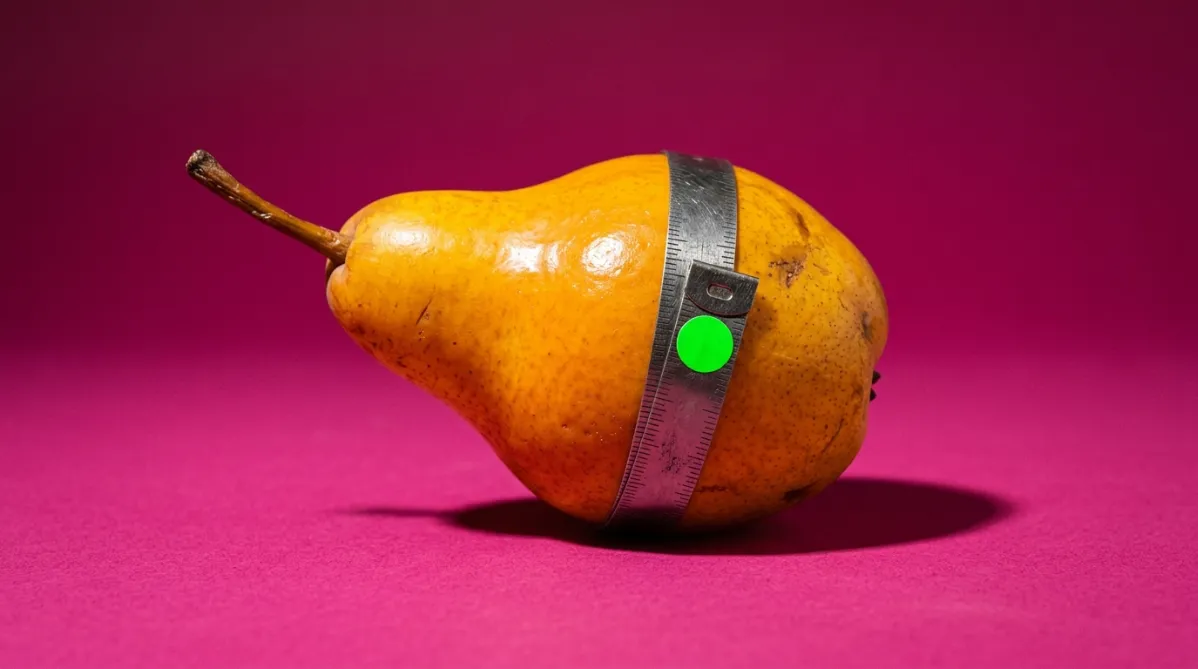
A single steel bathroom-style analog tape measure, pulled taut and wrapped around a ripe, glossy yellow-orange pear lying on its side, with the tape's tip locked at the same unmarked point, suggesting a waistline that did not shrink. The pear sits on a saturated magenta seamless backdrop, shot from a low three-quarter angle with a shallow depth of field, the stem sharp and the background softly blurred. Hard but slightly diffused studio key light from upper left casts a crisp, short shadow in deeper magenta on the surface. A tiny electric green sticky dot marks the tape's end, with no numbers or writing visible. Mood: playful, skeptical, deadpan, scientific restraint rather than hype.
longevity

Rapamycin hàng tuần trong một năm: An toàn, nhưng mỡ nội tạng có giảm không?

BY REX MERIDIAN ·

Mọi người đều muốn biết liệu việc dùng rapamycin mỗi tuần có thể giảm mỡ nội tạng và nâng cao sức khỏe không, và thử nghiệm PEARL đã đưa ra câu trả lời có thể khiến bạn ngạc nhiên. Sau 48 tuần ở người trưởng thành khỏe mạnh, chỉ số chính về mỡ nội tạng không thay đổi, trong khi mức độ an toàn tương đương với giả dược. Một vài dấu hiệu phụ, như tăng khối lượng cơ và giảm đau ở phụ nữ dùng 10 mg, hoặc cảm giác hạnh phúc và sức khỏe tổng thể tốt hơn ở nhóm 5 mg, gợi ý tiềm năng lợi ích. Tuy nhiên, đây là những phát hiện trong tiểu nhóm và dựa vào tự khai báo; thuốc được pha chế đặc biệt và chưa có bằng chứng nào cho thấy rapamycin kéo dài tuổi thọ con người.

A bright, airy editorial still life on a pale warm-white linen surface, shot from a slightly elevated three-quarter angle in soft natural window light. On the left, a small hand-thrown ceramic dish in matte oatmeal glaze holds several translucent golden-amber omega-3 softgel capsules, catching the light like tiny honey droplets. Next to it sits a smaller dish with a few pale yellow vitamin D capsules. Beside them, a halved fresh salmon fillet in coral-pink with delicate white marbling rests on a slate-gray stone board, with a sprig of dill and a thin lemon wedge. A few walnuts and a small glass bottle of olive oil lend a quiet Mediterranean feel.

On the right side of the frame, a pair of lightweight sage-green resistance bands and a single brushed-steel dumbbell in a muted tone rest on a folded cream towel, hinting at a home strength routine. Behind them, a vintage brass pocket watch lies open, its face softly out of focus, with a thin ribbon of cream fabric curling beside it to suggest the passage of time. A sparse, elegant sprig of dried eucalyptus arches across the top corner.

The palette is calm and modern: warm cream, soft sage, muted coral, honey gold, and stone gray, with gentle diffused shadows and a shallow depth of field. The background fades into a creamy blur with a hint of a sunlit window and sheer curtain. The composition leaves generous negative space across the upper left and center for headline text. The overall mood is clean, trustworthy, and contemporary, like a premium health and science journal feature, with subtle film-like grain, natural textures, and minimalist styling.
longevity

Omega-3 làm chậm lão hóa sinh học khoảng 3 tháng trong thử nghiệm ngẫu nhiên kéo 3 năm

BY DR. SYNAPSE ·

Một thử nghiệm ngẫu nhiên trên 777 người trưởng thành từ 70 tuổi trở lên cho thấy liều 1 g/ngày omega‑3 làm chậm một số đồng hồ lão hóa epigenetic, tương đương khoảng 3 tháng lão hóa sinh học trong vòng 3 năm. Khi kết hợp omega‑3 với vitamin D (2.000 IU/ngày) và chương trình tập luyện sức mạnh tại nhà, hiệu quả trên đồng hồ PhenoAge còn tăng lên. Tuy nhiên, tác động này nhỏ, phân tích là hậu‑phân tích và các đồng hồ epigenetic chỉ là chỉ số thay thế, không đồng nghĩa với tuổi thọ cao hơn.

A wide landscape editorial photograph of a minimalist laboratory-meets-wellness still life on a pale, warm-gray stone countertop, softly lit by diffused morning window light from the left. In the center foreground, a small amber glass supplement jar with a plain matte white label sits beside a scattering of fine white powder and a few loose white capsules on a ceramic dish. Next to it rests a clean, open notebook with faint hand-drawn line graphs, two diverging curves rising gently, one slightly higher than the other, drawn in muted sage-green and charcoal ink. A slim brass pen lies across the page.

In the soft-focus midground, a delicate glass beaker filled with clear liquid catches a thin streak of light, casting a gentle caustic shimmer across the stone. A sprig of dried eucalyptus and a small sliver of citrus peel add organic texture. Behind them, an out-of-focus wall of pale oat-colored tiles and a floating wooden shelf holds a few blurred ceramic vessels and a small potted fern.

The color palette is calm and editorial: warm creams, sage green, soft amber, muted terracotta accents, and touches of charcoal. Shallow depth of field with a crisp focus on the jar and notebook, creamy bokeh in the background. Subtle film-like grain, natural shadows, and generous negative space on the right third of the frame, suitable for headline overlay. The mood is thoughtful, measured, and trustworthy, like a contemporary science and wellness journal cover: modern, tactile, quietly optimistic, and grounded rather than hyped.
longevity

Canxi Alpha‑Ketoglutarate kéo dài tuổi thọ chuột cái lên tới 16,6 %: Điều này có nghĩa gì (và không có nghĩa gì) cho con người

BY DR. SYNAPSE ·

Nghiên cứu 2020 đăng trên *Cell Metabolism* cho thấy việc cho chuột trung niên ăn chế độ 2 % canxi alpha‑ketoglutarate (CaAKG) kéo dài tuổi thọ trung vị của chuột cái tới 16,6 % và giảm suy yếu. Ở nhóm thí nghiệm thứ hai hiệu quả giảm còn 10,5 %, trong khi lợi ích ở chuột đực không đạt ý nghĩa thống kê. Các nhà khoa học liên kết lợi ích này với giảm viêm toàn thân và tăng IL‑10, nhưng vẫn chỉ là dữ liệu trên chuột, chưa chứng minh được cho con người.

This page is available in