Biocracked
←

#isorhamnetin

1 article
Approach: Macro science, with the human outcome as a quiet secondary cue. Palette: C (Natural).

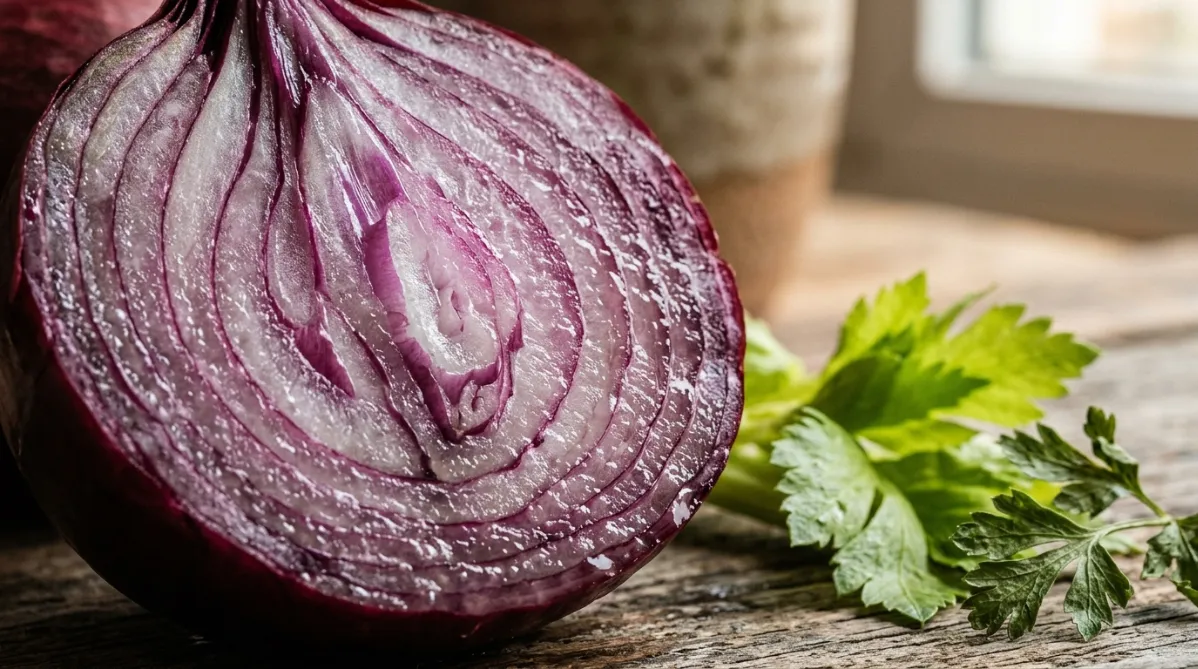
Extreme macro photograph of a halved red onion and fresh celery leaves, the real dietary sources of isorhamnetin and luteolin. The onion's glossy magenta-violet layers and translucent cell walls fill the left two-thirds of the frame, with fine droplets of juice catching the light. A few crisp green celery leaves and a sprig of dried parsley rest in soft focus to the right. Shot at a slight low angle, shallow depth of field, 100mm macro look. Soft morning daylight from a window behind and to the side gives a warm rim light and gentle translucency through the onion layers. The palette is earthy: plum, sage green, and warm wood tones, with one small electric green highlight on a celery leaf edge. The mood is calm, fresh, and quietly curious, with a hint of rest.
supplements

The Overlooked Flavonoid Linked to Better Sleep Isn't Quercetin

BY NOVA CHEN ·

Everyone talks about quercetin, but a large U.S. survey analysis points to two lesser-known flavonoids tied to better sleep: isorhamnetin and luteolin. People in the top tertile of isorhamnetin intake had about 25% lower odds of sleep disorders and reported longer sleep. Luteolin showed a smaller link, around 15% lower odds. But this is a cross-sectional study of 10,162 adults based on dietary recalls of foods, not supplements, so it cannot prove cause and effect. Here is what the numbers show, what they don't, and what a sensible takeaway looks like.

This page is available in