Biocracked
←

#isorhamnetin

1 article
Approach: Macro science, with the human outcome as a quiet secondary cue. Palette: C (Natural).

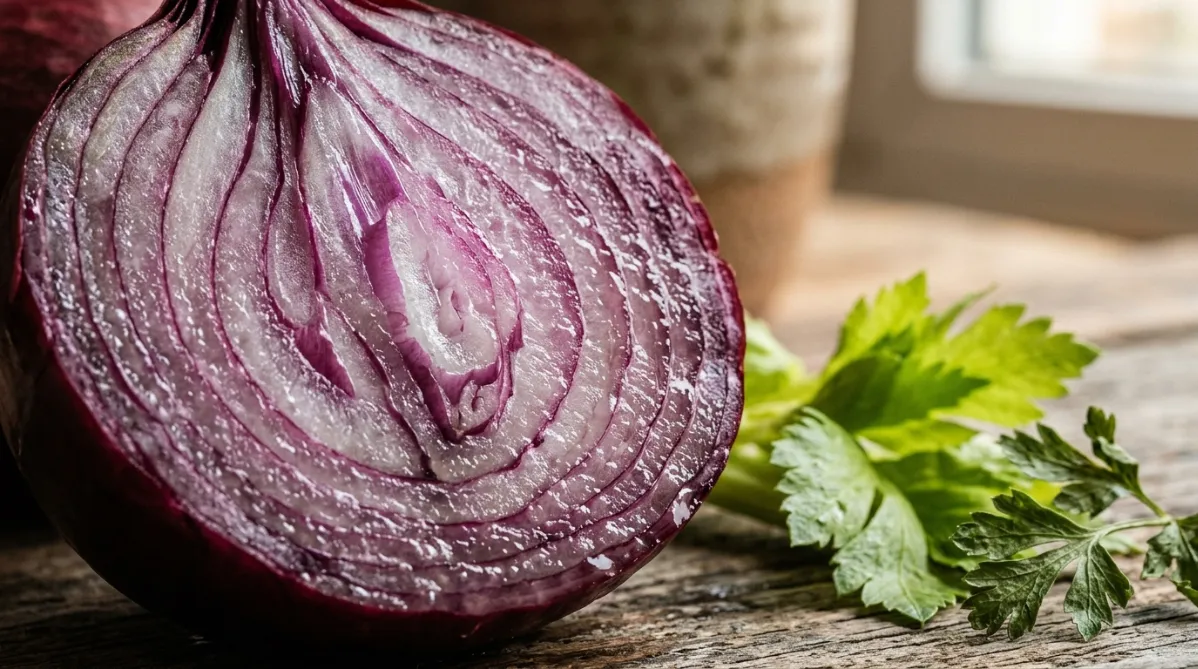
Extreme macro photograph of a halved red onion and fresh celery leaves, the real dietary sources of isorhamnetin and luteolin. The onion's glossy magenta-violet layers and translucent cell walls fill the left two-thirds of the frame, with fine droplets of juice catching the light. A few crisp green celery leaves and a sprig of dried parsley rest in soft focus to the right. Shot at a slight low angle, shallow depth of field, 100mm macro look. Soft morning daylight from a window behind and to the side gives a warm rim light and gentle translucency through the onion layers. The palette is earthy: plum, sage green, and warm wood tones, with one small electric green highlight on a celery leaf edge. The mood is calm, fresh, and quietly curious, with a hint of rest.
supplements

Il flavonoide trascurato associato a un sonno migliore non è la quercetina

BY NOVA CHEN ·

Tutti parlano di quercetina, ma un’analisi di un ampio sondaggio statunitense evidenzia due flavonoidi meno noti associati a un sonno migliore: isorhamnetina e luteolina. Le persone nel terzo più alto di assunzione di isorhamnetina avevano circa il 25 % di probabilità in meno di disturbi del sonno e riportavano durate più lunghe. La luteolina mostrava un legame più contenuto, intorno al 15 % di probabilità ridotta. Tuttavia, si tratta di uno studio trasversale su 10.162 adulti basato su richiami dietetici di cibi, non su integratori, quindi non può dimostrare causalità.

This page is available in