Biocracked
←

#isorhamnetin

1 article
Approach: Macro science, with the human outcome as a quiet secondary cue. Palette: C (Natural).

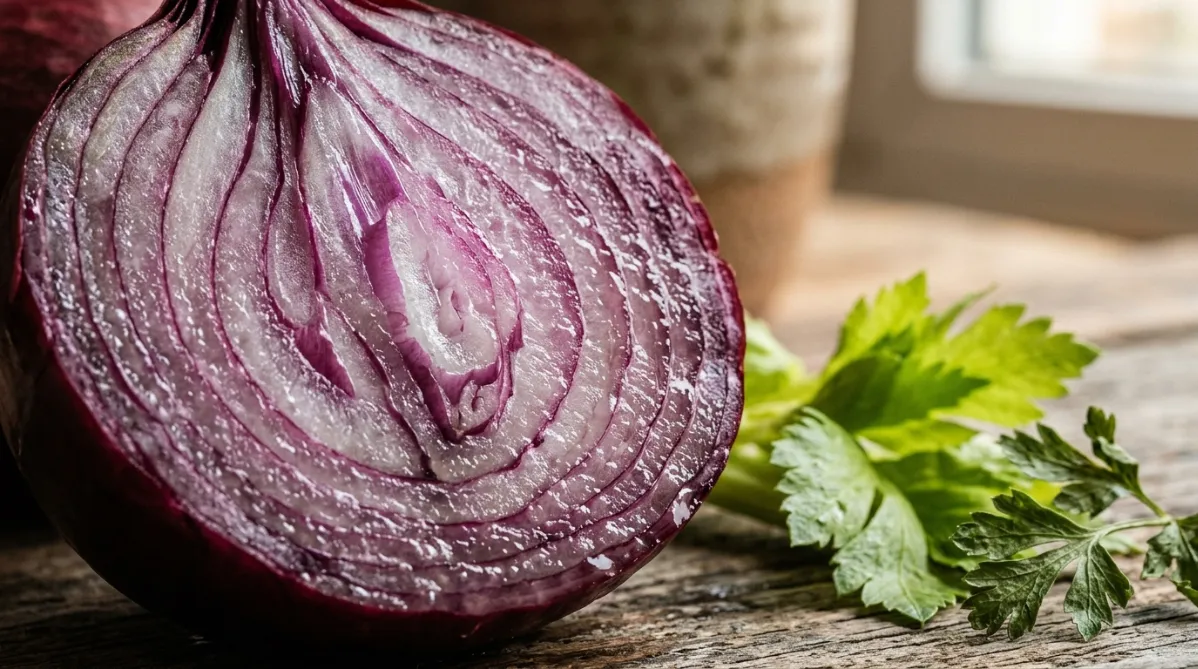
Extreme macro photograph of a halved red onion and fresh celery leaves, the real dietary sources of isorhamnetin and luteolin. The onion's glossy magenta-violet layers and translucent cell walls fill the left two-thirds of the frame, with fine droplets of juice catching the light. A few crisp green celery leaves and a sprig of dried parsley rest in soft focus to the right. Shot at a slight low angle, shallow depth of field, 100mm macro look. Soft morning daylight from a window behind and to the side gives a warm rim light and gentle translucency through the onion layers. The palette is earthy: plum, sage green, and warm wood tones, with one small electric green highlight on a celery leaf edge. The mood is calm, fresh, and quietly curious, with a hint of rest.
supplements

Das übersehene Flavonoid, das mit besserem Schlaf in Verbindung steht, ist nicht Quercetin

BY NOVA CHEN ·

Alle reden über Quercetin – doch eine umfangreiche Auswertung einer US‑Umfrage hebt zwei weniger bekannte Flavonoide hervor, die mit besserem Schlaf assoziiert sind: Isorhamnetin und Luteolin. Menschen im obersten Drittel des Isorhamnetin‑Konsums hatten rund 25 % geringere Wahrscheinlichkeit für Schlafstörungen und schliefen länger. Bei Luteolin war der Effekt schwächer, etwa 15 % geringere Wahrscheinlichkeit. Die Ergebnisse stammen aus einer Querschnittsstudie mit 10 162 Erwachsenen, die auf Ernährungs‑Recall‑Daten von Lebensmitteln – nicht von Nahrungsergänzungsmitteln – beruht, sodass kein kausaler Zusammenhang nachgewiesen werden kann. Im Folgenden wird gezeigt, was die Zahlen tatsächlich bedeuten, welche Grenzen sie haben und welche sinnvolle Schlussfolgerung sich daraus ziehen lässt.

This page is available in