Biocracked
←

#brain aging

2 articles
Approach: conceptual metaphor, with a natural palette.

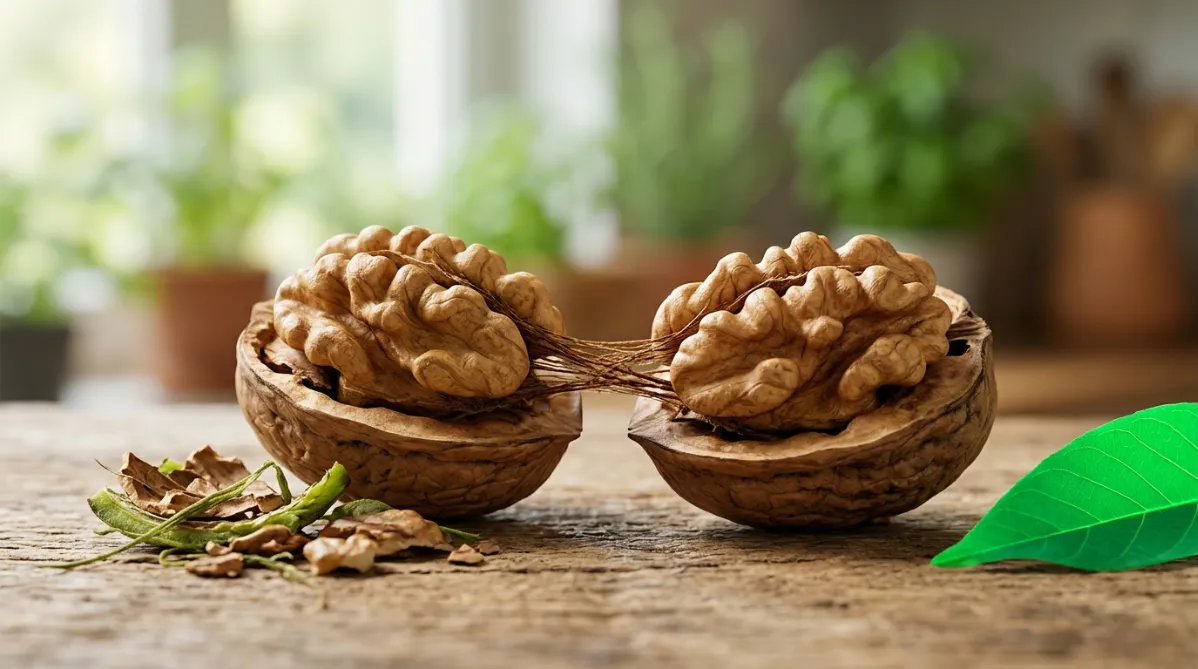
A single walnut is cracked open on a rough wooden board, and its two halves sit slightly apart. The halves are shot in tight macro from a low three-quarter angle. The walnut's brain-like folds are the focus. Between the halves, a thin cluster of fine, dark brown tannin-stained fibers stretches like a bridge. Beside it sits a small pile of shell fragments with a few strands of green walnut husk. A small, sharp, electric green (#00e676) leaf catches the light at the edge of the frame. The background is a softly blurred window-lit kitchen garden in leafy greens and warm earth tones. Soft natural daylight comes from the left and gives gentle shadows and visible texture on the nut's ridges. The mood is calm, curious and quietly scientific, with a fresh morning feel and no blue cast.
longevity

Urolithin A: The Walnut Gut Byproduct Tied to a Thicker Brain

BY NOVA CHEN ·

Eat a walnut and your gut bacteria turn its ellagitannins into urolithins, compounds that may be tied to how well your brain ages. In a 2-year MRI sub-study of the WAHA trial, bigger rises in urolithin A, urolithin C, and urolithin C glucuronide were associated with preserved cortical thickness among walnut eaters, mostly in right-hemisphere regions. The pattern was stronger in people with metabotype B gut profiles. But this is an association inside a randomized trial, not proof of cause, and it says nothing direct about urolithin A supplements. Here's what the data show, who might care, and who should stay skeptical.
Approach: Macro science, with a Bold color field palette.

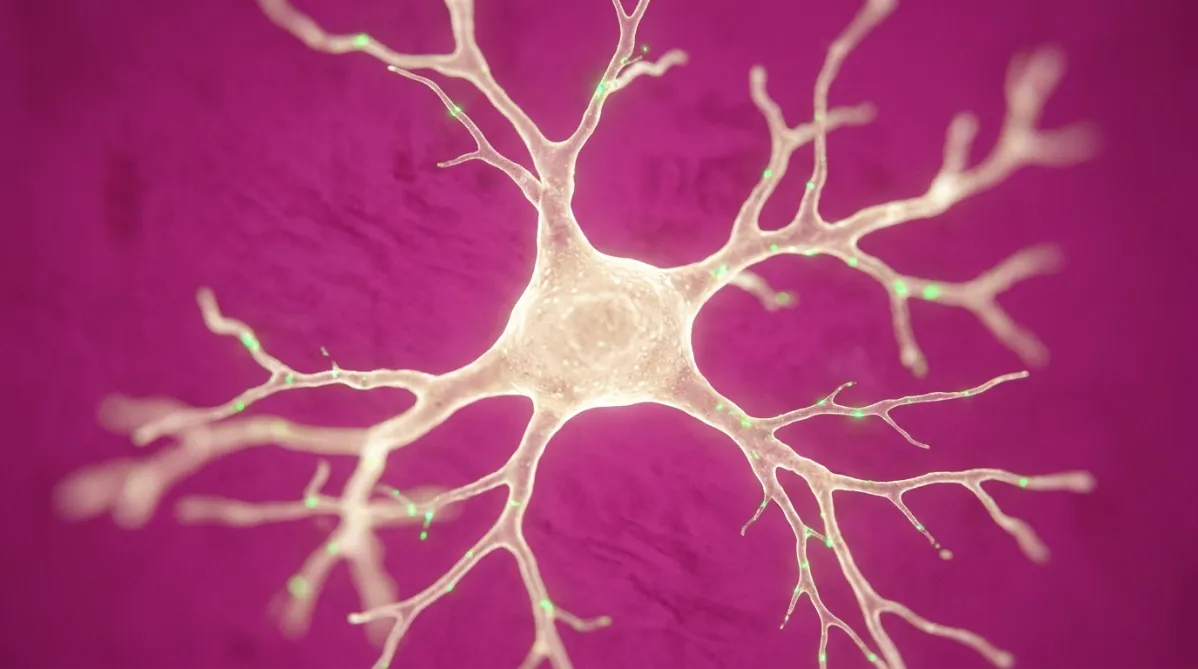
Extreme close-up microscopy-style image of a single microglial cell with fine, branching processes, rendered with the real texture of fluorescence-stained tissue: translucent, slightly granular cell body, delicate ramified arms reaching across the frame. Shot from straight overhead through a microscope objective with shallow depth of field, so the outer branches soften into blur. The cell is a luminous, warm ivory-white with a few small electric green (#00e676) points of light along its branches. Behind it is a saturated, even magenta backdrop with subtle tissue grain. Lighting is crisp and backlit, with gentle glow around the edges and no harsh shadows. The mood is curious and precise, with a quiet sense of renewal. No text or labels.
longevity

Mouse Study: NR Shifted Aged Brain Cells Toward a Younger State

BY NOVA CHEN ·

In a new GeroScience study, 22-month-old mice given nicotinamide riboside (NR) for eight weeks did better on memory and nest-building tests. Their brain immune cells also looked more like those of young mice. This was a mouse study, and it does not show the same benefits in people. The dose was 400 mg/kg, far above what humans take, and the abstract reports only male mice. Here is what changed in the microglia, what the study can't tell us, and what the findings mean for NR users.

This page is available in