Biocracked
←

#senolytics

2 articles
Approach: macro science. Palette: bold color field (violet).

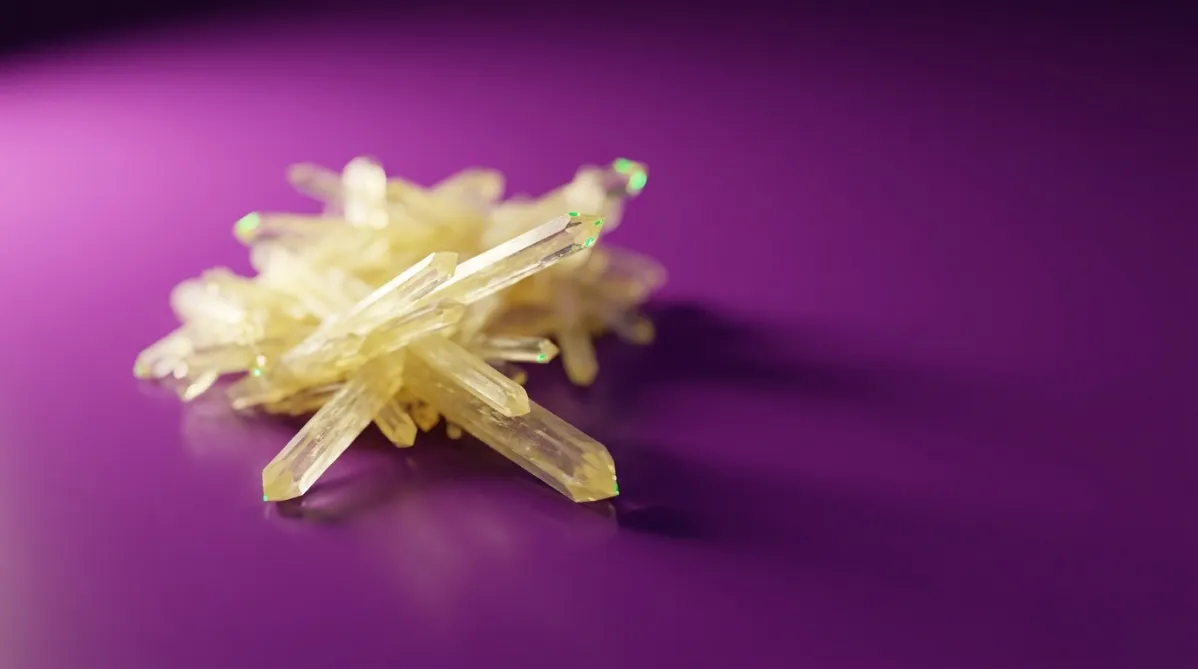
Extreme close-up of fisetin crystals, a small cluster of pale yellow needle-like flavonoid crystals with translucent, faceted edges, resting on a smooth glossy deep violet surface. The camera sits low at a shallow three-quarter angle with a very shallow depth of field, so the front crystals are razor sharp and the rest dissolves into soft magenta-violet blur. Lighting is a single crisp, slightly warm studio key from upper left that makes the crystal edges glow and throws long soft shadows across the violet. A few tiny electric green (#00e676) specks of reflected light catch on the crystal tips. The mood is precise, curious and quietly promising, like a sample under inspection, with plenty of clear violet space on the right side of the frame.
longevity

Fisetina Senolítica Prolonga a Vida de Camundongos — Prova em Humanos Ainda Falta

BY HELIX WARD ·

Fisetina, um flavonoide vegetal, emergiu como o senolítico mais potente entre dez compostos em um estudo bastante citado de 2018 na *EBioMedicine*. Em camundongos idosos, o tratamento tardio reduziu marcadores de senescência, aliviou patologias relacionadas à idade e ampliou tanto a expectativa de vida média quanto a máxima. O porém é que tudo isso foi observado em camundongos e em laboratório, não em ensaios clínicos concluídos em humanos. Este artigo explica o que os pesquisadores encontraram, o que realmente significa o regime de dosagem e quem deve ficar atento à medida que os estudos em humanos avançam.
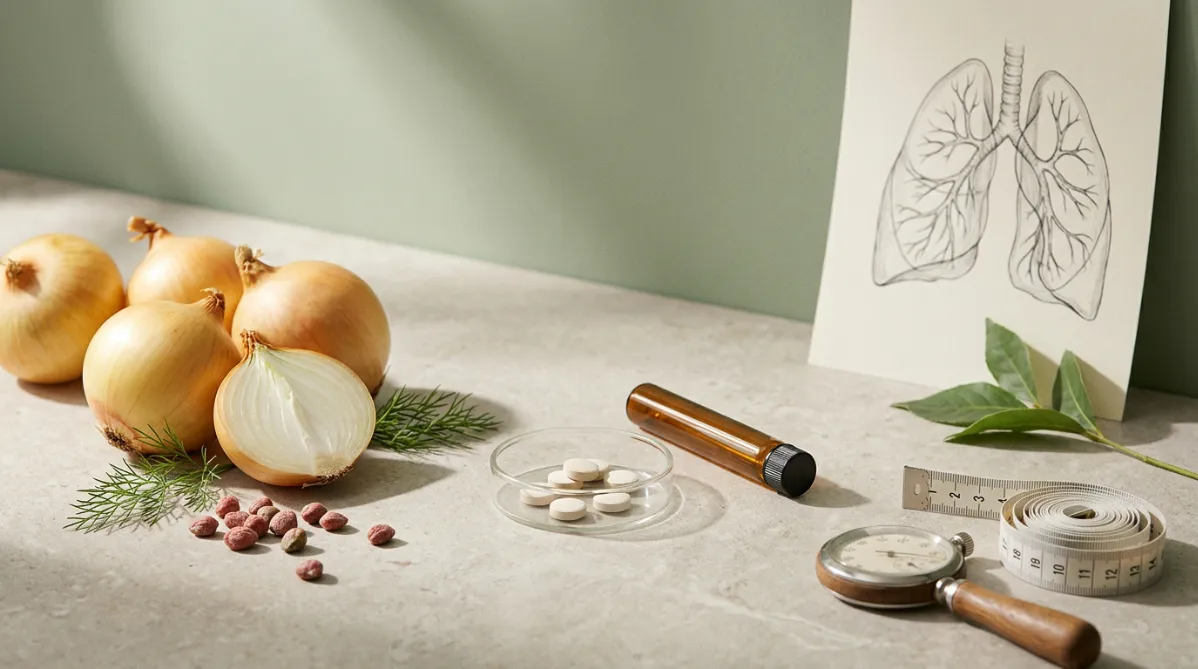
A wide, softly lit editorial still life on a pale warm-gray stone surface, shot from a slightly elevated three-quarter angle. On the left, a small cluster of fresh yellow-gold onions with papery skins, one cut in half to show its pale concentric layers, sits beside a few dusty-red capers and a sprig of dill. These are natural quercetin sources and read as quiet botanical details. In the center, a minimalist glass apothecary dish holds a few small, round, off-white tablets. Beside it, a slim amber glass vial lies on its side with a plain unlabeled cap.

On the right, a neatly arranged clinical element: a vintage-style wooden-handled stopwatch and a crisp paper stride-length measuring tape curled in a loose spiral, hinting at the 6-minute walk test and gait speed measures. Behind these, a softly out-of-focus wall of pale sage green with a subtle shadow of a window frame cast diagonally across it. A single translucent anatomical line drawing of lungs, rendered in fine charcoal ink on cream paper, leans against the wall, its delicate branching bronchi echoing the veining of a nearby green leaf.

Lighting is soft morning daylight from the upper left, creating gentle long shadows and a calm, thoughtful mood. The palette is muted and modern: butter yellow, sage, cream, warm gray, with small accents of terracotta and amber. Shallow depth of field keeps the tablets and onion sharp while the background melts into a creamy blur. Generous negative space across the upper right makes room for headline overlay. The composition feels like a contemporary science journal or wellness-research magazine cover: clean, tactile, restrained, with subtle film grain and natural color grading. No text, no logos, no people, no futuristic elements.
longevity

Os Primeiros Humanos a Tomarem Dasatinibe + Quercetina: O que um Estudo Piloto com 14 Pacientes com Fibrose Pulmonar Idiopática Revelou (e O que Não Revelou)

BY DR. SYNAPSE ·

Em 2019, pesquisadores relataram o primeiro uso humano da combinação senolítica dasatinibe + quercetina em 14 pacientes com fibrose pulmonar idiopática. Após três semanas de tratamento intermitente, os participantes apresentaram ganhos significativos na distância percorrida em 6 min, na velocidade de marcha e no tempo de subir de uma cadeira, embora a função pulmonar não tenha mudado. O estudo, aberto e sem grupo controle, envolveu um fármaco oncológico associado a uma dose alta de flavonoide, não a um protocolo de suplementação. Veja o que o ensaio realmente testou, o que encontrou e como interpretá‑lo criticamente.

This page is available in