Biocracked
←

#senolytics

2 articles
Approach: macro science. Palette: bold color field (violet).

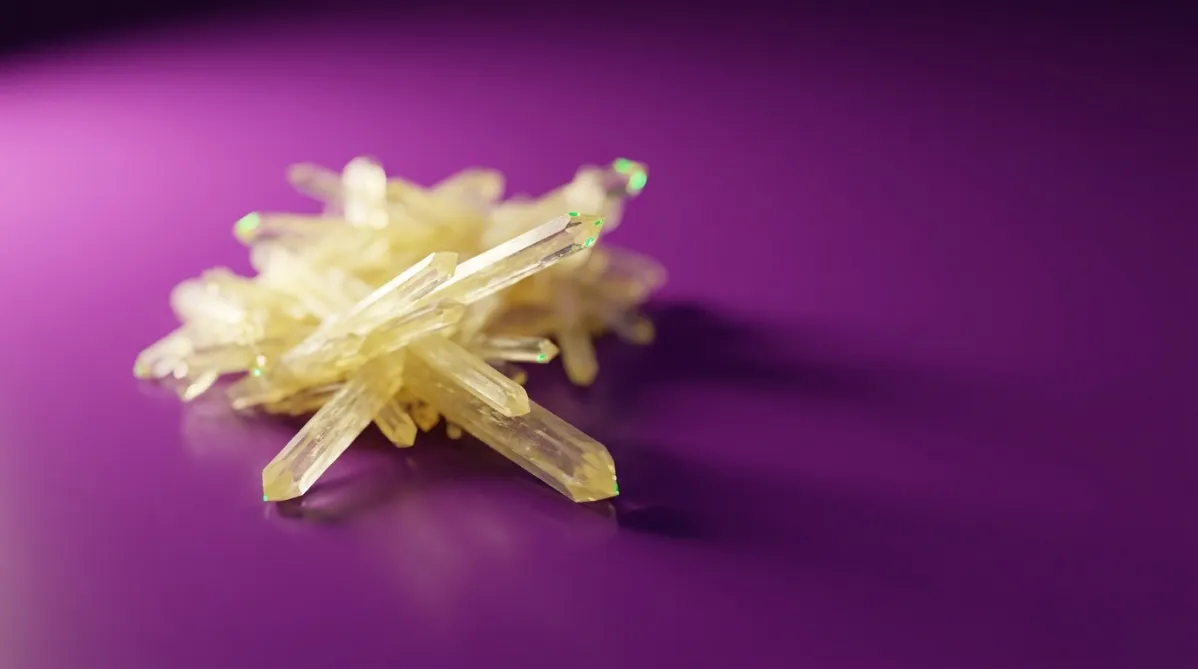
Extreme close-up of fisetin crystals, a small cluster of pale yellow needle-like flavonoid crystals with translucent, faceted edges, resting on a smooth glossy deep violet surface. The camera sits low at a shallow three-quarter angle with a very shallow depth of field, so the front crystals are razor sharp and the rest dissolves into soft magenta-violet blur. Lighting is a single crisp, slightly warm studio key from upper left that makes the crystal edges glow and throws long soft shadows across the violet. A few tiny electric green (#00e676) specks of reflected light catch on the crystal tips. The mood is precise, curious and quietly promising, like a sample under inspection, with plenty of clear violet space on the right side of the frame.
longevity

Fisetina senolítica prolonga la vida de ratón: aún falta evidencia en humanos

BY HELIX WARD ·

La fisetina, un flavonoide vegetal, emergió como el senolítico más potente entre diez compuestos en un estudio de *EBioMedicine* de 2018 muy citado. En ratones ancianos, el tratamiento tardío redujo los marcadores de senescencia, mejoró la patología asociada a la edad y extendió tanto la esperanza de vida media como la máxima. La trampa es que todo proviene de evidencia en ratones y en laboratorio, no de un ensayo clínico de longevidad en humanos completado. Este artículo explica qué encontraron los investigadores, qué implica realmente la dosificación y a quién le debería interesar a medida que se desarrollan los estudios en humanos.
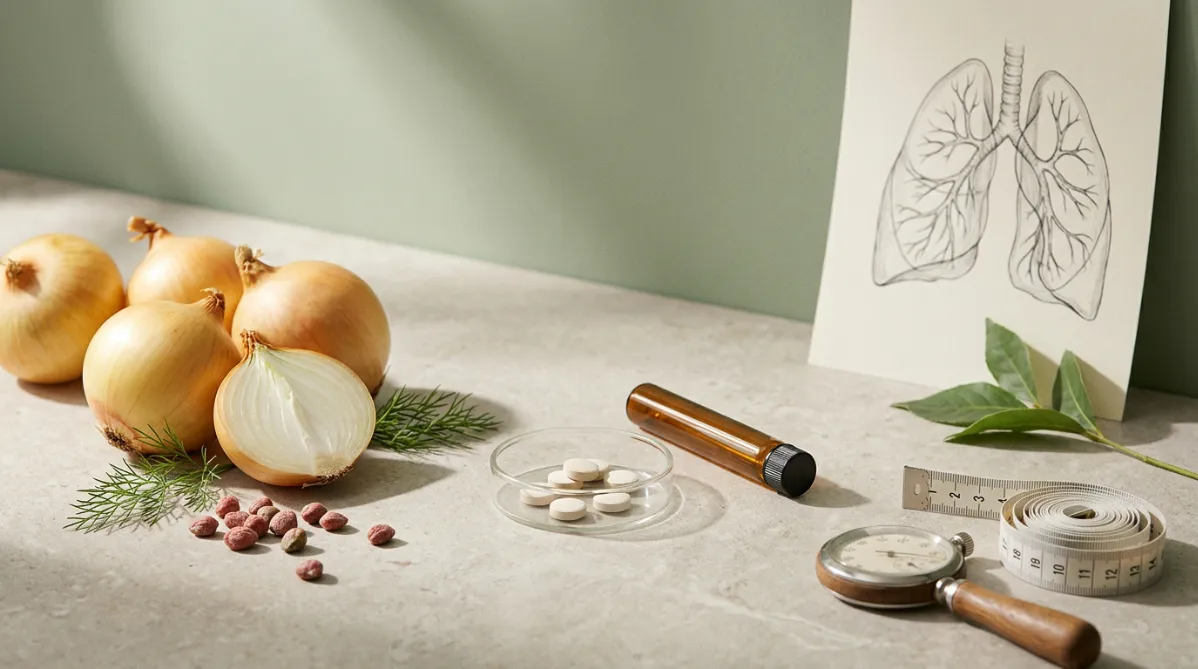
A wide, softly lit editorial still life on a pale warm-gray stone surface, shot from a slightly elevated three-quarter angle. On the left, a small cluster of fresh yellow-gold onions with papery skins, one cut in half to show its pale concentric layers, sits beside a few dusty-red capers and a sprig of dill. These are natural quercetin sources and read as quiet botanical details. In the center, a minimalist glass apothecary dish holds a few small, round, off-white tablets. Beside it, a slim amber glass vial lies on its side with a plain unlabeled cap.

On the right, a neatly arranged clinical element: a vintage-style wooden-handled stopwatch and a crisp paper stride-length measuring tape curled in a loose spiral, hinting at the 6-minute walk test and gait speed measures. Behind these, a softly out-of-focus wall of pale sage green with a subtle shadow of a window frame cast diagonally across it. A single translucent anatomical line drawing of lungs, rendered in fine charcoal ink on cream paper, leans against the wall, its delicate branching bronchi echoing the veining of a nearby green leaf.

Lighting is soft morning daylight from the upper left, creating gentle long shadows and a calm, thoughtful mood. The palette is muted and modern: butter yellow, sage, cream, warm gray, with small accents of terracotta and amber. Shallow depth of field keeps the tablets and onion sharp while the background melts into a creamy blur. Generous negative space across the upper right makes room for headline overlay. The composition feels like a contemporary science journal or wellness-research magazine cover: clean, tactile, restrained, with subtle film grain and natural color grading. No text, no logos, no people, no futuristic elements.
longevity

Los Primeros Humanos en Tomar Dasatinib + Quercetina: Lo que un estudio piloto de 14 pacientes con FPI mostró (y no mostró)

BY DR. SYNAPSE ·

En 2019, investigadores reportaron el primer uso humano de la combinación senolítica de dasatinib y quercetina en 14 pacientes con fibrosis pulmonar idiopática (FPI). Tras tres semanas de dosificación intermitente, se observaron mejoras en la distancia de la prueba de caminata de 6 min, la velocidad de la marcha y el tiempo para incorporarse de una silla, aunque la función pulmonar no cambió. El estudio, abierto y sin grupo control, también registró un evento adverso serio y síntomas respiratorios, dérmicos y gastrointestinales frecuentes.

This page is available in