Biocracked
←

#randomized trial

3 articles
Approach: conceptual metaphor. Palette: D, bold color field.

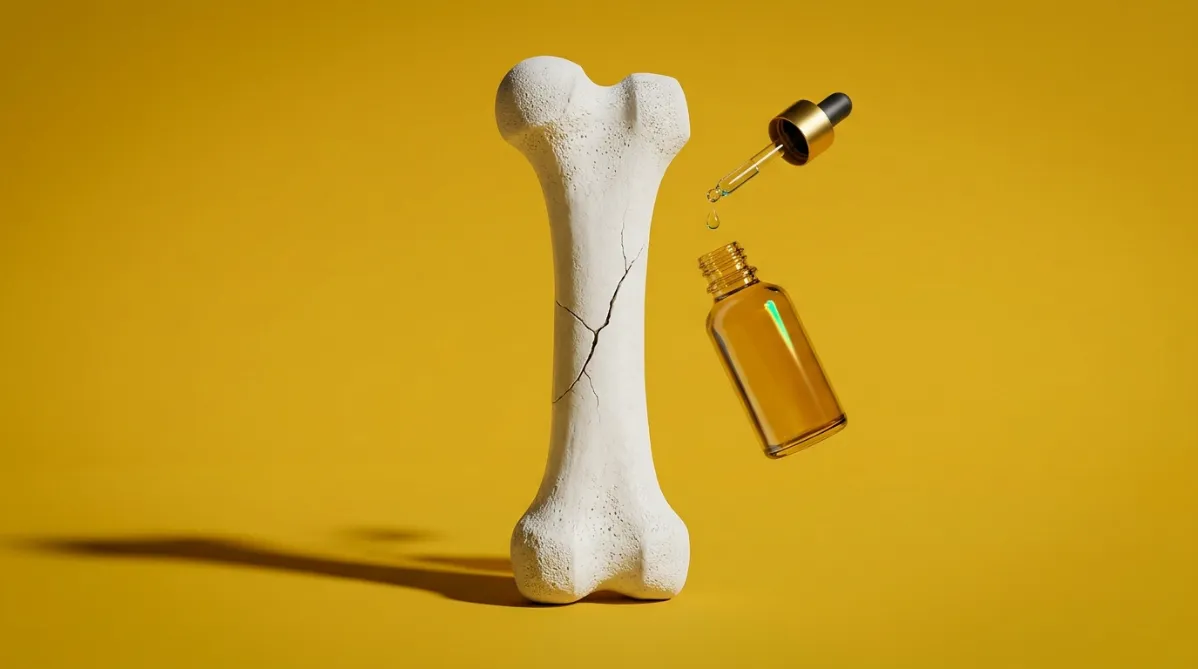
A single cracked ceramic-white bone-shaped column, like a femur section, stands upright at the center of a saturated mustard-yellow seamless backdrop. A thin, clean hairline fracture runs through its middle. Beside it, a small golden-amber glass dropper bottle sits tipped, with one droplet suspended just above the bone and not touching it, which suggests extra vitamin D that makes no difference. The camera is at a low three-quarter angle with a shallow depth of field. Hard, directional studio light from the upper left casts a crisp, long shadow across the yellow floor. The porous bone texture is visible in fine detail. A tiny electric green (#00e676) droplet reflection glints on the glass. The mood is skeptical, cool-headed and editorial.
longevity

High-Dose Vitamin D for Bones? A 5-Year Trial Says No

BY DR. SYNAPSE ·

Taking extra vitamin D to keep your bones strong? A five-year randomized trial in 2,495 older Finns found that neither 1,600 nor 3,200 IU/day reduced fractures compared with placebo. Oddly, the 1,600 IU group had more fractures (HR 1.52), though the higher dose showed no such effect, which suggests chance may be at play. Participants already had sufficient vitamin D at baseline, so the results may not apply to people who are deficient. Here is what the study found, what its limits are, and what to do before buying another bottle.
**Approach:** Conceptual metaphor. **Palette:** Bold color field (teal).

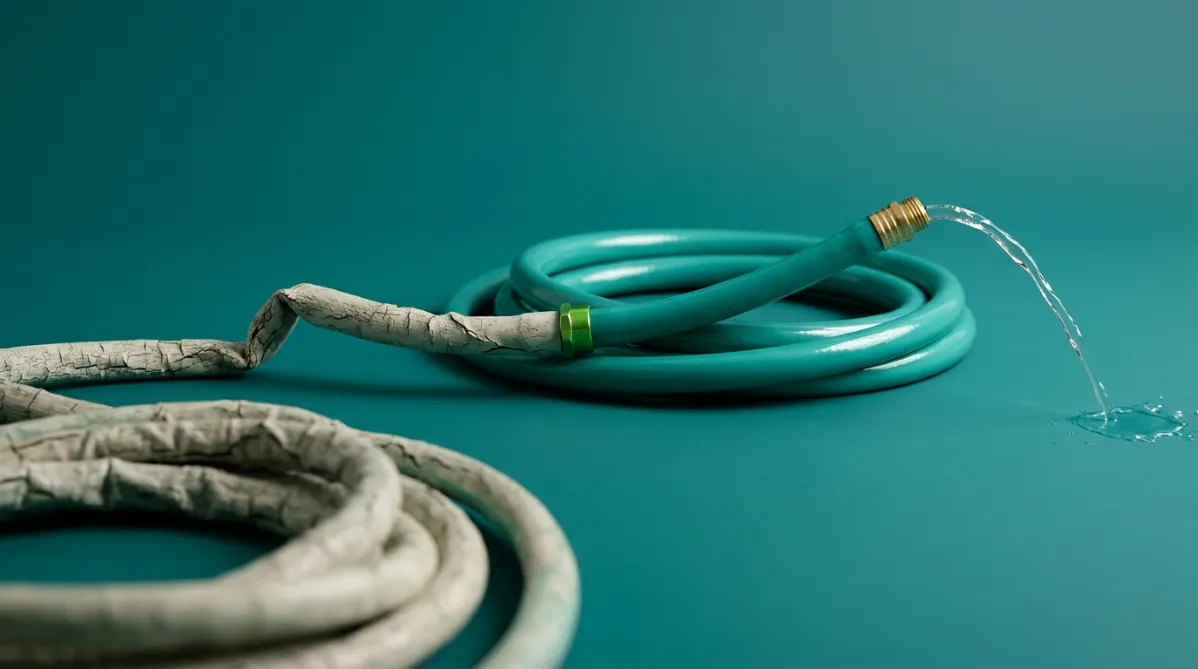
A single flexible garden hose, shot from a low three-quarter angle, lies coiled against a saturated teal seamless backdrop. One half of the hose is pale and wrinkled, with a stiff, cracked rubber texture and a visible kink. The other half is supple, glossy and smoothly curved. A thin stream of water arcs from the open end, catching the light. Soft, large-source studio light comes from the upper left and casts gentle, neutral grey shadows with no blue cast. A small electric green brass fitting, with a clean metallic sheen, sits where the two halves meet. The shallow depth of field blurs the coils in the foreground. The mood is quietly doubtful but curious, as if the result is promising and still unproven. There is no text anywhere in the frame.
longevity

Magnesium Eased Stiff Arteries After 6 Months—Then Came a Null Trial

BY DR. SYNAPSE ·

For 12 weeks, magnesium did nothing measurable to arterial stiffness. At week 24, a 52-person randomized trial found pulse wave velocity improved by 1.0 m/s versus placebo, with no change in blood pressure. It's an eye-catching result for anyone interested in vascular aging. But a larger 2022 follow-up from the same group, testing 164 adults and three magnesium forms, found no significant effect. Here's what the original study showed, where it falls short, and what to make of the conflicting evidence.
**Approach:** Conceptual metaphor, in a bold color field palette (D).

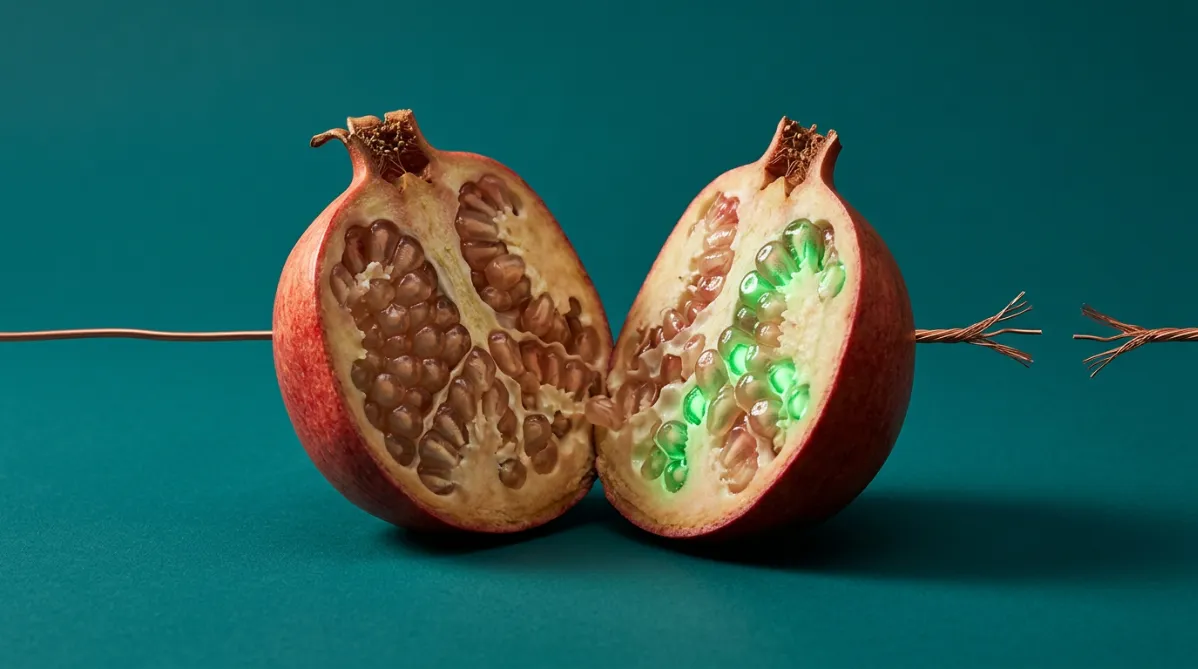
A single ripe pomegranate, split open, on a saturated teal backdrop. It is the natural source of urolithin A's precursors. The camera sits at a slightly low three-quarter angle, close enough to show glossy, translucent arils. On the left half, the arils sit dull and tightly packed. On the right, a few arils hold a faint electric green glow, as if lit from within, hinting at a selective response in one place and not another. Behind the fruit, a thin copper wire runs across the frame and is unbroken on one side and fraying on the other, standing for arteries versus brain vessels. Soft, directional studio light from the upper left casts crisp shadows. Mood: curious, restrained, quietly hopeful. No text anywhere.
supplements

Urolithin A Didn't Fix Arteries in 4 Weeks, but the Brain Responded

BY NOVA CHEN ·

A double-blind trial of 50 adults aged 40-64 with obesity found that 1,000 mg of urolithin A daily for four weeks did not improve flow-mediated dilation, the study's primary endpoint. Peripheral microvascular measures were also unchanged. Yet task-evoked cerebrovascular hemodynamic responses were significantly greater with urolithin A than with placebo, even though task performance did not budge. Because the brain result is a secondary outcome from a short, small trial, it is a lead rather than a conclusion. Here is what the data show, what they don't, and what it means for anyone considering the supplement.

This page is available in