
Biocracked
←

#semaglutide

4 articles
Approach: 3, the human outcome, here as an animal-science moment. Palette: C, natural.

An old female lab mouse with slightly greying, ruffled fur sits upright on a researcher's open gloved palm, photographed at eye level in a close side-on view with a shallow depth of field. Behind it, a softly blurred animal facility window pours in real morning daylight, giving the scene a pale green-grey and warm-wood setting. The nitrile glove is a vivid electric green (#00e676), the single saturated accent. The mouse's whiskers and pink ears catch the light, and the researcher's white coat sleeve is just visible. Tones are natural: skin, soft cream bedding, sage walls. The mood is calm, careful and quietly hopeful, and it conveys age and care rather than drama. The image has no text, no labels and no readable writing.
longevity

Ingrediente ativo do Ozempic prolonga a vida de ratos idosos; veja por quê

BY DR. SYNAPSE ·

Semaglutida, princípio ativo do Ozempic e do Wegovy, prolongou a longevidade de ratas idosas em um estudo publicado na *Nature*. O tratamento iniciou aos 20 meses de idade e reproduziu muitos dos benefícios da restrição calórica. Em comparação direta, o fármaco mostrou trajetórias mais favoráveis em curiosidade, memória espacial e controle da glicose. Contudo, trata‑se de pesquisa em ratos, apenas fêmeas, sem indicação de dose para humanos.
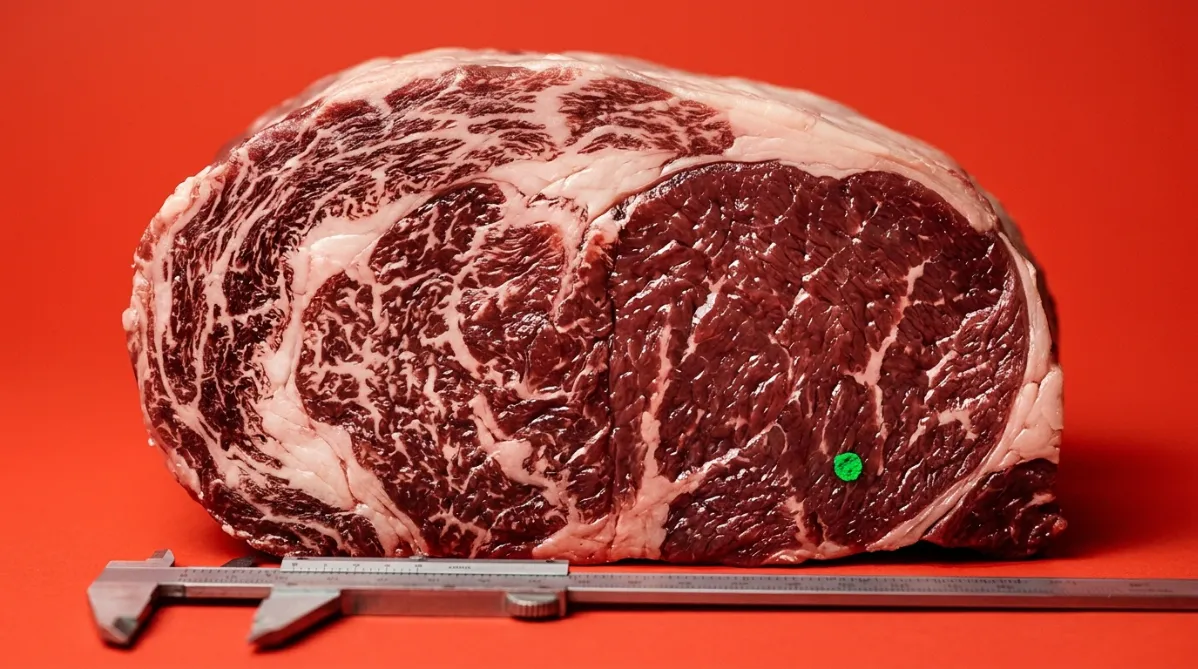
Approach: Macro science, the human outcome angle through tissue. Palette: D, bold color field.

Extreme close-up of a cross-section of raw beef thigh muscle, used as a stand-in for human thigh tissue. It is shot straight on and slightly from above, on a saturated tomato-red seamless backdrop. Fine white fat marbling threads run through the dark red muscle fibers. On one half the marbling is dense and lacy, and on the other it is sparse and clean, so the contrast reads as a before and after. A thin, translucent calipers-style steel ruler lies along the edge, with no markings readable. Lighting is soft, directional studio light from the upper left, with crisp highlights on the glistening fibers and gentle warm shadows. A single small electric green surgical marker dot sits on the tissue. The mood is analytical, tense and uncertain, with shallow depth of field and sharp detail on the fat texture.
longevity

Semaglutida em Alta Dose e Músculo da Coxa: O Que a Ressonância Magnética Mostra

BY HELIX WARD ·

Uma nova sub‑análise de ressonância magnética (RM) do ensaio STEP UP avaliou o que 72 semanas de semaglutida em alta dose (7,2 mg) fazem à composição corporal, incluindo os músculos da coxa. A perda de gordura foi expressiva – cerca de 11 L em comparação ao placebo – e a infiltração de gordura no músculo da coxa diminuiu significativamente. O volume muscular da coxa caiu cerca de 1,1 L, mudança que não alcançou significância estatística (p = 0,07), mas cujo intervalo de confiança sugere perda. Com apenas 55 participantes escaneados, seis deles em placebo, e com envolvimento da Novo Nordisk, os achados são sugestivos, porém não conclusivos. Veja o que os dados mostram, o que não podem dizer e como proteger seu músculo ao usar um GLP‑1.

**Approach:** Lab in action. **Palette:** Bold color field, mustard yellow.

A close, slightly high three-quarter view of a hand in a magenta-purple nitrile glove holding a clear 12-well cell culture plate. Each well is filled with salmon-pink culture medium. A multichannel pipette hovers over one well, with a single droplet caught just before it falls. The background is a seamless, saturated mustard-yellow surface and wall, with a soft shadow under the plate. Bright, even studio light comes from the upper left, giving crisp highlights on the plastic rims and a soft glow through the liquid. The depth of field is shallow, so the far wells blur gently. A tiny electric-green cap on a tube sits in the corner of the frame. The mood is calm, precise and curious, with a clean, graphic, editorial feel. No text or labels.
peptides

Semaglutida não encolheu as células musculares humanas. Então, por que a perda de massa muscular?

BY DR. SYNAPSE ·

A semaglutida realmente consome o seu músculo? Um estudo recente publicado na *GeroScience* aplicou o fármaco diretamente em células musculares humanas de adultos mais velhos com obesidade, e as células não apresentaram sinais de atrofia. Não houve ativação de genes atróficos, nem alterações no secretoma, e o GIP ainda aumentou a espessura dos miotúbulos após oito dias. A semaglutida reduziu modestamente a produção de ATP glicolítico, e os receptores GLP‑1 eram quase indetectáveis. Os resultados apontam para causas indiretas da perda de massa magra, como déficit calórico e menor carga mecânica, embora o peso corporal não seja o único fator.
**Approach: Conceptual metaphor. Palette: D, bold color field.**

A single clear glass of water sits on a saturated mustard-yellow backdrop, shot at a slight low three-quarter angle. A hand-held pen injector rests beside it, its body a matte white with a small electric green dial ring as the only green accent. Hard but clean studio light from the upper left throws a crisp, defined shadow across the yellow surface. Through the glass, the injector is refracted into two slightly offset images, suggesting a signal that is split and hard to read. The mood is calm, questioning and balanced, with no drama. The background is fully warm and bright, with no blue cast. The surface has a subtle paper-like texture. There is no text, no label and no face.
metabolism

Ozempic e Mounjaro causam depressão? O que revelam 20 estudos

BY DR. SYNAPSE ·

Ozempic e Mounjaro podem provocar depressão ou pensamentos suicidas? Uma revisão sistemática de 20 estudos, aliada às avaliações da EMA e da FDA, mostra que as evidências mais robustas não apontam esse risco. Dados de ensaios randomizados – inclusive duas grandes meta‑análises de 2025 – não revelaram aumento de suicídio, depressão ou ansiedade com semaglutida ou tirzepatida. Os sinais mais alarmantes vieram de desenhos que não conseguem separar os efeitos do medicamento do sofrimento associado à obesidade, do risco psiquiátrico basal e do viés de notificação. Como os ensaios excluiram muitos pacientes com doenças psiquiátricas, a vigilância permanece importante para grupos de alto risco e para eventos raros a longo prazo.

This page is available in