
Biocracked
←

#semaglutide

4 articles
Approach: 3, the human outcome, here as an animal-science moment. Palette: C, natural.

An old female lab mouse with slightly greying, ruffled fur sits upright on a researcher's open gloved palm, photographed at eye level in a close side-on view with a shallow depth of field. Behind it, a softly blurred animal facility window pours in real morning daylight, giving the scene a pale green-grey and warm-wood setting. The nitrile glove is a vivid electric green (#00e676), the single saturated accent. The mouse's whiskers and pink ears catch the light, and the researcher's white coat sleeve is just visible. Tones are natural: skin, soft cream bedding, sage walls. The mood is calm, careful and quietly hopeful, and it conveys age and care rather than drama. The image has no text, no labels and no readable writing.
longevity

Il principio attivo di Ozempic estende la vita nei topi anziani. Ecco perché

BY DR. SYNAPSE ·

La semaglutide, principio attivo di Ozempic e Wegovy, ha prolungato la vita di topi femmina anziani in un nuovo studio pubblicato su Nature dall’UC Berkeley. Il trattamento, iniziato a 20 mesi di età, ha replicato molti dei benefici della restrizione calorica. In un confronto diretto, il farmaco ha mostrato traiettorie più favorevoli rispetto alla restrizione calorica abbinata per quanto riguarda la motivazione all’esplorazione, la memoria spaziale e il controllo glucosico. Tuttavia, si tratta di una ricerca condotta esclusivamente su topi femmina, senza alcuna indicazione di dosaggio per l’uomo. Ecco cosa suggeriscono i risultati e cosa non significano.
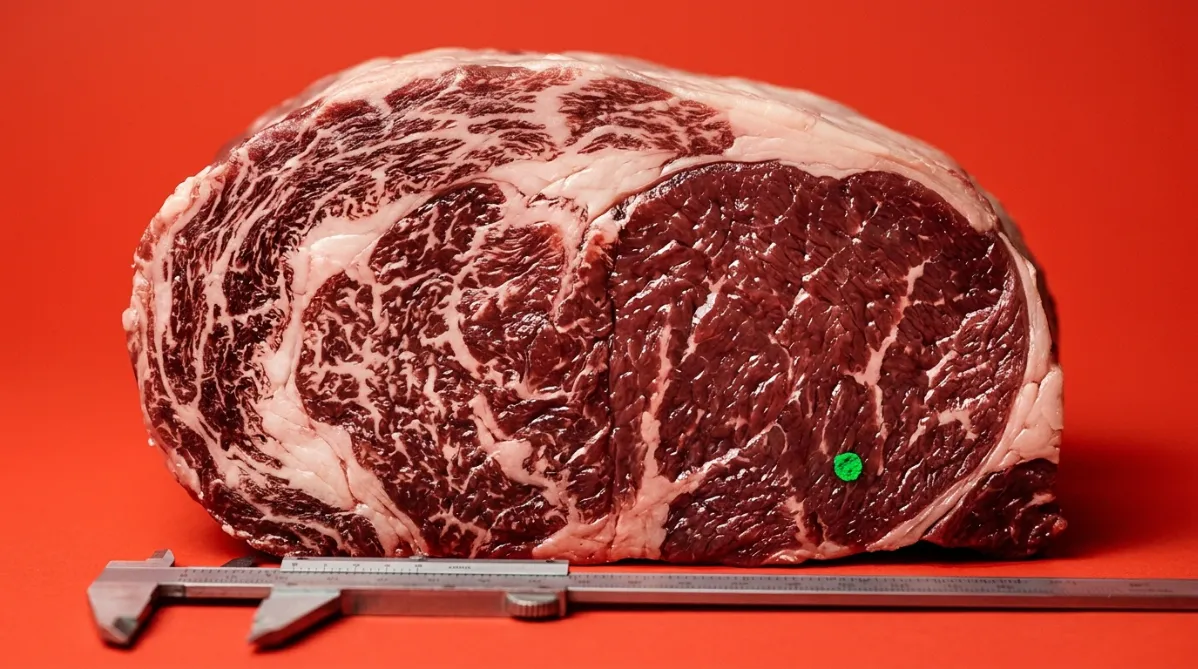
Approach: Macro science, the human outcome angle through tissue. Palette: D, bold color field.

Extreme close-up of a cross-section of raw beef thigh muscle, used as a stand-in for human thigh tissue. It is shot straight on and slightly from above, on a saturated tomato-red seamless backdrop. Fine white fat marbling threads run through the dark red muscle fibers. On one half the marbling is dense and lacy, and on the other it is sparse and clean, so the contrast reads as a before and after. A thin, translucent calipers-style steel ruler lies along the edge, with no markings readable. Lighting is soft, directional studio light from the upper left, with crisp highlights on the glistening fibers and gentle warm shadows. A single small electric green surgical marker dot sits on the tissue. The mood is analytical, tense and uncertain, with shallow depth of field and sharp detail on the fat texture.
longevity

Semaglutide ad alta dose e muscolo della coscia: cosa mostra la risonanza magnetica

BY HELIX WARD ·

Una nuova sotto‑analisi MRI del trial STEP UP ha valutato l’effetto di 72 settimane di semaglutide ad alta dose (7,2 mg) sulla composizione corporea, includendo i muscoli della coscia. La perdita di grasso è stata notevole, circa 11 litri rispetto al placebo, mentre l’infiltrazione di grasso nel muscolo della coscia è diminuita significativamente. Il volume muscolare della coscia è calato di circa 1,1 L, un cambiamento che non ha raggiunto la significatività statistica (p = 0,07) ma il suo intervallo di confidenza tende verso una perdita. Con solo 55 partecipanti scansionati, di cui sei in placebo, e il coinvolgimento di Novo Nordisk, i risultati sono più indicativi che conclusivi.

**Approach:** Lab in action. **Palette:** Bold color field, mustard yellow.

A close, slightly high three-quarter view of a hand in a magenta-purple nitrile glove holding a clear 12-well cell culture plate. Each well is filled with salmon-pink culture medium. A multichannel pipette hovers over one well, with a single droplet caught just before it falls. The background is a seamless, saturated mustard-yellow surface and wall, with a soft shadow under the plate. Bright, even studio light comes from the upper left, giving crisp highlights on the plastic rims and a soft glow through the liquid. The depth of field is shallow, so the far wells blur gently. A tiny electric-green cap on a tube sits in the corner of the frame. The mood is calm, precise and curious, with a clean, graphic, editorial feel. No text or labels.
peptides

La semaglutide non ha ridotto le cellule muscolari umane: perché allora si perde massa muscolare?

BY DR. SYNAPSE ·

Semaglutide, il farmaco usato per la perdita di peso, attacca davvero i muscoli? Uno studio su *GeroScience* ha esposto direttamente a semaglutide cellule muscolari umane primarie di anziani obesi: non hanno mostrato segni di atrofia, né attivazione di geni atrofici o di un secretoma infiammatorio. Anzi, il GIP ha aumentato lo spessore dei miotubi. La riduzione della massa magra osservata clinicamente sembra dunque dipendere da deficit calorico e minor attività meccanica, piuttosto che da un effetto tossico diretto del farmaco.

**Approach: Conceptual metaphor. Palette: D, bold color field.**

A single clear glass of water sits on a saturated mustard-yellow backdrop, shot at a slight low three-quarter angle. A hand-held pen injector rests beside it, its body a matte white with a small electric green dial ring as the only green accent. Hard but clean studio light from the upper left throws a crisp, defined shadow across the yellow surface. Through the glass, the injector is refracted into two slightly offset images, suggesting a signal that is split and hard to read. The mood is calm, questioning and balanced, with no drama. The background is fully warm and bright, with no blue cast. The surface has a subtle paper-like texture. There is no text, no label and no face.
metabolism

Ozempic e Mounjaro causano depressione? Cosa hanno scoperto 20 studi

BY DR. SYNAPSE ·

Ozempic e Mounjaro sono stati associati a cambiamenti d'umore e pensieri suicidi, ma una revisione sistematica di 20 studi, unitamente alle valutazioni EMA e FDA, non ha evidenziato alcun aumento del rischio. I dati randomizzati, comprese due ampie meta‑analisi del 2025, non mostrano un incremento di suicidio, depressione o ansia con semaglutide o tirzepatide. I segnali più preoccupanti provengono da studi che non riescono a distinguere gli effetti del farmaco dal disagio legato all’obesità, dal rischio psichiatrico di base e da bias di segnalazione. Tuttavia, gli studi hanno escluso molti pazienti psichiatrici, perciò la sorveglianza rimane importante per i gruppi ad alto rischio e per gli esiti rari a lungo termine.

This page is available in