Biocracked
←

#mouse study

2 articles
Approach: macro science. Palette: bold color field (violet).

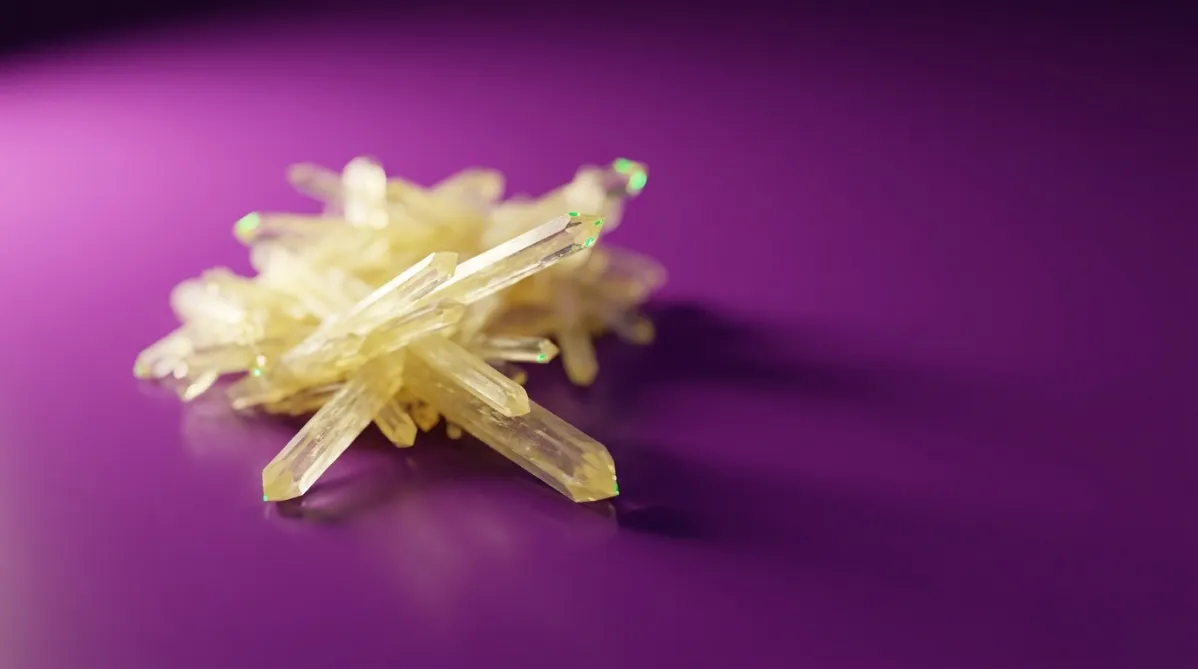
Extreme close-up of fisetin crystals, a small cluster of pale yellow needle-like flavonoid crystals with translucent, faceted edges, resting on a smooth glossy deep violet surface. The camera sits low at a shallow three-quarter angle with a very shallow depth of field, so the front crystals are razor sharp and the rest dissolves into soft magenta-violet blur. Lighting is a single crisp, slightly warm studio key from upper left that makes the crystal edges glow and throws long soft shadows across the violet. A few tiny electric green (#00e676) specks of reflected light catch on the crystal tips. The mood is precise, curious and quietly promising, like a sample under inspection, with plenty of clear violet space on the right side of the frame.
longevity

Fisetyna senolityczna wydłużyła życie myszy — dowód u ludzi nadal brak

BY HELIX WARD ·

Fisetyna, roślinny flawonoid, okazała się najpotężniejszym senolitykiem wśród dziesięciu związków przebadanych w szeroko cytowanym badaniu z 2018 r. opublikowanym w *EBioMedicine*. U starzejących się myszy podanie w późnym wieku obniżyło markery starzenia, złagodziło patologie związane z wiekiem i wydłużyło zarówno medianę, jak i maksymalny czas życia. Wyniki pochodzą jednak wyłącznie z badań na myszy i w probówkach – nie ma jeszcze dowodów klinicznych u ludzi.

A wide landscape editorial photograph of a minimalist laboratory-meets-wellness still life on a pale, warm-gray stone countertop, softly lit by diffused morning window light from the left. In the center foreground, a small amber glass supplement jar with a plain matte white label sits beside a scattering of fine white powder and a few loose white capsules on a ceramic dish. Next to it rests a clean, open notebook with faint hand-drawn line graphs, two diverging curves rising gently, one slightly higher than the other, drawn in muted sage-green and charcoal ink. A slim brass pen lies across the page.

In the soft-focus midground, a delicate glass beaker filled with clear liquid catches a thin streak of light, casting a gentle caustic shimmer across the stone. A sprig of dried eucalyptus and a small sliver of citrus peel add organic texture. Behind them, an out-of-focus wall of pale oat-colored tiles and a floating wooden shelf holds a few blurred ceramic vessels and a small potted fern.

The color palette is calm and editorial: warm creams, sage green, soft amber, muted terracotta accents, and touches of charcoal. Shallow depth of field with a crisp focus on the jar and notebook, creamy bokeh in the background. Subtle film-like grain, natural shadows, and generous negative space on the right third of the frame, suitable for headline overlay. The mood is thoughtful, measured, and trustworthy, like a contemporary science and wellness journal cover: modern, tactile, quietly optimistic, and grounded rather than hyped.
longevity

Wapniowy alfa‑ketoglutaran wydłużył życie samic myszy nawet o 16,6 %. Co to naprawdę oznacza (i czego nie oznacza) dla ludzi

BY DR. SYNAPSE ·

Badanie z 2020 r. opublikowane w *Cell Metabolism* wykazało, że podawanie 2 % diety wapniowego alfa‑ketoglutaranu (CaAKG) starszym samicom myszy wydłużyło medianę ich życia o **16,6 %** i zmniejszyło oznaki osłabienia. U samców efekt był mniejszy (10,5 %) i nie osiągnął istotności statystycznej. Autorzy powiązali korzyść z obniżeniem ogólnoustrojowego zapalenia i wzrostem poziomu IL‑10, ale badanie dotyczyło wyłącznie myszy i nie dowodzi, że AKG wydłuża życie ludzi. Poniżej wyjaśniamy, co naprawdę pokazują wyniki, jakie są ich ograniczenia i dlaczego CaAKG powinien pozostać na liście obserwacyjnej, a nie w zatwierdzonym protokole suplementacyjnym.

This page is available in