Biocracked
←

#alzheimer disease

1 article
Approach: Conceptual metaphor, palette D (bold color field).

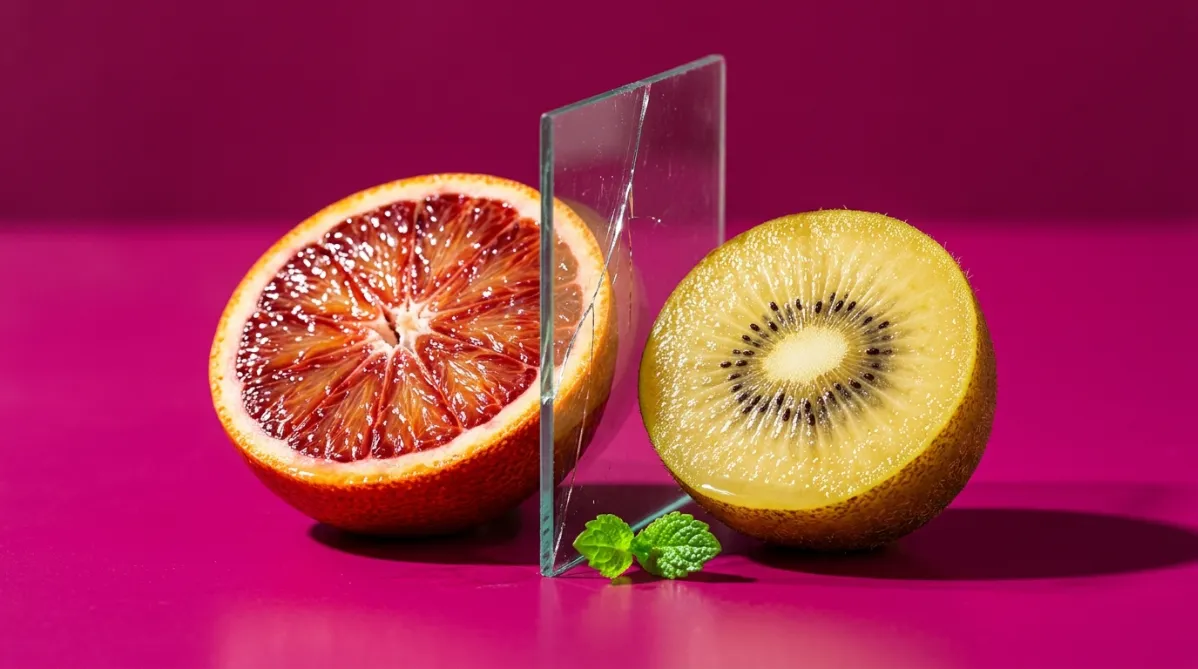
A single halved blood orange and a single halved yellow kiwi-style golden kiwi sit side by side on a saturated magenta seamless backdrop, shot from a low three-quarter angle with shallow depth of field. Between them, a thin, slightly cracked glass pane stands upright, partly dividing the two fruits to suggest "association, not cause." Glistening juice vesicles in the orange flesh catch crisp, directional studio light from the upper left, throwing a sharp, short shadow across the glossy magenta surface. A tiny electric green sprig of a fresh leaf rests at the base of the glass as the only green accent. Colors are juicy, vivid and contrasting: magenta, orange, gold. Mood is curious, clean and quietly skeptical, with a food-as-evidence feel. Photorealistic, tactile textures, no text or labels.
research

ビタミンC・Eの摂取がアルツハイマーリスクを約18%低減—注意すべきポイント

BY NOVA CHEN ·

オランダ・ロッテルダムで実施された大規模コホート研究(5,395人)では、ビタミンCとビタミンEの食事摂取量が標準偏差1σ増えるごとにアルツハイマーリスクが約18%低下することが示されました。特に喫煙者でベータカロテンやフラボノイドにも有意な傾向が見られましたが、観察研究であるため因果関係は証明できません。実データが示す意味と、これらの栄養素が豊富に含まれる食品・サプリメントの位置付けについて解説します。

This page is available in