Biocracked
←

#alzheimer disease

1 article
Approach: Conceptual metaphor, palette D (bold color field).

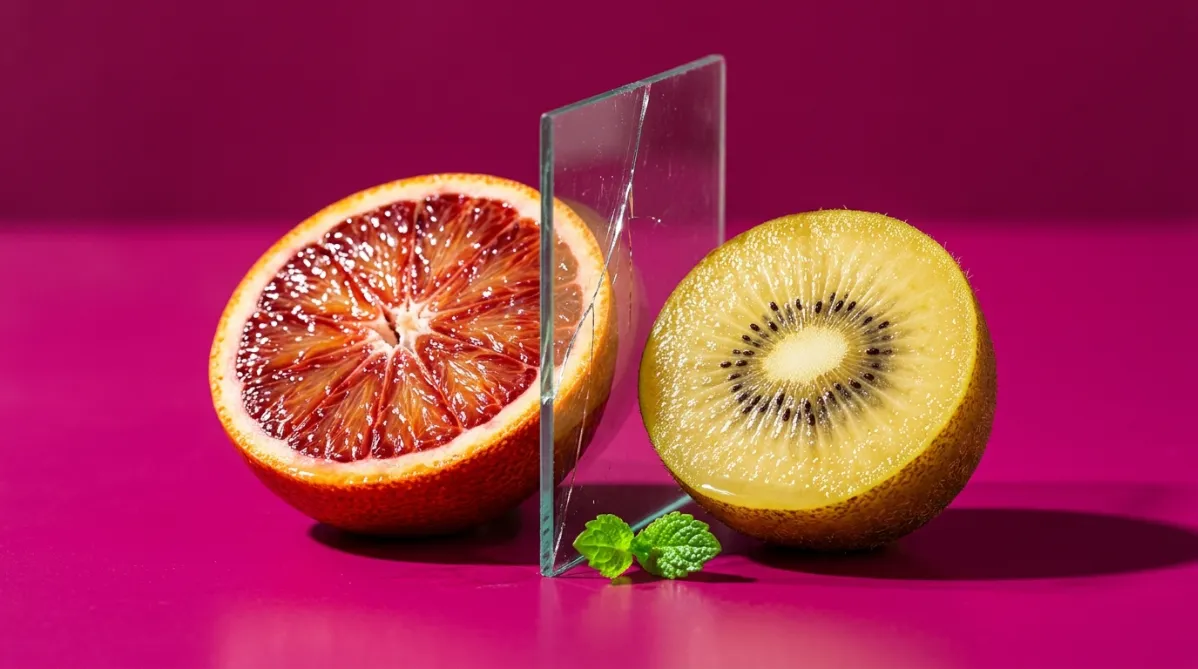
A single halved blood orange and a single halved yellow kiwi-style golden kiwi sit side by side on a saturated magenta seamless backdrop, shot from a low three-quarter angle with shallow depth of field. Between them, a thin, slightly cracked glass pane stands upright, partly dividing the two fruits to suggest "association, not cause." Glistening juice vesicles in the orange flesh catch crisp, directional studio light from the upper left, throwing a sharp, short shadow across the glossy magenta surface. A tiny electric green sprig of a fresh leaf rests at the base of the glass as the only green accent. Colors are juicy, vivid and contrasting: magenta, orange, gold. Mood is curious, clean and quietly skeptical, with a food-as-evidence feel. Photorealistic, tactile textures, no text or labels.
research

Vitamin C i E povezani su sa 18 % nižim rizikom od Alzheimerove bolesti – uz jednu zamku

BY NOVA CHEN ·

U Roterdamskoj studiji koja je obuhvatila 5 395 starijih osoba, veći unos vitamina C i vitamina E kroz ishranu bio je povezan otprilike sa 18 % manjim rizikom od Alzheimerove bolesti po svakoj standardnoj devijaciji. Najjači efekat je primećen kod pušača, gde su se istaknuli i β‑karoten i flavonoidi. Međutim, ovo je posmatračka studija ishrane, a ne pilula, pa pokazuje samo povezanost, a ne uzrok. Neki od istaknutih rezultata kod pušača imaju intervale poverenja koji prolaze kroz 1,0. Evo šta podaci zaista govore, koje namirnice daju ove nutrijente i gde suplementi imaju ili nemaju ulogu.

This page is available in