Biocracked
Approach: conceptual metaphor. Palette: D, bold color field.

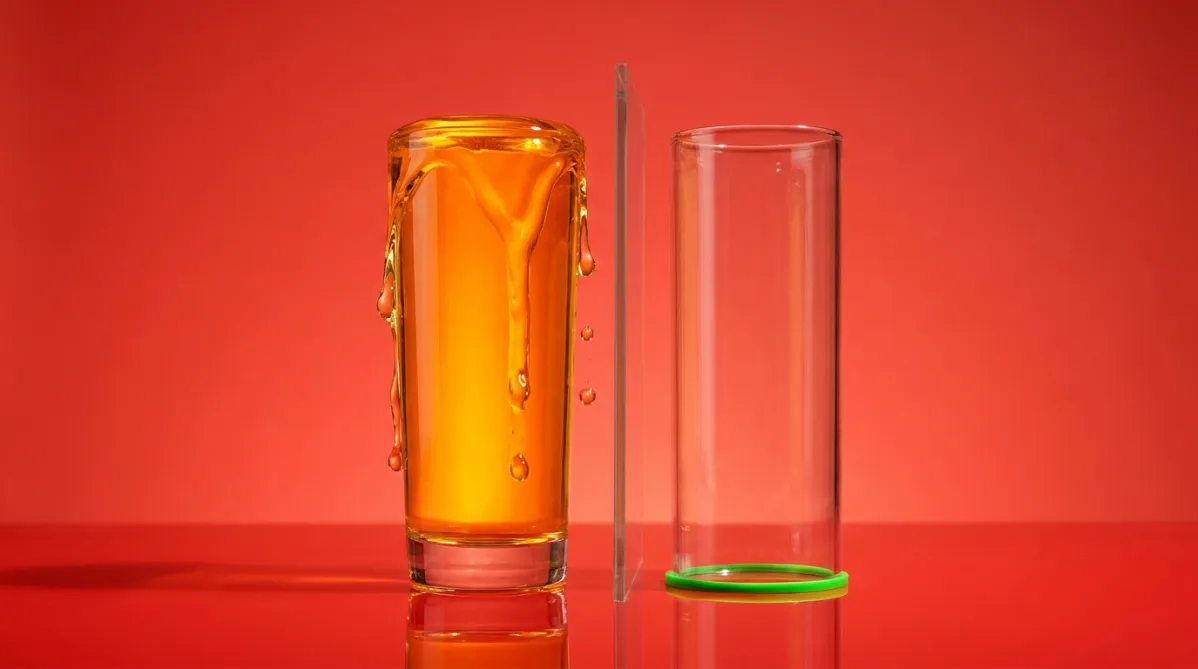
A tall glass of bright orange-gold liquid sits in the center of the frame, filled to the brim and overflowing down its sides, shot at a slight low angle. Beside it, a sealed, empty glass cylinder with a thin glass wall stays bone dry. A clear glass barrier stands between them, so the flow clearly never crosses. The backdrop is a saturated tomato-red seamless paper, with a glossy red surface reflecting both vessels. Hard, directional studio light from the upper left throws crisp, warm-neutral shadows and bright highlights along the glass rims and liquid droplets. One small electric green ring sits at the base of the empty cylinder as a subtle accent. Mood: tense, ironic, clean and editorial. Photorealistic, shallow depth of field, no text or labels.
Supplements

Your CoQ10 Reaches Your Blood, But Not Your Mitochondria

Nova Chen · · 5 min read

This is a human randomized trial, not an animal or cell study. In 40 older adults, 400 mg a day of coenzyme Q10 for 12 weeks pushed CoQ10 up in the bloodstream. It did not raise CoQ10 inside muscle tissue or the mitochondria that sit within it. That is the central finding of a new double-blind, placebo-controlled trial in GeroScience, and it should make anyone who buys CoQ10 as a mitochondrial booster pause.

The Study at a Glance

A team led by Malte Schmücker and Steen Larsen at the University of Copenhagen, with collaborators in Italy, Latvia and Poland, recruited 40 community-dwelling older adults with an average age of 74 ± 4 years. They were randomly assigned to 400 mg of oral CoQ10 daily or a placebo for 12 weeks. Neither participants nor researchers knew who got which.

The design is the kind longevity researchers rarely get. Muscle biopsies were taken before and after the intervention, so the team could look at the tissue where mitochondrial energy production matters for physical function. They also ran oral glucose tolerance tests and VO2max tests.

What They Measured

The researchers measured:

  • Mitochondrial respiratory capacity, in both isolated mitochondria and permeabilized muscle fibers
  • Mitochondrial H2O2 emission, a marker of oxidant production
  • Mitochondrial content
  • CoQ10 levels and redox status in plasma, muscle tissue and isolated muscle mitochondria
  • Glucose homeostasis, via the oral glucose tolerance test
  • VO2max, resting metabolic rate, cognitive function and body composition

This was a thorough attempt to test whether a popular supplement does what its marketing implies.

The Striking Result: Blood Up, Mitochondria Unchanged

Plasma CoQ10 rose significantly with supplementation, and the redox status (the balance between its oxidized and reduced forms) did not change. So the supplement was absorbed and entered circulation.

The next step is where the story stalls. The authors report no changes between groups or over time in muscle and isolated mitochondria for:

  • Mitochondrial respiratory capacity
  • H2O2 emission
  • Mitochondrial content
  • CoQ10 levels

Glucose homeostasis, VO2max and body composition were also unchanged. The abstract does not give effect sizes for these null results, so this article does not quote any.

The finding is a gap between plasma and tissue. A higher blood number is easy to produce and easy to sell, but it does not show that the molecule reached the place it is supposed to act.

Why This Matters for the Longevity Crowd

CoQ10 has an appealing story. It is part of the electron transport system that makes cellular energy, it works as an antioxidant, and the body's ability to make it may change with age. Supplementing therefore seems logical.

This trial challenges the last step of that logic, at least in this population. If the muscle mitochondria do not take up extra CoQ10 after three months at a fairly high dose, any downstream benefit through muscle mitochondrial function looks unlikely. In this group, none of the measured functional outcomes moved either.

Limitations and Fine Print

The authors describe their cohort as "robust older adults," and that qualifier matters.

  • Small sample. With 40 participants, a modest effect could be missed. The trial shows no detectable change, which is not the same as proof of no effect.
  • Healthy, robust participants. People with no deficiency may have little room to improve. The results may not apply to frail or ill people.
  • Short duration. Twelve weeks may not be long enough to see tissue changes or longer-term outcomes.
  • One dose. Only 400 mg/day was tested. Other doses, formulations or longer protocols were not.
  • One tissue. The study looked at skeletal muscle. It says nothing about CoQ10 uptake in the heart, brain or other organs.
  • Conflict of interest. Senior author S. Larsen discloses consulting for Pharma Nord, a supplement company. The other authors declare no conflicts, and the funders had no role in the study's design, analysis or publication. The disclosure is worth noting, particularly since the results were null rather than favorable to a supplement maker.

Who Might Still Benefit? (Not Tested Here)

This trial does not say CoQ10 is useless for everyone. Several groups are often discussed in connection with CoQ10, but none of them were studied in this trial:

  • Statin users. Statins affect the pathway that also produces CoQ10, which is why people ask about it. This trial did not test statin users or muscle symptoms.
  • People with a true CoQ10 deficiency. Participants here were robust, not deficient.
  • People with heart failure. This is a major area of CoQ10 research, but these participants did not have heart failure.

These are open questions, not endorsements. Do not read this study as either supporting or ruling out CoQ10 in those settings.

Practical Takeaways

Dose: The trial used 400 mg daily for 12 weeks. That raised blood levels but did not change the muscle measures. Taking more is not a proven fix.

Timing: The trial summary gives no evidence about the best time of day. CoQ10 is fat-soluble, so supplement labels commonly suggest taking it with a meal containing fat. That is general guidance, not a finding from this study.

Who it is for: Based on this study, healthy older adults hoping to improve mitochondrial function, VO2max or glucose control have little evidence here to justify it. Anyone considering it for a specific condition should talk to a clinician.

Who should skip it or ask first: People on blood thinners such as warfarin should check with their doctor, as CoQ10 has been reported to interact with anticoagulants. The same applies to anyone on multiple medications, people with a chronic condition, or those who are pregnant or nursing.

Keep in mind: A blood test showing higher CoQ10 after supplementing tells you the capsule was absorbed. It does not tell you your mitochondria are working better.

The Bottom Line

In a well-designed double-blind trial with muscle biopsies, 400 mg/day of CoQ10 for 12 weeks raised plasma CoQ10 in 40 healthy older adults. It left muscle and mitochondrial CoQ10, mitochondrial function, glucose homeostasis, VO2max and body composition unchanged. The study is small and short and covers a healthy population, so it cannot close the case on CoQ10 for every group. It does show that a higher blood level should not be mistaken for a mitochondrial benefit.
Original study

Read the original research on pubmed.ncbi.nlm.nih.gov →

This article summarizes published research for general information. It is not medical advice.

NC

Written by

Nova Chen

Nova Chen writes for Biocracked: biohacking science, longevity & human performance.

Related Articles

**Approach: Lab in action. Palette: D, bold color field (teal).**

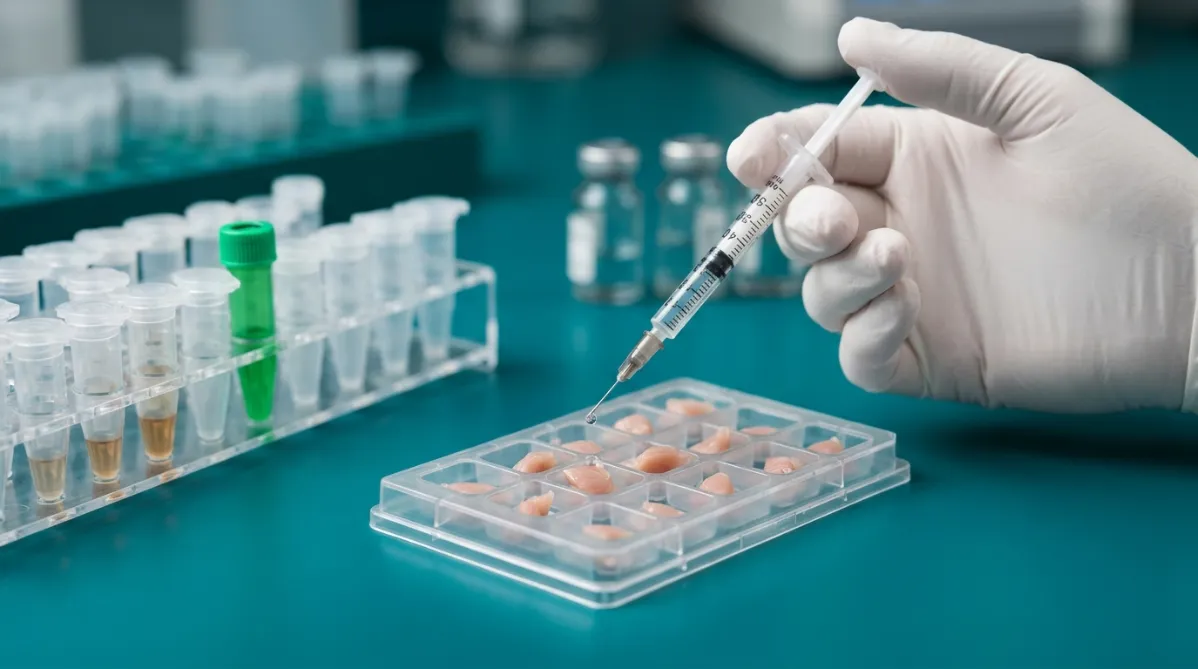
Overhead three-quarter angle on a gloved hand holding a small insulin-style syringe over a tray of mouse-muscle tissue samples. The nitrile glove is bright white, and the backdrop is a saturated teal lab bench surface with a soft sheen. Tiny clear microtubes sit in a rack, and a few contain a faint amber liquid. One thin electric green cap on a tube is the only green accent. The lighting is bright, even studio-like lab light with crisp, soft-edged shadows and a gentle highlight on the syringe barrel and a single hanging droplet at the needle tip. The depth of field is shallow, so the background tubes blur into teal. The mood is precise, focused and quietly hopeful, with no readable text or labels anywhere.
peptides

One Shot Made Old Mouse Muscle Mitochondria Act Young in 1 Hour

BY HELIX WARD ·

A single injection of SS-31 (elamipretide) restored muscle mitochondrial energy production in very old mice to young levels within one hour. That result comes from a 2013 mouse study, not from human trials. The peptide had no observable effect on young muscle, and eight days of treatment improved endurance in the old animals. In humans, elamipretide won FDA accelerated approval for Barth syndrome but missed its primary endpoints in the MMPOWER-3 mitochondrial myopathy trial. Here is what the study showed, where it falls short, and why grey-market versions are a bad idea.

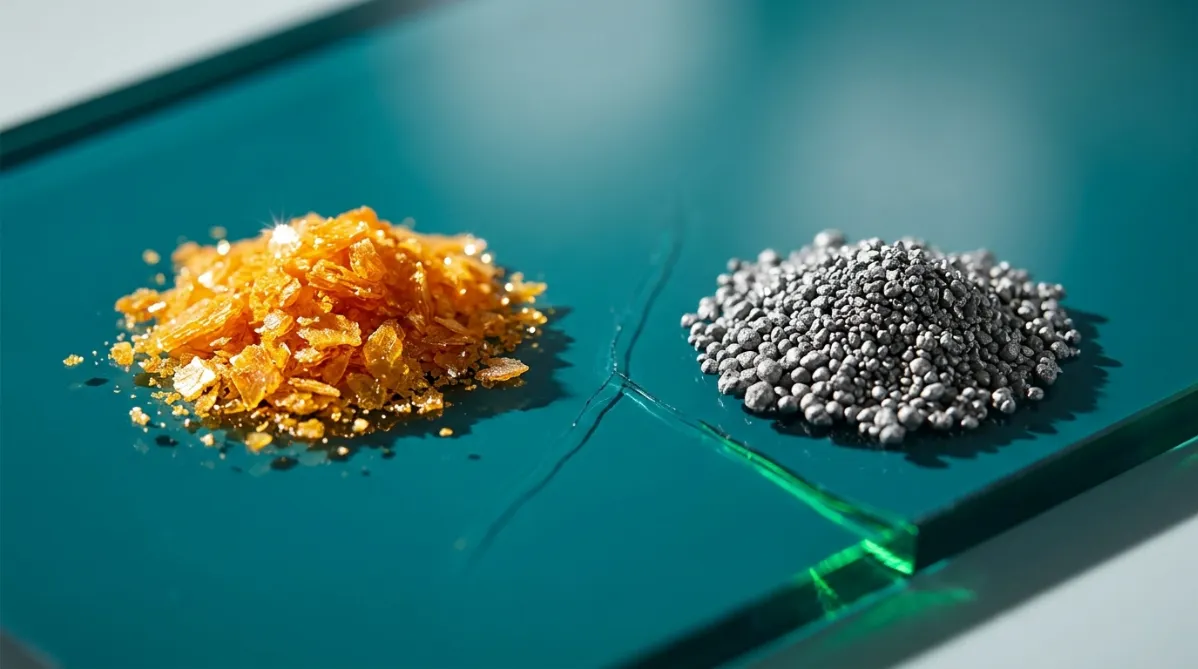
Macro photograph at a low 30-degree angle of two tiny mounds on a glossy, saturated teal acrylic surface. The left mound is orange-yellow CoQ10 crystalline powder with visible faceted flakes. The right mound is dull metallic grey selenium granules. A hairline crack runs across the acrylic between them, hinting at the catch. Hard, clean studio light from the upper left throws crisp, short shadows and sparkles on the crystal edges. The background falls softly out of focus, with a thin electric green reflection streaking across the glossy surface. The palette is bold color field: teal against orange, with silver-grey accents. The mood is precise, curious and cautionary, like a lab specimen photographed for a magazine. Photorealistic, shallow depth of field, no text.
longevity

Two Cheap Supplements Cut Heart Deaths by Half. There's a Catch.

BY NOVA CHEN ·

Two inexpensive supplements, CoQ10 and selenium, were linked to a drop in cardiovascular deaths from 12.6% to 5.9% in elderly Swedes. Heart-strain biomarkers and echocardiograms improved as well. But the trial enrolled just 443 people in a selenium-poor country, and it can't say which nutrient did the work. Here's what the KiSel-10 study actually showed, who it may apply to, and the safety limits to know before you try it.

A wide landscape editorial photograph of a minimalist laboratory-meets-wellness still life on a pale, warm-gray stone countertop, softly lit by diffused morning window light from the left. In the center foreground, a small amber glass supplement jar with a plain matte white label sits beside a scattering of fine white powder and a few loose white capsules on a ceramic dish. Next to it rests a clean, open notebook with faint hand-drawn line graphs, two diverging curves rising gently, one slightly higher than the other, drawn in muted sage-green and charcoal ink. A slim brass pen lies across the page.

In the soft-focus midground, a delicate glass beaker filled with clear liquid catches a thin streak of light, casting a gentle caustic shimmer across the stone. A sprig of dried eucalyptus and a small sliver of citrus peel add organic texture. Behind them, an out-of-focus wall of pale oat-colored tiles and a floating wooden shelf holds a few blurred ceramic vessels and a small potted fern.

The color palette is calm and editorial: warm creams, sage green, soft amber, muted terracotta accents, and touches of charcoal. Shallow depth of field with a crisp focus on the jar and notebook, creamy bokeh in the background. Subtle film-like grain, natural shadows, and generous negative space on the right third of the frame, suitable for headline overlay. The mood is thoughtful, measured, and trustworthy, like a contemporary science and wellness journal cover: modern, tactile, quietly optimistic, and grounded rather than hyped.
longevity

Calcium Alpha-Ketoglutarate Extended Female Mouse Lifespan by Up to 16.6%. Here's What That Does (and Doesn't) Mean for Humans

BY DR. SYNAPSE ·

A 2020 Cell Metabolism study found that feeding middle-aged mice a 2% calcium alpha-ketoglutarate diet extended female median lifespan by up to 16.6% and reduced frailty. The effect was smaller in the second cohort (10.5%), and male survival gains were not statistically significant. Researchers link the benefit to lower systemic inflammation and a proposed rise in IL-10. But this was a mouse-only study, and it does not establish that AKG extends human lifespan. Here is what the data show, how they differ from supplement marketing, and why CaAKG belongs on a research watchlist rather than in a proven protocol.

A serene editorial still life shot from a slightly elevated angle on a pale travertine surface, bathed in soft morning window light with gentle long shadows. At the center sits a small matte ceramic bowl in warm oatmeal tone, holding a fine mound of white crystalline powder, with a delicate wooden scoop resting beside it. A few grains are scattered naturally across the stone. To the left, a clear glass of water catches the light, throwing a subtle caustic shimmer onto the surface. To the right, a neatly arranged trio of translucent amber glass capsules and a single sprig of dried eucalyptus add organic texture.

In the softly blurred background, a sage-green linen cloth drapes across the frame, and a vintage brass hourglass stands upright, its sand halfway through. This is a subtle nod to aging and time. A small open notebook with faint, abstract hand-drawn line graphs trending gently downward, with no legible text, rests at the edge of the composition, with a slim pencil placed across it.

The palette is calm and modern: creamy ivory, warm sand, muted sage, soft terracotta, and touches of honey amber. The mood is quiet, thoughtful, and scientific without being clinical, like a contemporary wellness and science magazine cover. Shallow depth of field keeps the powder bowl crisp, with creamy bokeh behind it. Generous negative space on the right side of the wide 16:9 frame leaves room for headline overlay. Fine film-like grain, natural color grading, and minimalist composition give it a refined, trendy journal feel.
longevity

Taurine, the Cheap Amino Acid That Stretched Mouse Lifespans by Up to 12%, Falls With Age in Humans

BY DR. SYNAPSE ·

A 2023 Science study found that circulating taurine, a cheap and widely available amino acid, declines with age in mice, monkeys and humans. Supplementing middle-aged mice extended median lifespan by roughly 10-12% and improved healthspan in both rodents and monkeys. The compound appeared to curb cellular senescence, DNA damage, mitochondrial dysfunction and inflammaging. Human data remain observational, and the mouse doses scale to several grams a day, so the evidence is far from proof. Here is what the study showed, what doses people have discussed, and why researchers say trials are needed before anyone treats taurine as an anti-aging pill.

This page is available in