Biocracked
←

#animal study

1 article
Approach: macro science (with a conceptual split). Palette: D, bold color field.

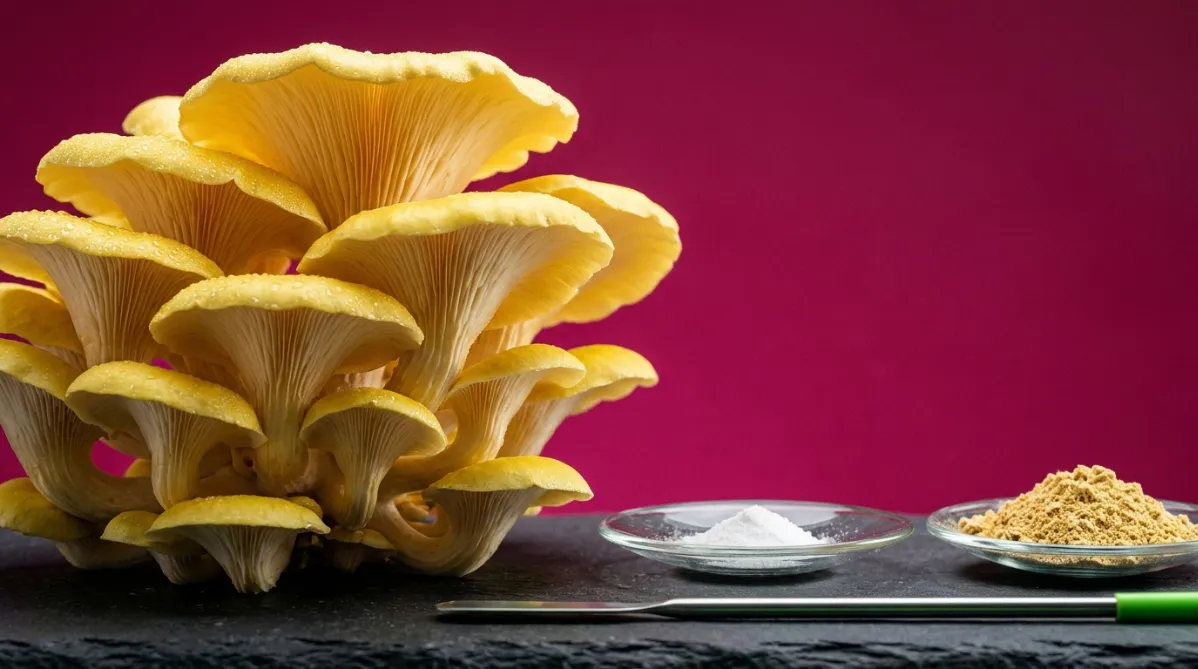
Extreme close-up photograph of a cluster of golden oyster mushrooms (Tamogitake), their ruffled, canary-yellow caps and fine gill structures sharply detailed, shot at a slight low three-quarter angle against a saturated magenta backdrop. In the foreground, a small glass watch dish holds a pinch of fine white crystalline powder, the isolated compound, sitting plain and inert beside a heap of fawn-yellow dried mushroom powder in a second dish. Soft directional studio light from the upper left gives the caps a translucent glow and creates crisp, short shadows. Tiny dew-like droplets cling to the gills. A single thin electric green stem of a lab spatula glints at the edge of the frame. Mood: curious, vivid, quietly skeptical, with the mushroom clearly outshining the isolate. No text or labels.
research

Loại nấm này giảm mỡ gan ở động vật—nhưng hợp chất chủ đạo của nó thì không

BY NOVA CHEN ·

Ergothioneine là hợp chất thường được ca ngợi vì lợi ích sức khỏe của nấm, nhưng một nghiên cứu mới trên chuột khiến câu chuyện này trở nên phức tạp hơn. Chuột và thỏ béo ăn bột nấm sò vàng (Tamogitake) có mức cholesterol và triglyceride trong gan thấp hơn, trong khi những con chỉ được cho ergothioneine tinh khiết thì không. Nấm còn có xu hướng tăng việc đào thải cholesterol và axit béo tự do qua phân, trong khi chất cô lập không có tác dụng. Các tác giả kết luận rằng hiệu quả không thể chỉ do ergothioneine một mình.

This page is available in