Biocracked
←

#insulin sensitivity

2 articles
Approach: Macro science. Palette: D, bold color field.

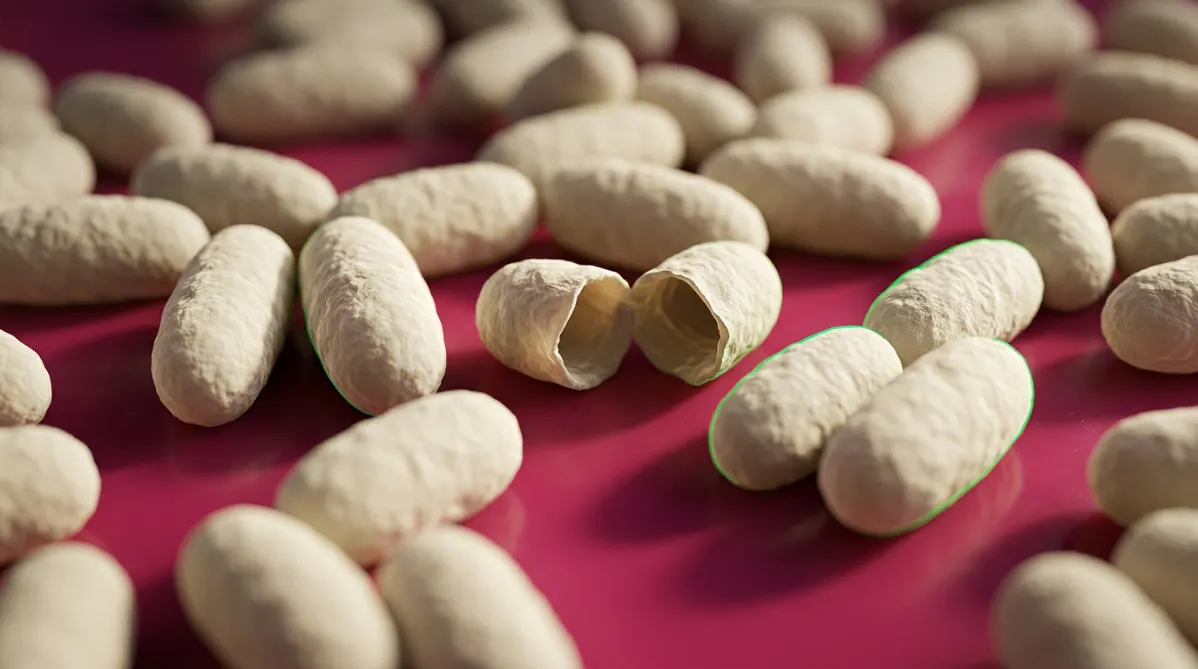
Extreme close-up microscopy-style photograph of a dense cluster of oval, rod-shaped bacterial cells, rendered as slightly wrinkled, matte, pale cream-white forms with visible surface texture. They rest on a smooth, saturated magenta-pink gel surface. Several cells in the foreground are crisp, while the rest fall into soft shallow depth of field. One cell near the center is split open and visibly hollow, to suggest a dead, heat-treated organism. Camera is a low three-quarter angle, as if through a scanning microscope. Lighting is a single hard, warm-white side light that casts short crisp shadows and creates bright rim highlights. A thin electric green (#00e676) line of reflected light traces the edge of one cell. The mood is stark, curious and quietly skeptical. There is no text and no labels.
metabolism

Il Batterio Intestinale Che Funziona Meglio Se È Morto: Il Vantaggio del 29 % di Akkermansia

BY HELIX WARD ·

Nel primo studio clinico con Akkermansia muciniphila, è la versione pastorizzata (termicamente inattivata) a produrre i risultati più marcati. La sensibilità all’insulina è aumentata del 28,62 % e l’insulina a digiuno è diminuita del 34,08 % rispetto al placebo in adulti sovrappeso e insulino‑resistenti. I cambiamenti di peso e di massa grassa, tanto ricercati, non hanno raggiunto la significatività statistica; inoltre, diversi autori detengono brevetti e hanno co‑fondato un’azienda che commercializza il batterio. Scopri cosa ha rivelato lo studio, cosa non può dirti e cosa verificare prima di acquistare un integratore.
A softly lit editorial still life on a pale oat-colored linen surface, shot from a slightly elevated three-quarter angle in a wide landscape frame. At center-left, a small matte white ceramic dish holds a modest pile of fine off-white powder, with a tiny brushed-brass measuring spoon resting beside it. Next to the dish stands a minimalist amber glass supplement bottle with a plain cream label and no readable text. A few capsules spill casually across the linen, some translucent and some opaque ivory.

On the right side of the composition, a ripe blood orange cut in half and a handful of raw almonds sit on a light ash-wood board. A sprig of fresh rosemary adds a muted green accent. A sheer glass of water catches the light and throws a soft, rippled caustic pattern across the fabric.

In the background, out of focus, a woman's hand in a soft sage-green knit sleeve rests near a ceramic mug. This suggests a calm morning routine without showing a face. Behind her, a tall window casts diffused, golden-hour light from the upper left, with gentle shadows and a creamy, shallow depth of field.

The palette is warm and restrained: oat, ivory, terracotta, sage, and amber, with a single pop of coral from the blood orange. A thin, abstract line of muted terracotta paint, like a brushed arc, sweeps across the upper right background. It subtly evokes a rising curve without becoming a literal chart.

The mood is calm, trustworthy, and contemporary, like a premium wellness and science journal feature. The image has crisp focus on the powder and bottle, natural film-like grain, soft contrast, and generous negative space in the upper third for headline overlay. It looks like a high-end editorial photograph with no text, logos, or futuristic elements.
metabolism

Il primo risultato clinico umano del NMN: 250 mg al giorno migliorano la sensibilità all'insulina muscolare di circa il 25 % nelle donne prediabetiche

BY DR. SYNAPSE ·

Il NMN è stato a lungo il prodotto di punta del mercato della longevità, ma le evidenze sull’uomo erano scarse fino al trial del 2021 della Washington University pubblicato su *Science*. In donne in postmenopausa con prediabete, sovrappeso o obese, 250 mg al giorno per 10 settimane hanno migliorato la sensibilità all’insulina muscolare di circa il 25 %. Anche il segnale insulinico e i geni legati al rimodellamento muscolare sono aumentati, mentre il gruppo placebo non ha mostrato variazioni. Tuttavia il beneficio è stato limitato: lo studio non ha dimostrato una riduzione della glicemia né una reversibilità del prediabete.

This page is available in