Biocracked
←

#glp-1

2 articles
Approach: Macro science. Palette: B, warm.

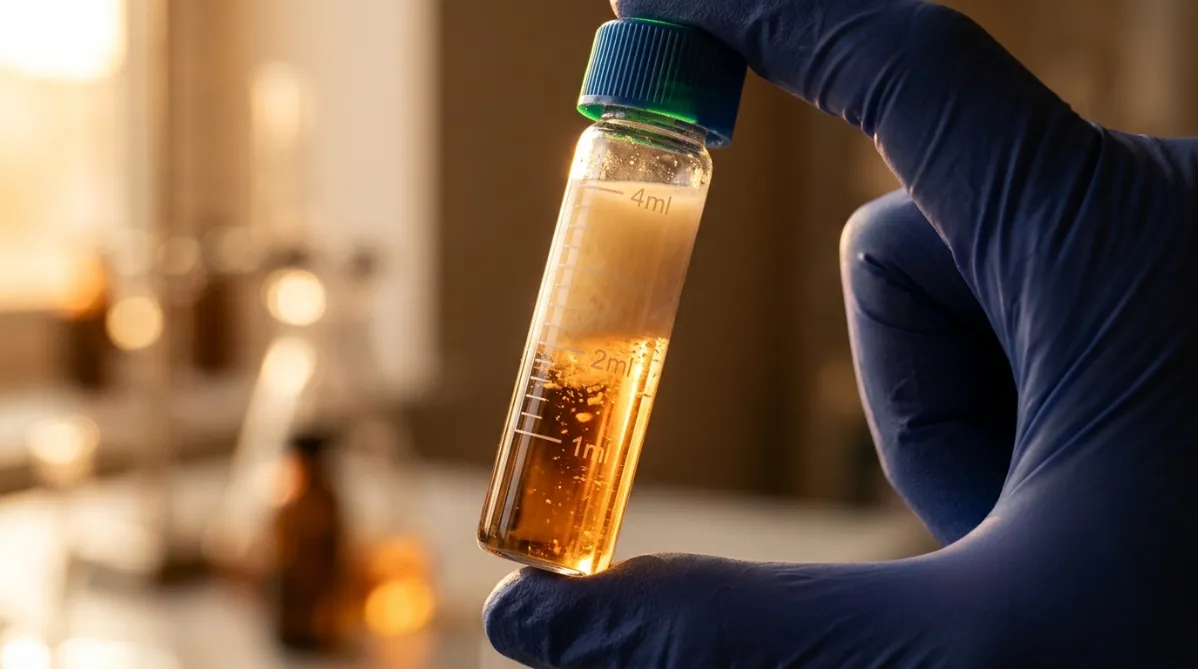
Extreme macro photograph of a clear glass vial of blood plasma held in a gloved hand, shot at a slight low angle so the camera looks up through the tube. The plasma is cloudy and creamy at the top, where large fat-rich particles gather, and it clears to translucent golden amber toward the bottom, showing the drop in triglyceride particles. Tiny suspended droplets catch the light as bright specks. Warm honey-colored backlight from a low window-like source glows through the liquid and casts copper highlights across the glass. The background is a soft blur of warm brown and amber, with a faint electric green reflection on the rim of the vial cap. The mood is calm, precise and cautious, with a shallow depth of field and a real clinical texture on the glass. No text or labels.
metabolism

Retatrutide reduce en un 84 % las partículas grandes de triglicéridos — pero lee esto primero

BY DR. SYNAPSE ·

Retatrutide se conoce sobre todo por su potente efecto en la pérdida de peso. Sin embargo, un nuevo análisis post‑hoc de dos ensayos fase 2 muestra que, en adultos con diabetes tipo 2, las partículas grandes ricas en triglicéridos disminuyeron hasta un 84,4 %, mientras que la ApoB cayó entre un 21 % y un 24 %. En el estudio sin diabetes, la hsCRP bajó un 54,8 % y la IL‑6 un 29,6 %, aunque estos cambios no fueron significativos en el ensayo con diabetes. El resumen no menciona resultados de Lp(a) ni desglose por dosis. Se trata de un fármaco de receta aún no aprobado, no de un suplemento, y los datos se refieren a biomarcadores, no a evidencia de menos infartos.
Approach: Macro science. Palette: D, bold color field.

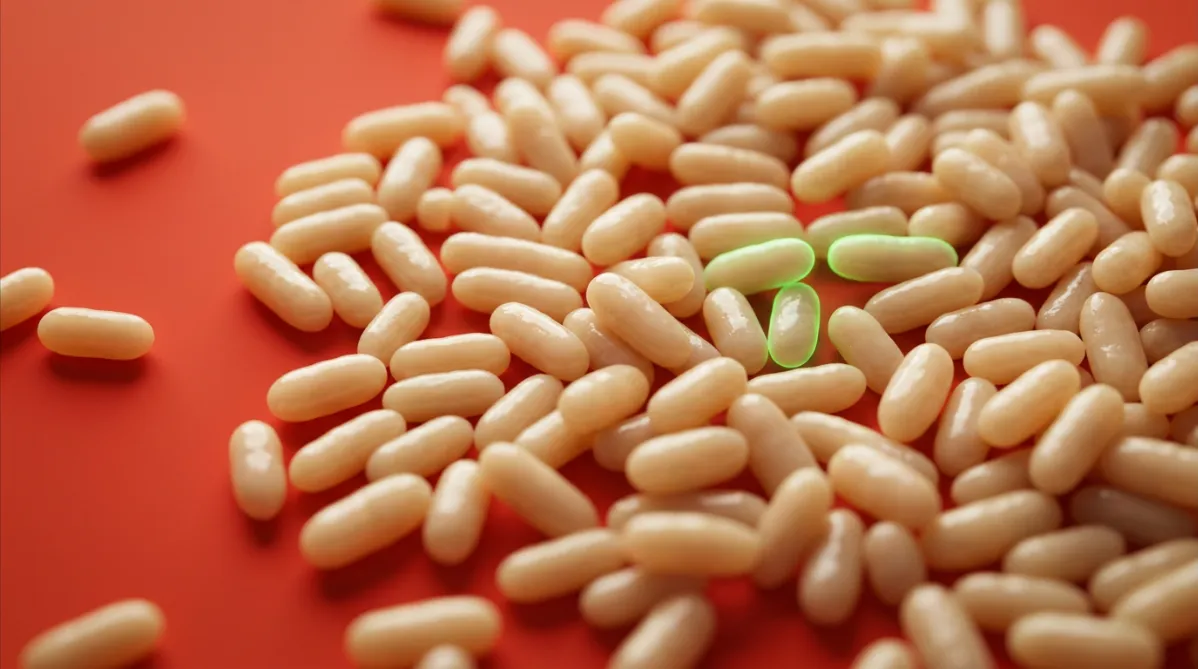
Extreme close-up microscopy-style image of a dense cluster of oval, rod-shaped bacteria with a slightly mucous, glossy membrane texture, shot from a shallow top-down angle with a razor-thin focal plane. Most of the colony sits in the sharp center, softening into creamy blur at the edges. The cells are warm ivory with subtle translucent depth, resting on a saturated tomato-red backdrop. A scattering of sparser, isolated cells on one side suggests "low baseline" and hints at the subgroup story. One or two cells carry a faint electric green (#00e676) fluorescent rim glow. Lighting is soft, directional studio light with gentle specular highlights on the cell walls and clean shadows in warm red tones. Mood: curious, precise, quietly skeptical, with a vivid but grounded look. No text and no blue cast.
supplements

Akkermansia falló en su objetivo principal, salvo en personas con escasez de ella

BY NOVA CHEN ·

Una bacteria intestinal pasteurizada, frecuentemente anunciada como un “potenciador natural de GLP‑1”, acaba de someterse a un ensayo clínico doble ciego con 142 participantes y no alcanzó su objetivo primario de mejorar la sensibilidad a la insulina. Sin embargo, los análisis exploratorios mostraron un aumento del GLP‑1 tras la carga glucémica y que los sujetos con bajos niveles basales de Akkermansia presentaron mejor sensibilidad a la insulina y menos grasa troncal. Estos hallazgos de subgrupos generan hipótesis, están justo en el umbral de significación y provienen de un estudio con fuerte participación industrial. Aquí se describe lo que los datos revelan, lo que no demuestran y a quién podrían interesar.

This page is available in