Biocracked
←

#glp-1

2 articles
Approach: Macro science. Palette: B, warm.

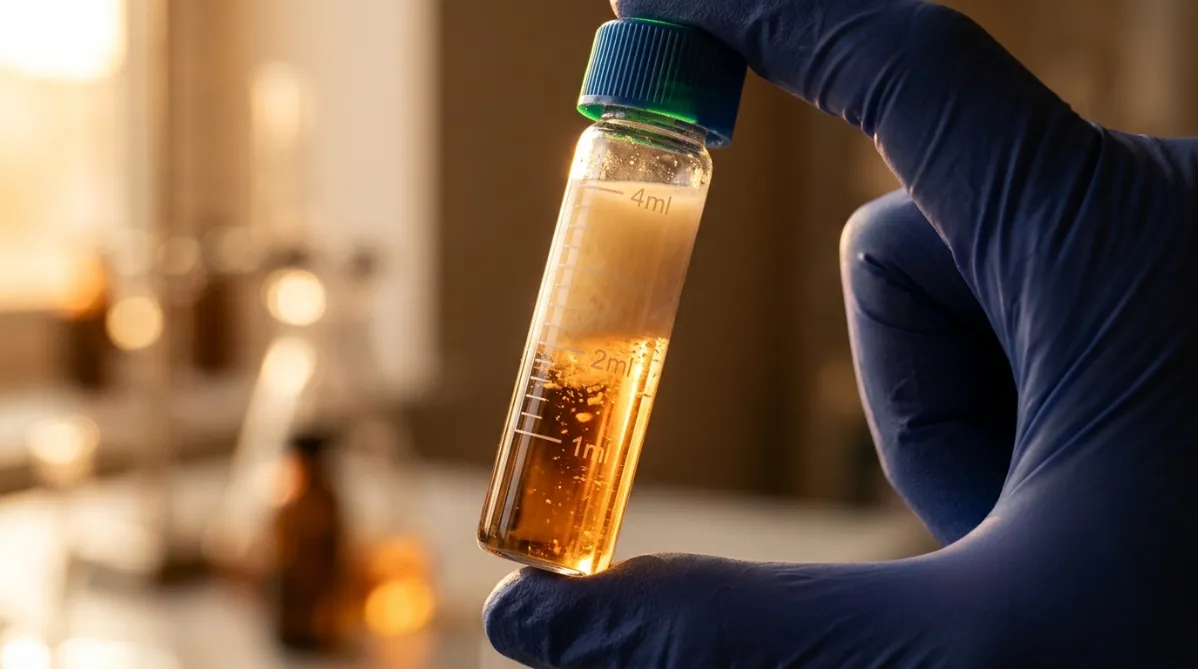
Extreme macro photograph of a clear glass vial of blood plasma held in a gloved hand, shot at a slight low angle so the camera looks up through the tube. The plasma is cloudy and creamy at the top, where large fat-rich particles gather, and it clears to translucent golden amber toward the bottom, showing the drop in triglyceride particles. Tiny suspended droplets catch the light as bright specks. Warm honey-colored backlight from a low window-like source glows through the liquid and casts copper highlights across the glass. The background is a soft blur of warm brown and amber, with a faint electric green reflection on the rim of the vial cap. The mood is calm, precise and cautious, with a shallow depth of field and a real clinical texture on the glass. No text or labels.
metabolism

Retatrutide riduce dell'84 % le grandi particelle di trigliceridi — ma leggilo prima

BY DR. SYNAPSE ·

Il retatrutide è noto soprattutto per la sua capacità di favorire la perdita di peso, ma una recente analisi post‑hoc di due studi di fase 2 ha valutato gli effetti sul sangue. Le grandi particelle lipoproteiche ricche di trigliceridi sono diminuite fino all'84,4 % negli adulti con diabete di tipo 2, mentre l'ApoB è scesa di circa il 21‑24 %. Nei soggetti senza diabete, l'hsCRP è calata del 54,8 % e l'IL‑6 del 29,6 %, sebbene questi cambiamenti non fossero significativi nello studio sul diabete. L'abstract non riporta dati su Lp(a) né suddivisioni per dose. Si tratta di un farmaco investigativo da prescrizione, non di un integratore; i risultati riguardano biomarcatori, non la riduzione di eventi infartali.
Approach: Macro science. Palette: D, bold color field.

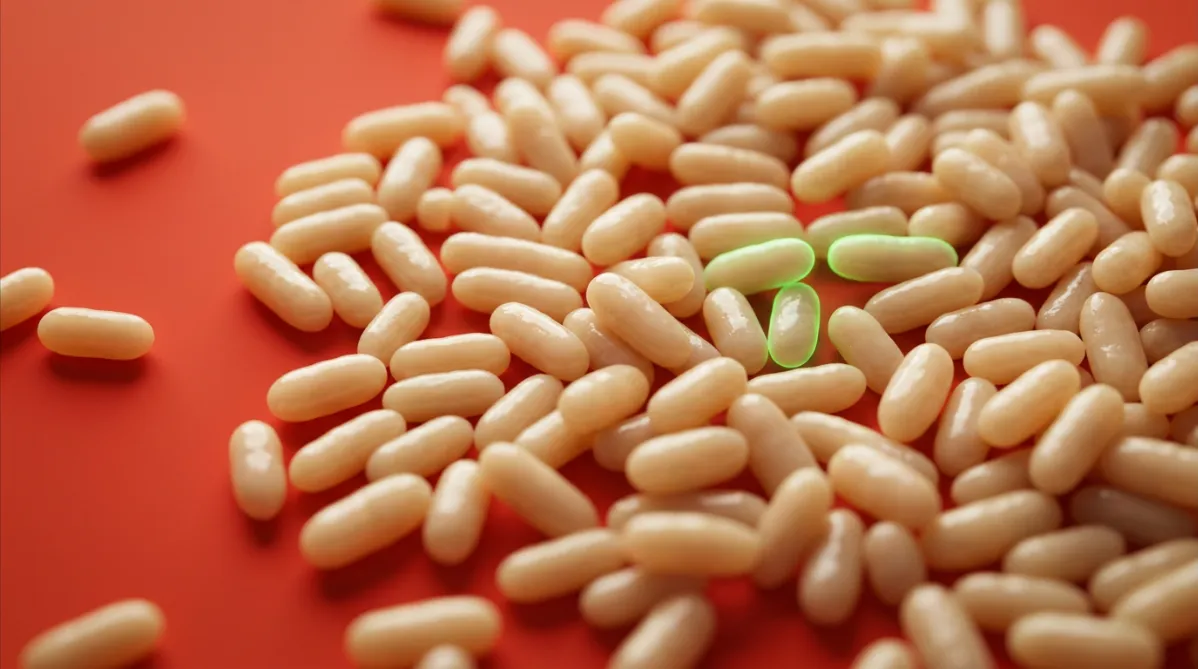
Extreme close-up microscopy-style image of a dense cluster of oval, rod-shaped bacteria with a slightly mucous, glossy membrane texture, shot from a shallow top-down angle with a razor-thin focal plane. Most of the colony sits in the sharp center, softening into creamy blur at the edges. The cells are warm ivory with subtle translucent depth, resting on a saturated tomato-red backdrop. A scattering of sparser, isolated cells on one side suggests "low baseline" and hints at the subgroup story. One or two cells carry a faint electric green (#00e676) fluorescent rim glow. Lighting is soft, directional studio light with gentle specular highlights on the cell walls and clean shadows in warm red tones. Mood: curious, precise, quietly skeptical, with a vivid but grounded look. No text and no blue cast.
supplements

Akkermansia non ha raggiunto il suo obiettivo principale — eccetto nelle persone carenti

BY NOVA CHEN ·

Un batterio intestinale pastorizzato, spesso pubblicizzato come “potenziatore naturale di GLP‑1”, ha appena superato il più grande studio clinico su di esso, ma non è riuscito a raggiungere l’obiettivo primario di migliorare la sensibilità all’insulina. Le analisi esplorative, tuttavia, hanno mostrato un aumento del GLP‑1 post‑glucosio e un miglioramento della sensibilità insulinica nei soggetti con bassi livelli basali di Akkermansia. Questi risultati di sottogruppo generano nuove ipotesi, sono al limite della significatività e provengono da uno studio con forte coinvolgimento industriale. Scopri cosa dimostrano davvero i dati, cosa non dimostrano e a chi potrebbero interessare.

This page is available in