Biocracked
←

#glp-1

2 articles
Approach: Macro science. Palette: B, warm.

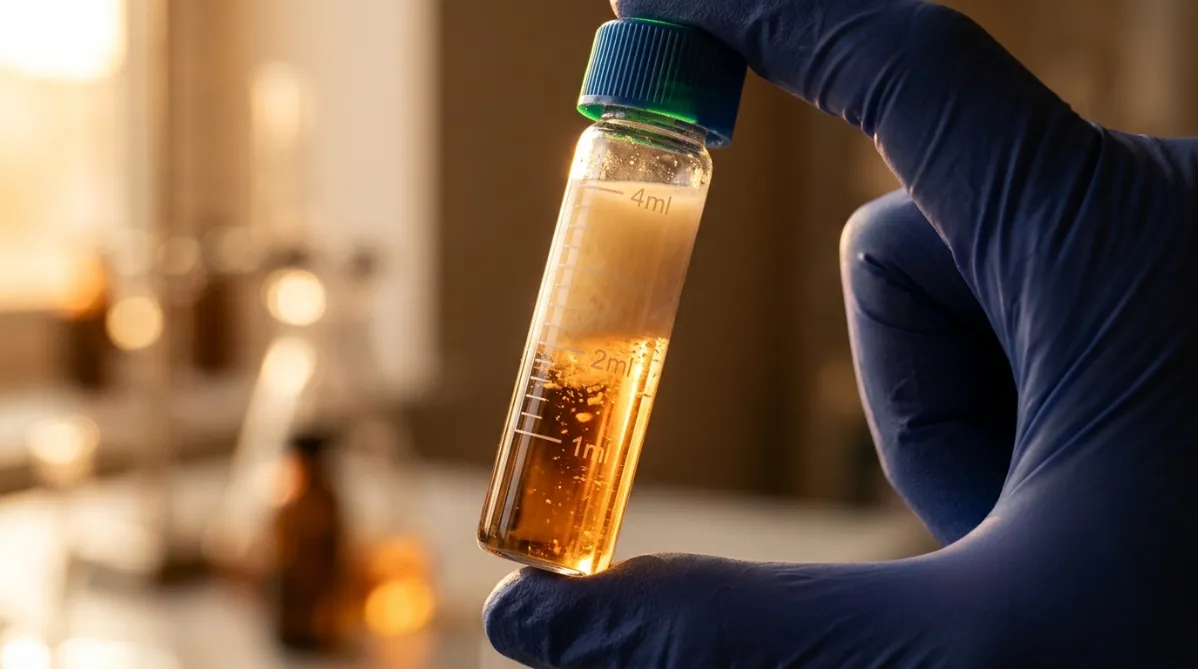
Extreme macro photograph of a clear glass vial of blood plasma held in a gloved hand, shot at a slight low angle so the camera looks up through the tube. The plasma is cloudy and creamy at the top, where large fat-rich particles gather, and it clears to translucent golden amber toward the bottom, showing the drop in triglyceride particles. Tiny suspended droplets catch the light as bright specks. Warm honey-colored backlight from a low window-like source glows through the liquid and casts copper highlights across the glass. The background is a soft blur of warm brown and amber, with a faint electric green reflection on the rim of the vial cap. The mood is calm, precise and cautious, with a shallow depth of field and a real clinical texture on the glass. No text or labels.
metabolism

Retatrutide reduziert große Triglyceridpartikel um 84 % – aber zuerst lesen

BY DR. SYNAPSE ·

Retatrutide ist vor allem für seine Gewichtsverlust‑Effekte bekannt, doch eine neue Post‑hoc‑Analyse von zwei Phase‑2‑Studien untersucht, wie das Medikament das Blut beeinflusst. Große, triglyzerid‑reiche Lipoprotein‑Partikel fielen bei Erwachsenen mit Typ‑2‑Diabetes um bis zu 84,4 % und ApoB sank um etwa 21–24 %. In der Studie ohne Diabetes sank hsCRP um 54,8 % und IL‑6 um 29,6 %, während diese Änderungen in der Diabetes‑Studie nicht signifikant waren. Der Abstract enthält weder Lp(a)-Ergebnisse noch eine Dosis‑auf‑Dosis‑Aufschlüsselung. Dabei handelt es sich um ein nicht zugelassenes Arzneimittel, nicht um ein Nahrungsergänzungsmittel – es geht um Biomarker, nicht um Evidenz für weniger Herzinfarkte.
Approach: Macro science. Palette: D, bold color field.

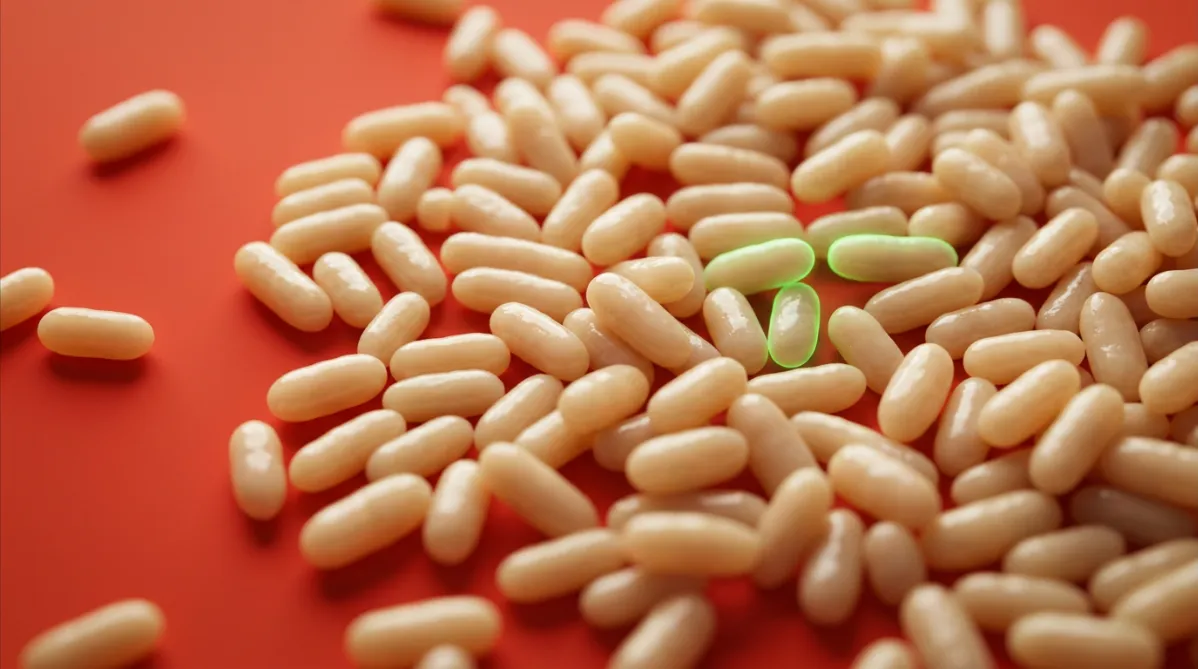
Extreme close-up microscopy-style image of a dense cluster of oval, rod-shaped bacteria with a slightly mucous, glossy membrane texture, shot from a shallow top-down angle with a razor-thin focal plane. Most of the colony sits in the sharp center, softening into creamy blur at the edges. The cells are warm ivory with subtle translucent depth, resting on a saturated tomato-red backdrop. A scattering of sparser, isolated cells on one side suggests "low baseline" and hints at the subgroup story. One or two cells carry a faint electric green (#00e676) fluorescent rim glow. Lighting is soft, directional studio light with gentle specular highlights on the cell walls and clean shadows in warm red tones. Mood: curious, precise, quietly skeptical, with a vivid but grounded look. No text and no blue cast.
supplements

Akkermansia verfehlte ihr Hauptziel – außer bei Menschen, bei denen es fehlt

BY NOVA CHEN ·

Ein pasteurisiertes Darmbakterium, das oft als „natürlicher GLP‑1‑Booster“ angepriesen wird, hat gerade eine 142‑köpfige, doppelblinde Studie hinter sich – und das primäre Ziel, die Insulinsensitivität zu verbessern, verfehlt. Explorative Analysen zeigen jedoch einen Anstieg von GLP‑1 nach einer Glukosebelastung, und Personen mit niedrigen Anfangswerten von Akkermansia profitieren von besserer Insulinsensitivität und weniger Bauchfett. Diese Untergruppenergebnisse sind hypothesis‑generierend, liegen nahe an der Signifikanzschwelle und stammen aus einer stark industriegeprägten Studie. Im Folgenden wird dargestellt, was die Daten zeigen, was sie nicht zeigen und für wen sie relevant sein könnten.

This page is available in