Biocracked
Approach: Macro science. Palette: D, bold color field.

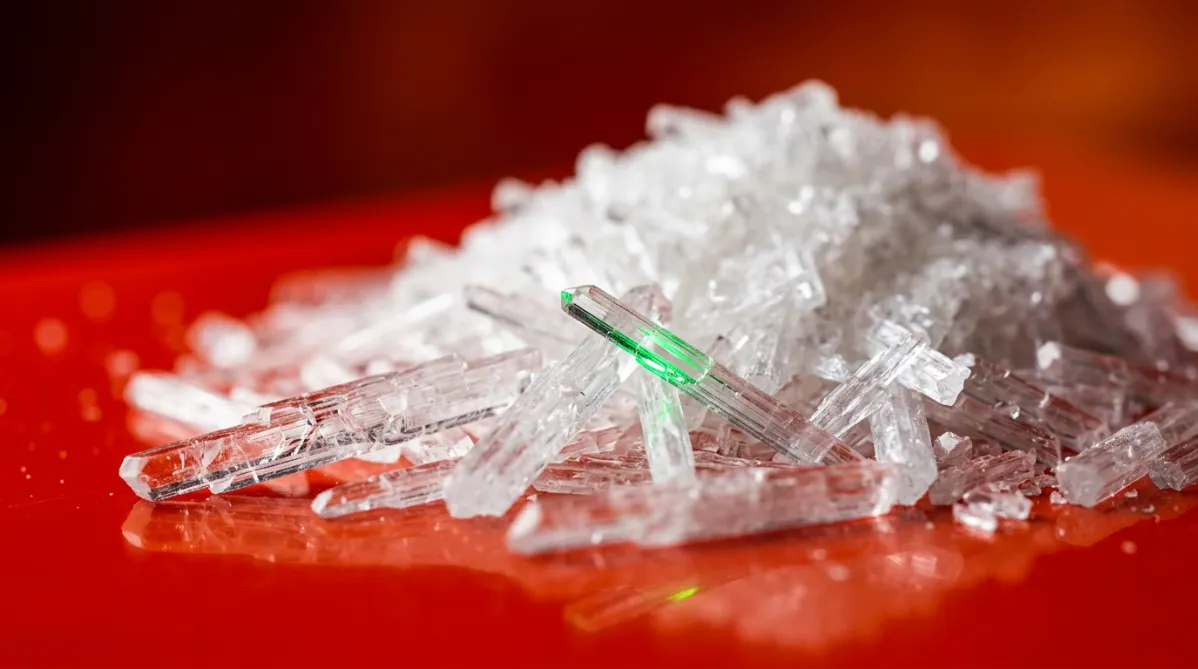
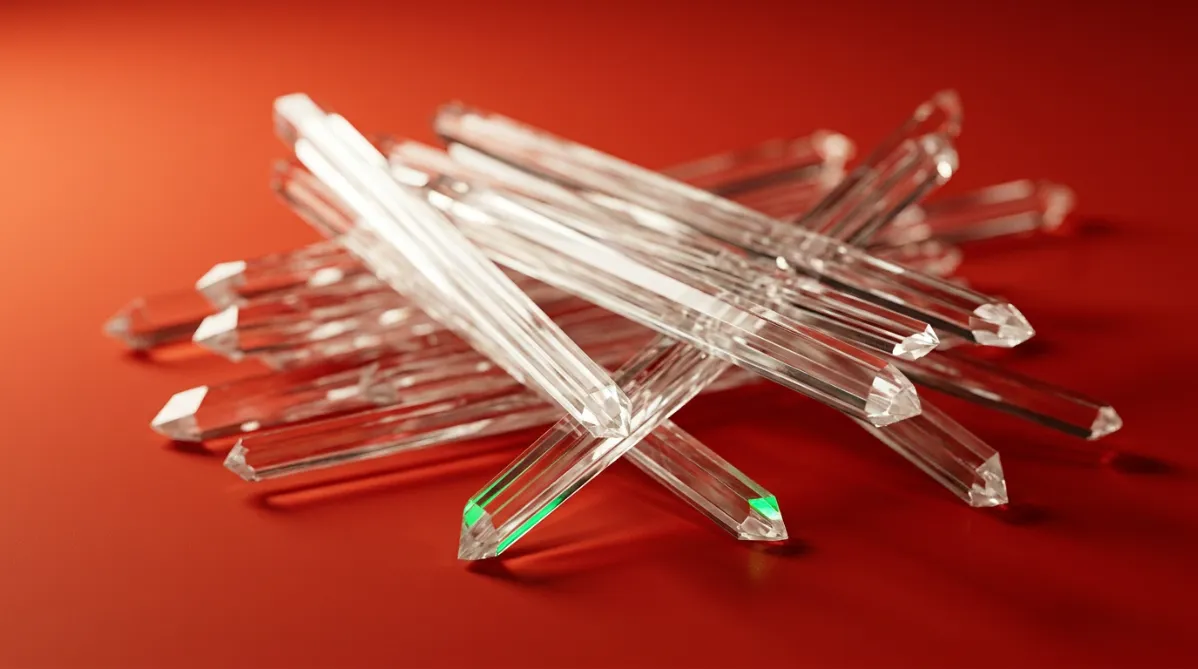
Extreme close-up photograph of taurine crystals, long translucent needle-like prisms with sharp faceted edges, bundled and crossing in a loose cluster. They rest on a saturated tomato-red matte acrylic surface. The camera is a low three-quarter angle with a shallow depth of field, so the front crystals are razor sharp and the back ones melt into soft red blur. A hard, warm key light from the upper left makes the facets glint white and throws crisp, thin red-tinted shadows. A single crystal tip in the foreground catches a tiny edge of electric green (#00e676) light refracted through the glass-like prism. The mood is bold, tense and curious, which suits a paradox in the findings. The image has no text, no labels, and no blue cast.
Longevity

Taurine Rises With Age. So Why Did More Protect Old Mice?

Nova Chen · · 5 min read

The amino acid on the back of your energy drink can, taurine, has a new twist in the longevity story. A study in Cell from Vishwa Deep Dixit's lab at Yale reports that taurine goes up in the blood as humans and mice age, not down. Pushing it higher in aged mice still improved health span and cut deaths from sepsis. That cuts against a popular narrative, and it points to a specific immune switch.

The plot twist: blood taurine rises with age

In 2023, a high-profile Science paper (Singh et al.) argued that taurine deficiency drives aging. Supplementing taurine in mice extended healthy lifespan, and the idea spread quickly through the longevity world.

The new Cell paper, published online October 23, 2026, adds nuance. The authors report that aging increases circulating taurine in humans and mice. They describe this as an apparent compensatory response, which they call "enantiostatic": the body shifts a variable to preserve function as conditions change. In this view, rising taurine is the body defending itself, not a sign of failure.

The authors say whether a taurine decline drives aging "is debated." This study doesn't settle it, but it complicates the simple "low taurine equals old" story.

What happened when they added even more

The team raised taurine further in aged mice. According to the abstract, this:

  • Enhanced health span in the aged animals
  • Engaged anti-inflammatory pathways previously linked to youthfulness
  • Reduced mortality from sepsis and from inflammasome-mediated inflammation

The target is "inflammaging," the chronic, low-grade inflammation that builds with age and is tied to many age-related diseases.

The mechanism: a taurine leak that arms the NLRP3 inflammasome

The cell-level finding explains why this amino acid matters. Macrophages are immune cells that sense danger. The NLRP3 inflammasome is a molecular alarm complex inside them. When it fires, it drives inflammation and a fiery form of cell death called pyroptosis.

The authors report the following:

  1. Diverse NLRP3-specific "danger signals" make macrophages dump taurine. This efflux is described as a proximal step in activating the inflammasome and the resulting pyroptosis.
  2. Restoring taurine inside macrophages prevents NLRP3-induced disassembly of the trans-Golgi network, an organelle event tied to NLRP3 activation. That suppresses the inflammasome.
  3. The reverse also holds. Lowering taurine biosynthesis while also reducing taurine bioavailability in macrophages made inflammasome activation worse.

The authors call taurine an "immunometabolic rheostat" linking danger sensing to NLRP3 activation. Cells hold taurine at high millimolar concentrations, and this suggests part of its job is to keep that alarm from tripping too easily.

The human angle: calorie restriction

The human data are limited and observational. In people, sustained caloric restriction elevated adipose tissue taurine and was accompanied by lower inflammation. This is an association. It doesn't show that taurine caused the anti-inflammatory effect. It does fit the idea that taurine tracks with a lower-inflammation metabolic state.

Study design: what we can and can't say

I only had access to the abstract and database record, not the full paper. Here is what is established:

  • Design: Mixed. It combines mouse experiments (aged mice, sepsis and inflammasome models), macrophage cell work, and human observational data on circulating taurine with age and adipose taurine during calorie restriction.
  • Where it was done: Yale School of Medicine, with collaborators at Pennington Biomedical, Mayo Clinic, St. Jude, UC San Diego, AdventHealth, Kyoto University and Keio University.
  • Funding conflicts: The authors declare no competing interests.
  • Sample sizes, doses and durations: These are not given in the abstract, so I won't guess. Check the full text for animal numbers, taurine dosing and treatment length before drawing conclusions.

The paper did not test a human supplement dose, as far as the abstract shows.

What this means for you

Don't act on this paper alone. It is largely mouse and cell research. Here is what other work tells us about human taurine use.

Doses used in other human trials

  • Clinical trials of oral taurine for outcomes like blood pressure, blood sugar and cardiac function have generally used about 1 to 6 grams per day, often split into two or three doses and given for weeks to months.
  • The European Food Safety Authority has said that up to about 3 g/day from supplements is of no safety concern in the general adult population, and some trials have gone higher with good tolerance.
  • A typical energy drink has roughly 1,000 mg of taurine per serving, but also caffeine and sugar. Drinking energy drinks is not a sensible way to get a taurine supplement.
  • Most of these trials were short, so long-term safety and anti-aging benefit in humans are unproven.

Timing

There is no evidence-based optimal timing for anti-inflammatory purposes. Trials commonly split doses with meals, which may help tolerability. Treat this as practical convention, not proven science.

Who might consider it

  • Adults curious about low-risk, well-studied amino acid supplementation who are willing to discuss it with a clinician first.
  • People with a specific reason to ask, such as cardiometabolic concerns, since that is where most human trial data sit.

Who should skip it, or ask a doctor first

  • People who are pregnant or breastfeeding
  • Anyone with kidney disease or on medications affecting blood pressure or blood sugar
  • Anyone hoping to replace proven anti-inflammatory habits such as exercise, sleep, weight management or moderate calorie intake
  • Anyone who takes high doses of energy drinks for the taurine

The caveats that matter

  • Mouse is not human. Mouse lifespan and sepsis results often fail to translate.
  • Rising taurine with age is a puzzle. If blood levels are already high in older people, it's unclear whether supplementing helps, does nothing, or whether tissue taurine matters more than blood levels. The macrophage data suggest the intracellular pool is key.
  • The human data are correlational. Higher adipose taurine during calorie restriction doesn't prove taurine reduced inflammation.
  • Two major papers disagree on the direction of change. That means the field still needs larger human studies that measure tissue and blood levels and test supplementation directly.

Bottom line

This Cell paper makes taurine a more interesting longevity candidate, and it identifies a plausible mechanism: taurine leaving macrophages helps trip the NLRP3 inflammasome, and keeping it in blunts that response. But it is mouse-and-cell biology with an observational human piece. It is a strong reason to run human trials, not a reason to start stacking grams of taurine.
Original study

Read the original research on pubmed.ncbi.nlm.nih.gov →

This article summarizes published research for general information. It is not medical advice.

NC

Written by

Nova Chen

Nova Chen writes for Biocracked: biohacking science, longevity & human performance.

Related Articles

A serene editorial still life shot from a slightly elevated angle on a pale travertine surface, bathed in soft morning window light with gentle long shadows. At the center sits a small matte ceramic bowl in warm oatmeal tone, holding a fine mound of white crystalline powder, with a delicate wooden scoop resting beside it. A few grains are scattered naturally across the stone. To the left, a clear glass of water catches the light, throwing a subtle caustic shimmer onto the surface. To the right, a neatly arranged trio of translucent amber glass capsules and a single sprig of dried eucalyptus add organic texture.

In the softly blurred background, a sage-green linen cloth drapes across the frame, and a vintage brass hourglass stands upright, its sand halfway through. This is a subtle nod to aging and time. A small open notebook with faint, abstract hand-drawn line graphs trending gently downward, with no legible text, rests at the edge of the composition, with a slim pencil placed across it.

The palette is calm and modern: creamy ivory, warm sand, muted sage, soft terracotta, and touches of honey amber. The mood is quiet, thoughtful, and scientific without being clinical, like a contemporary wellness and science magazine cover. Shallow depth of field keeps the powder bowl crisp, with creamy bokeh behind it. Generous negative space on the right side of the wide 16:9 frame leaves room for headline overlay. Fine film-like grain, natural color grading, and minimalist composition give it a refined, trendy journal feel.
longevity

Taurine, the Cheap Amino Acid That Stretched Mouse Lifespans by Up to 12%, Falls With Age in Humans

BY DR. SYNAPSE ·

A 2023 Science study found that circulating taurine, a cheap and widely available amino acid, declines with age in mice, monkeys and humans. Supplementing middle-aged mice extended median lifespan by roughly 10-12% and improved healthspan in both rodents and monkeys. The compound appeared to curb cellular senescence, DNA damage, mitochondrial dysfunction and inflammaging. Human data remain observational, and the mouse doses scale to several grams a day, so the evidence is far from proof. Here is what the study showed, what doses people have discussed, and why researchers say trials are needed before anyone treats taurine as an anti-aging pill.

Approach: conceptual metaphor. Palette: D, bold color field.

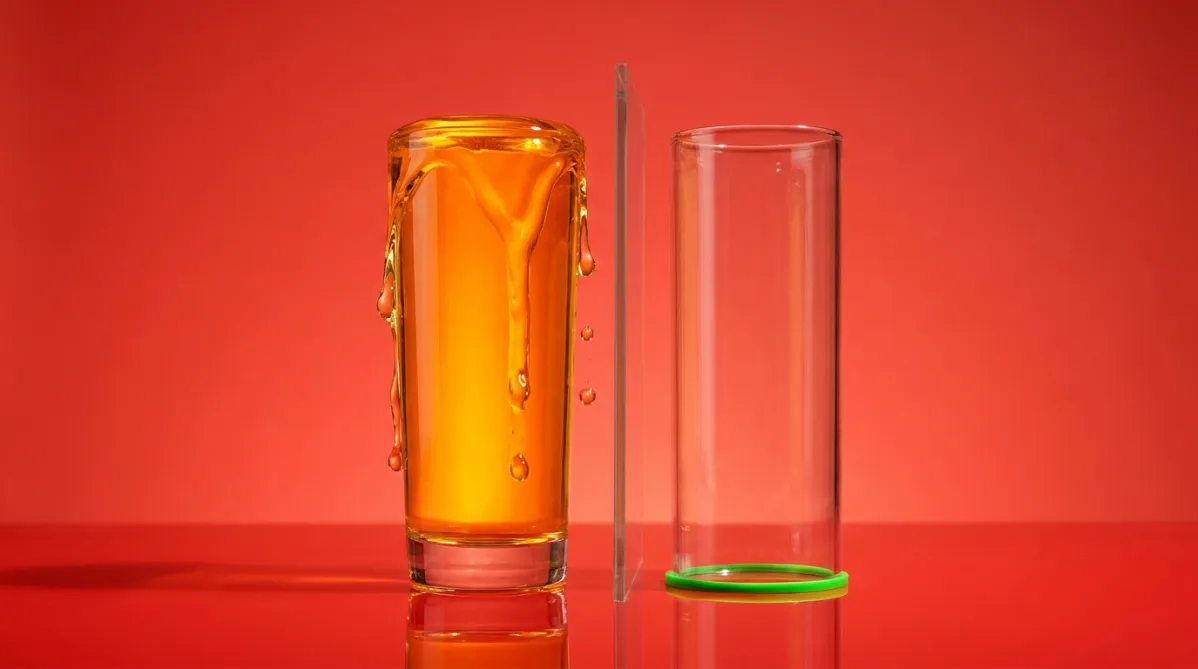
A tall glass of bright orange-gold liquid sits in the center of the frame, filled to the brim and overflowing down its sides, shot at a slight low angle. Beside it, a sealed, empty glass cylinder with a thin glass wall stays bone dry. A clear glass barrier stands between them, so the flow clearly never crosses. The backdrop is a saturated tomato-red seamless paper, with a glossy red surface reflecting both vessels. Hard, directional studio light from the upper left throws crisp, warm-neutral shadows and bright highlights along the glass rims and liquid droplets. One small electric green ring sits at the base of the empty cylinder as a subtle accent. Mood: tense, ironic, clean and editorial. Photorealistic, shallow depth of field, no text or labels.
supplements

Your CoQ10 Reaches Your Blood, But Not Your Mitochondria

BY NOVA CHEN ·

A new human trial put a hugely popular longevity supplement to the test with muscle biopsies, and the results are awkward for the marketing. In 40 healthy adults averaging 74 years, 400 mg/day of CoQ10 for 12 weeks raised blood levels but left muscle and mitochondrial CoQ10 unchanged. Mitochondrial function, VO2max, glucose control and body composition did not move either. The study is small, short and limited to robust older adults, and the senior author consults for Pharma Nord. Here is what it shows, what it cannot say, and who might still want to ask a doctor about CoQ10.

**Approach:** Macro science. **Palette:** D, bold color field.

Extreme close-up of a small mound of white taurine crystals, needle-like and prismatic, shot at a 35-degree angle with a macro lens and shallow depth of field. The front crystals are razor sharp, with faceted edges that catch light and show tiny internal fractures. The mound sits on a glossy, saturated tomato-red acrylic surface that reflects a soft, blurred mirror image of the crystals. A large softbox from the upper left gives crisp highlights and warm red bounce in the shadows. A single crystal near the focal point carries a faint electric green (#00e676) refraction glint. The background melts into an out-of-focus gradient of deep red and orange. The mood is precise, energetic and confident, with a clean scientific feel. No text, no labels, no containers.
supplements

Taurine's 1.5–3 g Sweet Spot: What 34 Trials Found on Sugar and BP

BY NOVA CHEN ·

Taurine is best known for its anti-aging buzz, but a new meta-analysis of 34 randomized trials looked at everyday health markers instead. Supplementation was linked to lower fasting glucose, HbA1c, triglycerides, cholesterol, blood pressure and inflammation. The benefits clustered at 1.5–3 g per day, and the duration findings were surprising: glucose and lipids improved most after 8 or more weeks, while blood pressure and inflammation looked better in shorter trials. The effects are modest and the trials were varied, so here is what the paper does and doesn't show, and who might want to be cautious.

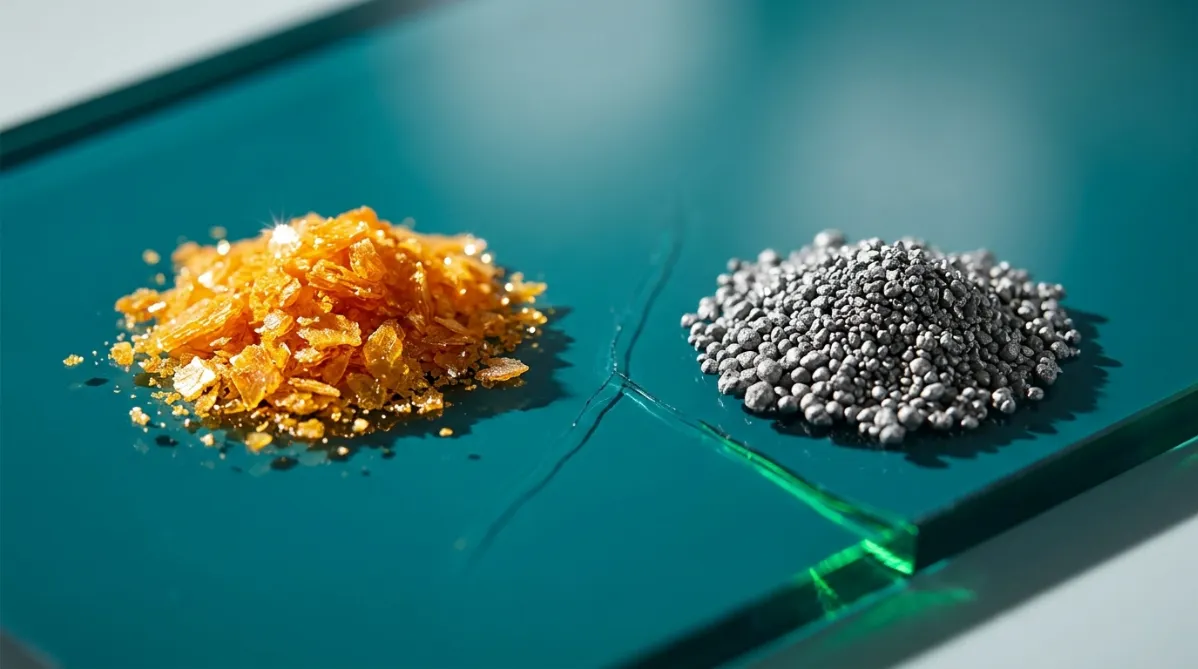
Macro photograph at a low 30-degree angle of two tiny mounds on a glossy, saturated teal acrylic surface. The left mound is orange-yellow CoQ10 crystalline powder with visible faceted flakes. The right mound is dull metallic grey selenium granules. A hairline crack runs across the acrylic between them, hinting at the catch. Hard, clean studio light from the upper left throws crisp, short shadows and sparkles on the crystal edges. The background falls softly out of focus, with a thin electric green reflection streaking across the glossy surface. The palette is bold color field: teal against orange, with silver-grey accents. The mood is precise, curious and cautionary, like a lab specimen photographed for a magazine. Photorealistic, shallow depth of field, no text.
longevity

Two Cheap Supplements Cut Heart Deaths by Half. There's a Catch.

BY NOVA CHEN ·

Two inexpensive supplements, CoQ10 and selenium, were linked to a drop in cardiovascular deaths from 12.6% to 5.9% in elderly Swedes. Heart-strain biomarkers and echocardiograms improved as well. But the trial enrolled just 443 people in a selenium-poor country, and it can't say which nutrient did the work. Here's what the KiSel-10 study actually showed, who it may apply to, and the safety limits to know before you try it.

This page is available in