Biocracked
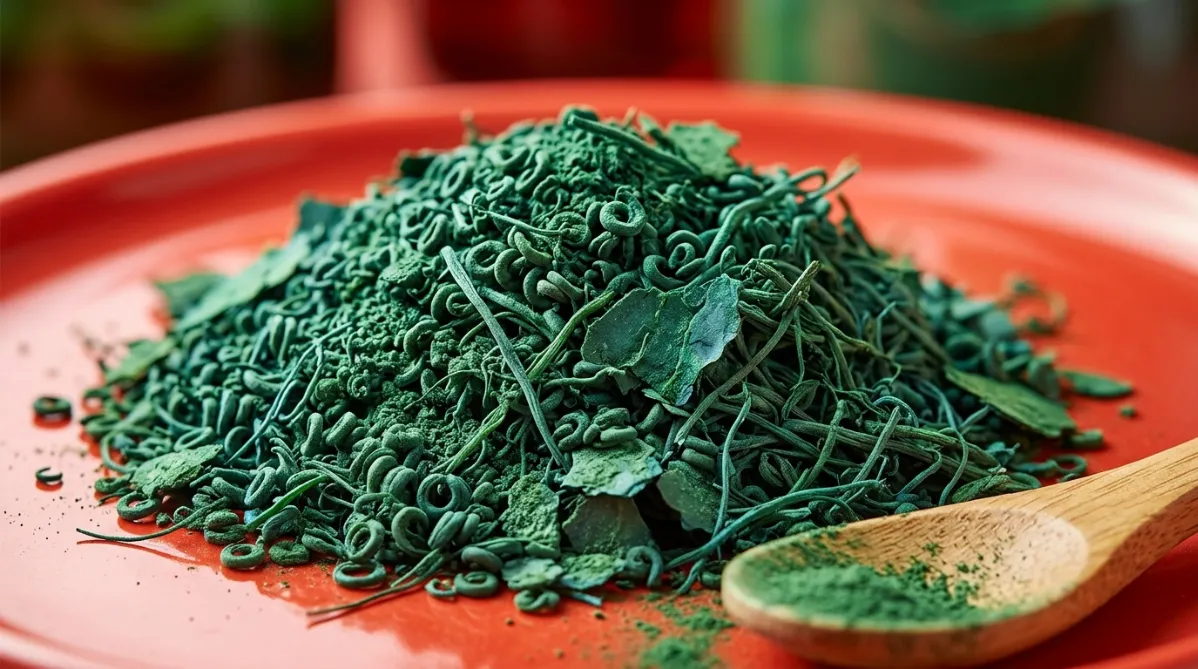
Macro science close-up of spirulina itself: a dense mound of dried spirulina filaments and flakes, shot from a low three-quarter angle with a macro lens and a shallow depth of field. Crisp, deep blue-green coils and fine threads sit in the focal plane, and the rest melts into soft blur. One small pile rests on a smooth, glossy tomato-red ceramic surface, and the saturated red field contrasts hard with the green algae. Lighting is bright, diffuse studio daylight from the upper left, with soft highlights on the powdery grains and gentle warm shadows. A single wooden spoon edge enters the frame at the corner, dusted with fine green powder. The mood is clean, curious and clinical, with no text, labels or packaging, and no blue cast.
Supplements

Spirulina Cut Anxiety and Stress in Men on Methadone, RCT Finds

Nova Chen · · 4 min read

A small but carefully designed clinical trial suggests that a daily gram of spirulina may take the edge off anxiety and stress. The catch is that the participants were a very specific group: men receiving methadone maintenance therapy (MMT) for opioid dependence. The findings are interesting, but they should be read with that context firmly in mind.

What the researchers did

The study, published in Food Science & Nutrition in 2026 by Asadolah-Poor-Kashi and colleagues, was a double-blind, randomized, placebo-controlled trial. Fifty men in methadone maintenance therapy were split evenly into two groups of 25. One group took spirulina at 500 mg twice daily, for 1 gram per day in total. The other group took a placebo. The intervention lasted 12 weeks, with assessments at baseline and at the end of the trial.

The trial was registered in advance (IRCT20231101059923N2, registered December 2023). Prospective registration is a good sign, because it limits the room for outcomes to be swapped or cherry-picked after the fact.

The team measured a broad set of outcomes:

  • Psychological distress: the Depression, Anxiety, and Stress Scale-21 (DASS-21)
  • Sexual function: the International Index of Erectile Function (IIEF)
  • Drug craving: the Drug Desire Questionnaire (DDQ)
  • Cognition: the FAS verbal fluency test, the Iowa Gambling Task (IGT), and the Trail Making Test (TMT)

What they found

Spirulina significantly reduced anxiety and stress scores compared with placebo (p < 0.05). That is the headline result.

The other outcomes did not move. There were no significant between-group differences in depression, sexual function, drug craving or cognitive performance (all p > 0.05). The abstract does not report effect sizes, so it would be a mistake to guess at how large the improvement in anxiety and stress actually was. All we can say is that it reached statistical significance.

Why this population matters

People on methadone maintenance often deal with elevated anxiety, stress and other psychological problems, along with sexual dysfunction and cognitive difficulties. These problems can undermine treatment and retention. That makes low-risk supportive interventions attractive in principle.

It also means the results may not transfer to the general population. This trial enrolled only men, only people on methadone, and only 50 of them. Anxiety and stress in a person managing opioid dependence have different drivers than everyday work stress or generalized anxiety in someone who is not on opioid therapy. Whether spirulina would do the same for other groups, or for women, is simply not answered here.

How to read the result

A few points call for caution:

  • Small sample. With 25 people per arm, the trial is vulnerable to chance findings. The authors themselves call for larger studies.
  • Mixed results. Of the several outcome domains, only two (anxiety and stress) showed benefit. When many outcomes are tested, an occasional significant result can appear by chance, so replication matters.
  • Short follow-up. Twelve weeks says nothing about longer-term effects.
  • No mechanism shown. The abstract does not establish why spirulina might help. Proposed explanations for algae-derived supplements often involve antioxidant or anti-inflammatory activity, but that remains speculative here.

The absence of effects on depression, craving and cognition is also informative. Spirulina is not shown here to be a general mental-health booster, a craving suppressant or a cognitive enhancer. The authors describe it only as a potential supportive intervention for anxiety and stress.

Practical takeaways

Dose and duration. The trial used 500 mg twice daily (1 g per day) for 12 weeks. If you are curious about spirulina, that is the only regimen with evidence behind it in this study. More is not necessarily better, and this trial does not support higher doses.

Quality matters. Spirulina is a cyanobacterium grown in ponds or tanks, and it can be contaminated. Poorly sourced products may contain heavy metals or microcystins, which are toxins produced by other cyanobacteria growing alongside it. Look for products with third-party testing for heavy metals and microcystins, clear sourcing, and batch certificates of analysis. Cheap, unverified products are a gamble. Also note that the product used in the trial may differ from what you find on a shelf.

Who might consider it. Healthy adults with mild stress who want to try a low-risk supplement could reasonably be curious, but the evidence for them is indirect. For people on methadone or other medications, the decision should involve their prescriber or addiction-treatment team. Spirulina should never replace prescribed treatment, counseling or anxiety care. People with autoimmune conditions, phenylketonuria or on immunosuppressants should also check with a clinician, since spirulina is generally advised against or used cautiously in these situations.

Bottom line

This randomized, double-blind trial gives preliminary evidence that 1 g/day of spirulina for 12 weeks can lower anxiety and stress in men on methadone maintenance therapy. It does not show benefits for depression, sexual function, craving or cognition, and it cannot be extended to the general population. Treat it as a promising signal that justifies larger, longer trials, not as a reason to expect a calming effect from every bottle of green powder.
Original study

Read the original research on pubmed.ncbi.nlm.nih.gov →

This article summarizes published research for general information. It is not medical advice.

NC

Written by

Nova Chen

Nova Chen writes for Biocracked: biohacking science, longevity & human performance.

Related Articles

**Approach: Macro science, with Palette C (natural).**

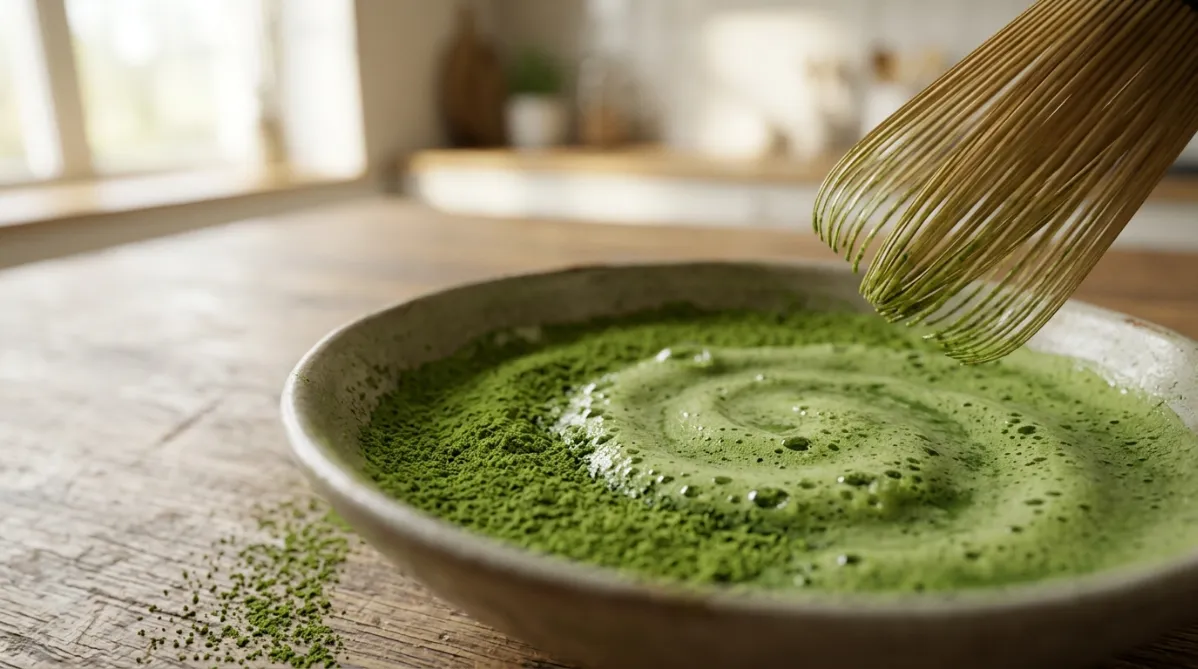
Extreme close-up, shot from a low 30-degree angle, of finely sifted matcha powder in a shallow matte ceramic bowl. A bamboo whisk's tines have just lifted from the surface, leaving a swirl of vivid green foam with a few tiny bubbles. Individual powder grains and the soft ridges of the foam are sharp in the foreground, and the background falls into a creamy blur. Soft side light from a window at left picks out the velvety texture and a faint sheen on the bubbles. The palette is grassy greens, with a worn wooden table in warm brown and a hint of pale daylight. The mood is calm and focused, with a clean, airy, natural feel. The green is the vivid, near-electric tone of fresh matcha. No text, no logos.
supplements

Matcha Beat Plain Caffeine for Working Under Stress, Study Finds

BY NOVA CHEN ·

Caffeine gets the credit for most of our morning focus, but a randomized placebo-controlled trial in middle-aged and older Japanese adults suggests matcha may offer something extra. A single caffeine dose sharpened attention, yet only continuous daily matcha intake increased work output on a stress-inducing arithmetic test. The authors credit matcha's pairing of caffeine with amino acids like L-theanine. The study has real limits, including mild lab stress, one population and no isolated theanine arm, so the takeaways come with caveats. Here is what the findings mean for matcha versus coffee, daily habits versus one-off doses, and who might benefit.

Approach: The human outcome. Palette: C, Natural.

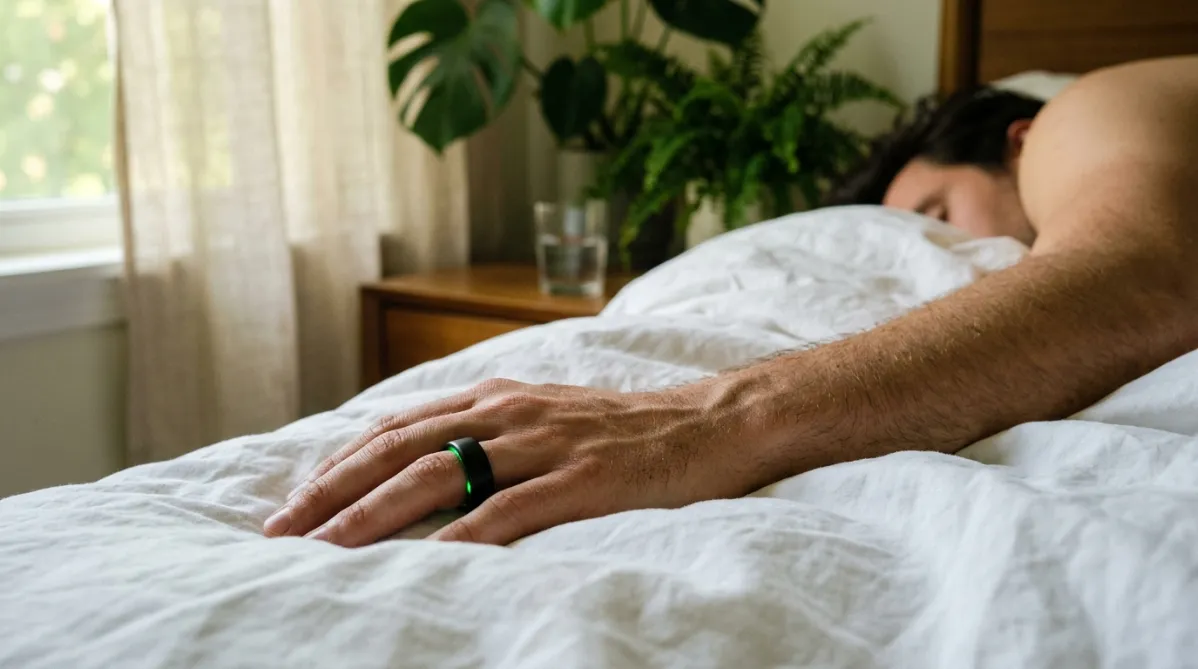
A close, low-angle shot of a sleeping person's bare forearm and hand resting on a rumpled white cotton duvet, a matte black smart ring on the index finger, with a small electric green LED glint on the ring's inner edge. Early morning daylight comes through a sheer curtain at the left and casts soft golden-green light across the skin, showing fine arm hair and natural skin texture. In the background, out of focus, are a wooden nightstand with a glass of water and the blurred green leaves of a houseplant by the window. The face is not shown. Shot at a 35mm equivalent with shallow depth of field, focused on the ring and knuckles. The mood is calm, restorative and quietly observational, as if the night's data were about to be checked.
supplements

Magnesium L-Threonate Lifted Oura Deep and REM Scores in 3 Weeks

BY NOVA CHEN ·

A 2024 randomized trial tested a brain-targeted form of magnesium, magnesium L-threonate (Magtein), in 80 adults with sleep complaints. After 21 days at 1 g/day, the MgT group had better Oura deep and REM sleep scores than placebo, along with improved mood, energy and alertness. But the placebo group also got worse, the sleep staging came from a consumer wearable, and the study never compared threonate to glycinate or citrate. Here's what the trial actually shows, what a 1 g dose really delivers in elemental magnesium, and where the caveats lie.

Approach: Macro science. Palette: B, warm.

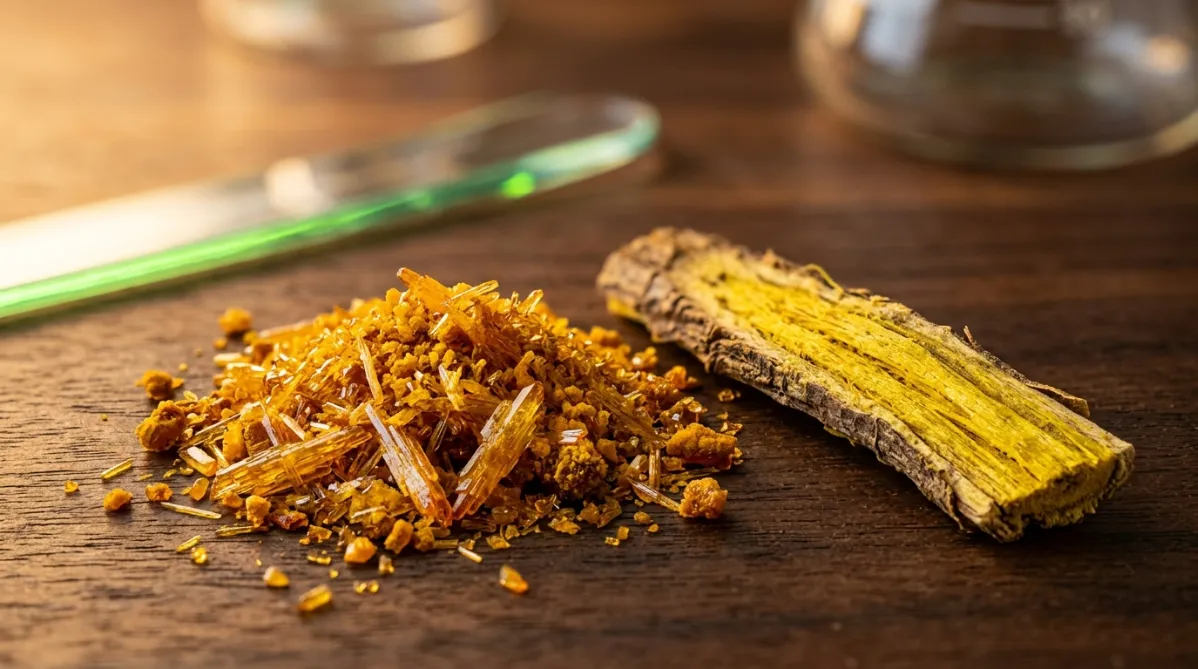
Extreme macro photograph of raw berberine: a small heap of vivid yellow-orange crystalline powder with needle-like crystal clusters, shot at a low 30-degree angle with a shallow depth of field. Beside it, a dry sliver of Berberis root bark shows its bright yellow inner wood and fibrous grain. The surface is a smooth dark walnut board. Low golden-hour side light from the left makes the crystals glint like amber glass and throws long warm copper shadows across the wood. One tiny electric green highlight reflects off a glass spatula edge in the soft background blur. The mood is quiet and investigative, with rich saturated honey and burnt-orange tones and no blue cast. Photorealistic, microscopy-like texture, no text or labels.
metabolism

Berberine vs. Metformin: The Pilot Trial Behind HbA1c 9.5% to 7.5%

BY HELIX WARD ·

A small 2008 pilot trial put berberine head-to-head with metformin in newly diagnosed type 2 diabetes, and the glucose-lowering effect looked similar. In the berberine group, HbA1c fell from 9.5% to 7.5% in three months. A second trial in 48 people already on treatment saw HbA1c drop from 8.1% to 7.3% and HOMA-IR fall 44.7%. But these were small studies in people with diabetes, and about a third of participants had GI side effects. Here is what the data show, what they don't, and what to know before you think about berberine.

**Approach: Conceptual metaphor. Palette: B, Warm.**

A close, slightly high three-quarter view of a single weathered hemp rope stretched horizontally across the frame, shot at a shallow depth of field. On the left the rope is thick and tightly twisted. On the right it has frayed down to a few thin strands, with a short, neat whipping of bright electric green thread binding the rope just where the fraying stops. Golden-hour sunlight enters low from the left and picks out each individual fiber in honey and copper tones. Soft amber shadows fall across a blurred, sun-warmed wooden dock in the background. The mood is quiet and cautiously hopeful, suggesting something worn down slowly but partly held in place. The image is photorealistic and has no text.
longevity

Vitamin D3 Preserved 140 Base Pairs of Telomere in a 4-Year RCT

BY DR. SYNAPSE ·

A large, randomized, placebo-controlled trial found that four years of vitamin D3 slowed telomere shortening by about 140 base pairs. The data come from the VITAL study of older U.S. adults taking 2,000 IU/day. The effect was modest and borderline significant (p=0.039), and telomere length is a surrogate marker, not proof of a longer life. Omega-3s, meanwhile, did nothing for telomeres in this trial. Here is what the numbers show, what the limits are, and how to use the finding sensibly.

This page is available in