Biocracked
←

#urolithin a

1 article
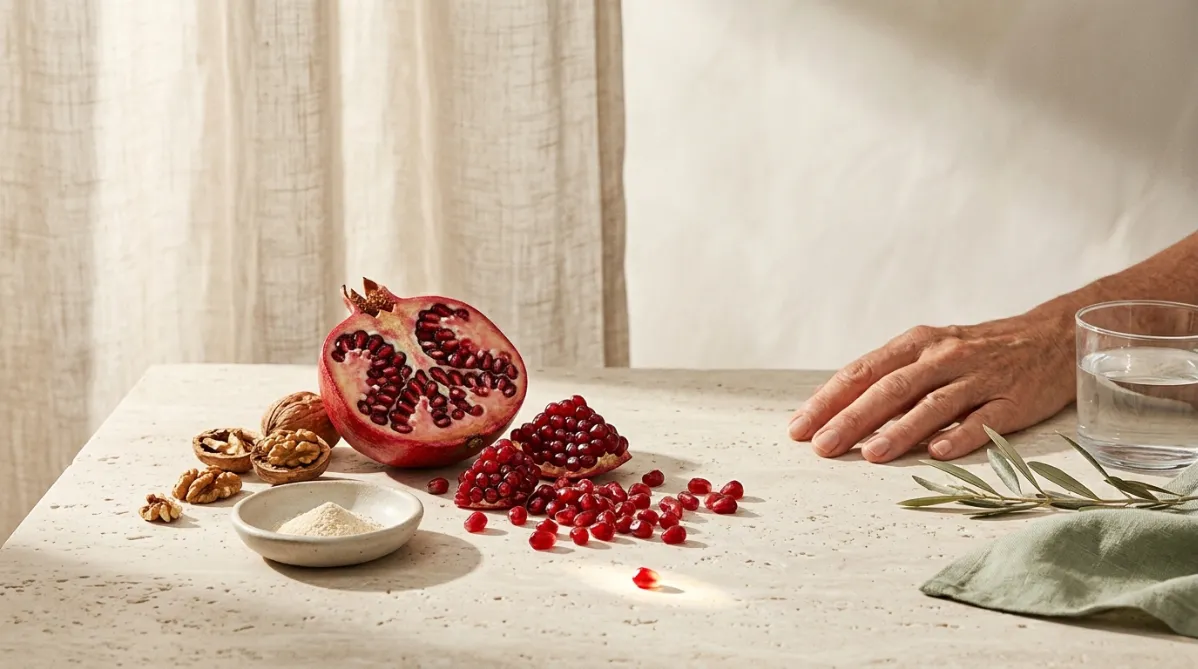
A wide, softly lit editorial still life on a pale travertine surface. In the center-left, a halved ruby-red pomegranate sits open, its glossy arils spilling in a loose cluster onto the stone. Beside it are a few cracked walnut halves and a small matte ceramic dish holding a pinch of fine cream-colored powder. A single aril catches a bright highlight near the foreground. In the soft-focus background, a sheer linen curtain filters warm morning sunlight, which casts long, gentle shadows across the scene.

On the right side, an elegant older woman's hand, seen only from the wrist down, rests lightly on the surface next to a minimalist glass of water. Her skin shows natural texture and warmth. A slim sprig of dried olive branch and a folded sage-green napkin add quiet, organic accents.

The palette is restrained and modern: deep garnet red, warm walnut brown, oat beige, soft sage, and creamy off-white. The composition leaves generous negative space on the upper right for title text. The depth of field is shallow, with crisp focus on the pomegranate and a creamy bokeh falloff. The lighting is natural, diffused, and slightly golden, in the style of a high-end wellness magazine or a contemporary science and nutrition journal. The mood is calm, clean, and quietly authoritative. The finish is photographic, with fine grain, subtle matte tones, and a premium editorial feel.
supplements

Urolithina A, o pós‑biótico da romã, desencadeia assinatura de mitofagia em adultos mais velhos

BY DR. SYNAPSE ·

Urolithina A, molécula produzida por bactérias intestinais a partir dos polifenóis da romã e de nozes, tem rejuvenescido músculos de animais envelhecidos há tempos. O primeiro ensaio clínico em humanos mais velhos mostrou que ela é segura, biodisponível e capaz de alterar marcadores mitocondriais em doses de 500 a 1.000 mg por dia. O estudo, patrocinado pela empresa responsável pelo Mitopure, revelou uma assinatura molecular de melhora da saúde mitocondrial muscular. Contudo, foi pequeno, de curta duração e avaliou apenas biomarcadores, não força ou longevidade. A seguir, os dados, para quem é indicado e onde a evidência termina.

This page is available in