Biocracked
←

#sirt1

2 articles
Approach: macro science. Palette: bold color field, magenta and violet.

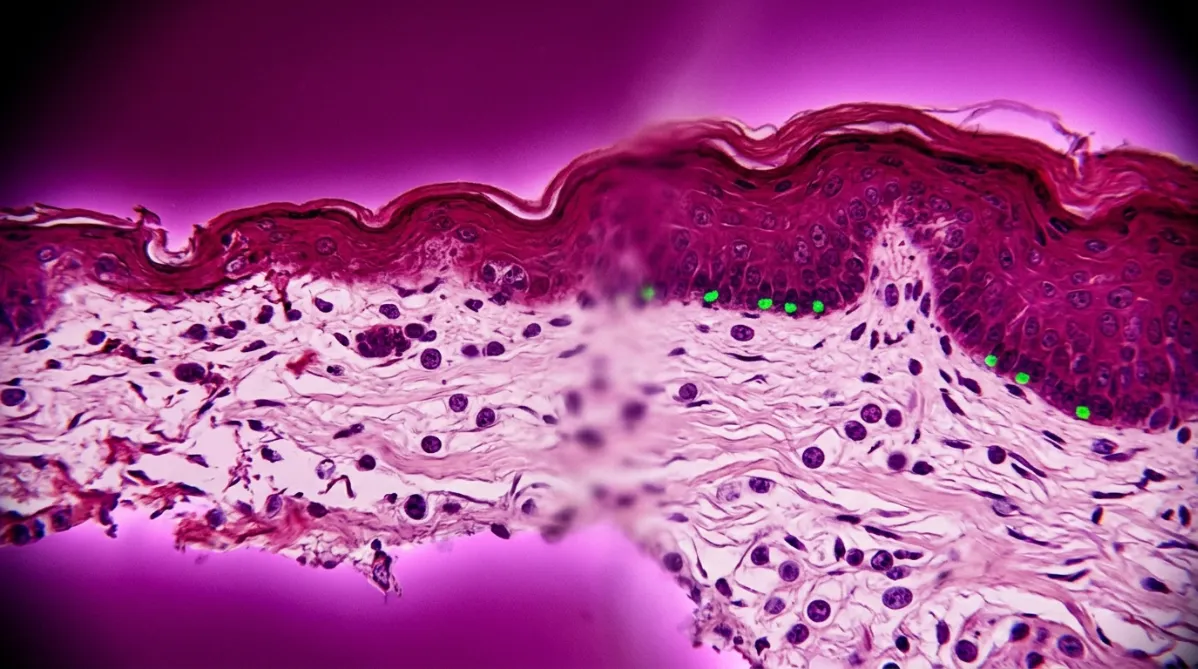
Extreme close-up microscopy photograph of a stained skin tissue cross-section, shot straight-on through the eyepiece with shallow depth of field. A thin, wavy epidermis in deep magenta sits above a fibrous dermis in pale pink, with visible collagen strands and a few round cell nuclei in dark violet. The left half of the frame shows noticeably thinned, flattened tissue, and the right half shows thicker, healthier layers, separated by a soft focus fall-off rather than a hard line. A few tiny electric green fluorescent dots mark nuclei along the basal layer. Lighting is bright, transmitted microscope light with a luminous glow behind the tissue and a saturated magenta backdrop in the out-of-focus edges. The grain is realistic and the mood is precise, curious and cautionary. No text or labels.
longevity

Resweratrol zatrzymał cienienie skóry myszy z wiekiem — ale jest haczyk

BY NOVA CHEN ·

Skóra z wiekiem staje się cieńsza, a nowe badanie na myszach sugeruje, że popularny suplement może spowolnić ten proces. W starszych zwierzętach 32‑tygodniowa dieta z dodatkiem resweratrolu zmniejszyła utratę grubości naskórka i skóry właściwej, przywróciła podział komórek skóry i zahamowała wzrost enzymów degradujących kolagen – MMP‑9 i MMP‑13. Mechanizm wiązany jest z aktywacją SIRT1, co potwierdzono eksperymentami na keratynocytach. To jednak badanie na zwierzętach – nie wiadomo, jaka dawka byłaby skuteczna u ludzi, a niska biodostępność resweratrolu stanowi poważną przeszkodę. Oto, co wykazało badanie i co z tego wynika.
Approach: the human outcome. Palette: warm, golden-hour light.

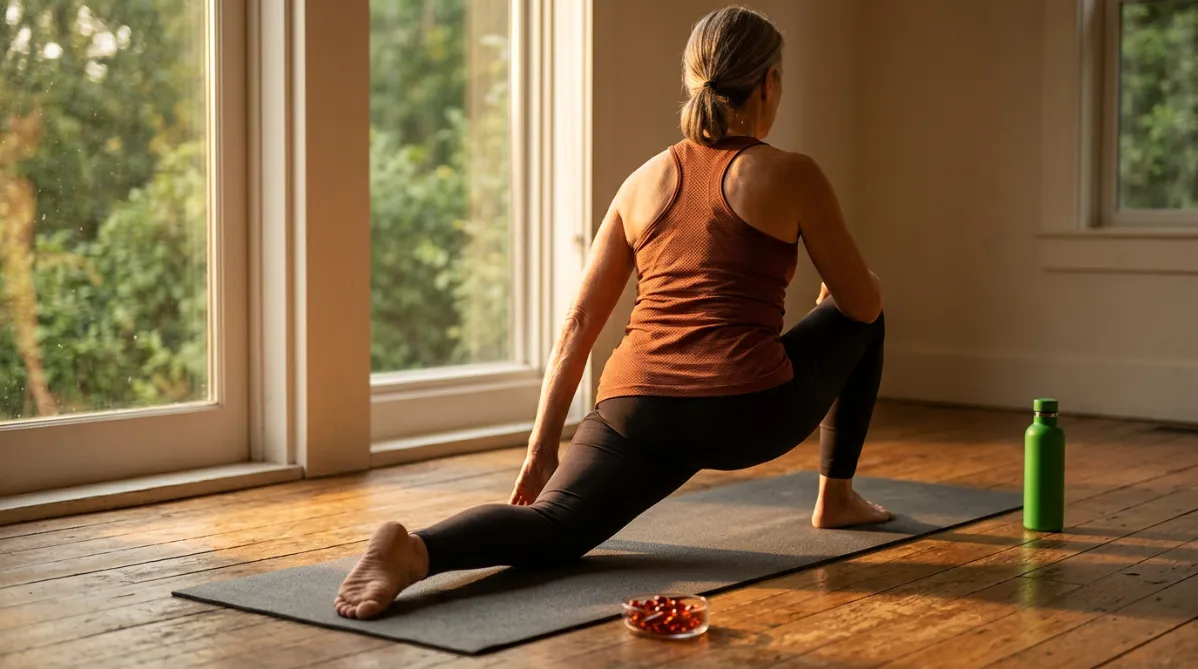
A woman in her fifties seen from behind and slightly above, in a low lunge on a yoga mat. Her face is out of frame, and only her shoulders, outstretched arms and tied-back silver-brown hair show. She practices on a wooden floor beside a tall window as low amber sunlight rakes across the room. The light picks out the weave of her rust-colored top and the fine skin texture of her forearms. In the foreground, a small glass dish of deep red-orange astaxanthin softgels sits slightly out of focus on the floor, catching a copper glow. A single small electric green water bottle sits at the edge of the mat. Shot at 35mm with shallow depth of field, in warm honey tones with soft brown shadows. The mood is calm, grounded and quietly hopeful.
supplements

Yoga i astaksantyna obniżają wyniki depresji o 45 % – sama joga i sama astaksantyna dają znacznie mniej

BY NOVA CHEN ·

12‑tygodniowe, randomizowane badanie na 100 kobietach po menopauzie wykazało, że połączenie Hatha‑yogi z 12 mg dziennie astaksantyny obniżyło wyniki depresji o 45,1 %. Sama joga dała spadek o 28,5 %, a sama astaksantyna jedynie 10,9 %. Kombinacja dodatkowo poprawiła objawy menopauzy, aktywność enzymów antyoksydacyjnych i ekspresję NRF1, przy czym SIRT1 i PGC‑1α wzrosły w obu grupach z jogą. Badanie jest małe, najprawdopodobniej jednositeowe i ograniczone do kobiet z łagodnymi‑średnimi objawami. Oto, co liczby mówią, czego nie mówią i komu taki zestaw może pasować.

This page is available in