Biocracked
Approach: Conceptual metaphor, palette D (bold color field).

A single halved blood orange and a single halved yellow kiwi-style golden kiwi sit side by side on a saturated magenta seamless backdrop, shot from a low three-quarter angle with shallow depth of field. Between them, a thin, slightly cracked glass pane stands upright, partly dividing the two fruits to suggest "association, not cause." Glistening juice vesicles in the orange flesh catch crisp, directional studio light from the upper left, throwing a sharp, short shadow across the glossy magenta surface. A tiny electric green sprig of a fresh leaf rests at the base of the glass as the only green accent. Colors are juicy, vivid and contrasting: magenta, orange, gold. Mood is curious, clean and quietly skeptical, with a food-as-evidence feel. Photorealistic, tactile textures, no text or labels.
Research

Vitamin C and E Linked to 18% Lower Alzheimer Risk, With a Catch

Nova Chen · · 4 min read

What if the foods already on your plate were tied to a lower chance of Alzheimer disease? A large Dutch study found exactly that for vitamin C and vitamin E. The same study also contains caveats that matter before anyone reaches for a supplement bottle.

The Headline Finding: About 18% Lower Risk Per Standard Deviation

The study is the Rotterdam Study, a population-based cohort in the Netherlands. Its antioxidant analysis, published in JAMA in 2002 by Engelhart and colleagues, followed 5,395 adults aged 55 and older. All were free of dementia, lived in the community, and had a reliable dietary assessment at baseline (1990-1993).

Over a mean follow-up of about 6 years, 197 participants developed dementia. Of those, 146 had Alzheimer disease.

After adjusting for age, sex, baseline Mini-Mental State Examination score, alcohol intake, education, smoking, pack-years, body mass index, total energy intake, carotid plaques, and use of antioxidant supplements, the researchers found:

  • Vitamin C: rate ratio of 0.82 per 1-SD increase in intake (95% CI 0.68-0.99)
  • Vitamin E: rate ratio of 0.82 per 1-SD increase in intake (95% CI 0.66-1.00)

In plain terms, each standard-deviation step up in dietary intake was linked to roughly an 18% lower rate of Alzheimer disease. Neither association was dramatic or airtight. The vitamin E interval touches 1.00, the point of no effect.

The Smoker Twist

The association looked strongest among current smokers, which is the detail that tends to get attention. In that subgroup:

  • Vitamin C: RR 0.65 (95% CI 0.37-1.14)
  • Vitamin E: RR 0.58 (95% CI 0.30-1.12)
  • Beta carotene: RR 0.49 (95% CI 0.27-0.92)
  • Flavonoids: RR 0.54 (95% CI 0.31-0.96)

The numbers look striking, but read them carefully. For vitamins C and E in smokers, the confidence intervals cross 1.0, so those estimates are not statistically conclusive on their own. Only beta carotene and flavonoids reached conventional significance in smokers. The subgroup is also small, and the paper reports no clear benefit from these nutrients in the cohort as a whole beyond vitamins C and E.

The plausible story is oxidative stress. Smoking increases it, and laboratory work has suggested it contributes to Alzheimer pathology, so antioxidants might matter more for people under heavier oxidative load. That is a hypothesis, and this study did not test it.

The associations did not vary by education level or apolipoprotein E genotype, so the pattern was not confined to people with the best-known genetic risk factor.

Read the Fine Print: What This Study Cannot Say

Here is the honest part.

1. It is observational. Participants reported what they ate, and researchers watched who developed Alzheimer disease. That can show an association. It cannot show that vitamins C and E prevented anything. People who eat more fruit, vegetables, nuts, and oils may differ in many ways that were not fully captured, even with extensive adjustment.

2. It measured food, not pills. The exposure was dietary intake. The analysis adjusted for supplement use, but it did not show that taking vitamin C or E capsules lowers risk. Food delivers these compounds alongside fiber, other carotenoids, polyphenols, and minerals.

3. The case count is modest. With 146 Alzheimer cases, the estimates are fairly wide, and the subgroup findings are more fragile still.

4. Diet was self-reported. Food questionnaires are imperfect, and a single baseline assessment may not reflect decades of eating.

5. Follow-up was short. Six years is brief for a disease that develops over many years. Early, undiagnosed cognitive decline could also influence what people eat, although the analysis did adjust for baseline MMSE score.

The authors' own conclusion is hedged: high dietary intake of vitamin C and vitamin E may lower the risk of Alzheimer disease.

Practical Takeaways: Food First

The paper reports intake in standard-deviation units rather than a target dose, so it gives no "magic number" to hit. The sensible reading is to aim for a diet generously rich in these nutrients. For general reference, adult recommended intakes are around 75-90 mg of vitamin C and 15 mg of vitamin E per day.

Vitamin C sources: citrus fruit, kiwi, strawberries, bell peppers, broccoli, Brussels sprouts, and tomatoes. One medium orange or one red bell pepper can supply a day's recommended amount.

Vitamin E sources: almonds, sunflower seeds, hazelnuts, wheat germ, and vegetable oils such as sunflower and olive oil, plus spinach and avocado. A small handful of almonds delivers a meaningful share.

Beta carotene and flavonoids: carrots, sweet potatoes, pumpkin, leafy greens, apples, onions, berries, tea, and citrus.

Who this is relevant for: adults in midlife and older who want to shape long-term brain-health habits, and especially current smokers, who are the subgroup with the most striking numbers. Quitting smoking is far better supported than any antioxidant strategy.

Where Do Supplements Fit?

This study does not support routine antioxidant pills for Alzheimer prevention. Some points for context:

  • Vitamin C and E supplements are not shown by this paper to reproduce the food-based association.
  • Beta carotene supplements have been linked in other trials to increased lung cancer risk in smokers. That is a key reason smokers should get beta carotene from food, not capsules.
  • Very high-dose vitamin E has raised safety concerns in some other research, so megadoses are not a harmless default.

Supplements can make sense for someone with a documented deficiency or a very restricted diet, ideally with a clinician's guidance. Otherwise, the evidence here points toward the produce aisle.

The Bottom Line

The Rotterdam Study offers a modest, interesting signal: people whose diets were richer in vitamin C and vitamin E had about 18% lower Alzheimer rates per standard deviation of intake. Beta carotene and flavonoids looked protective in smokers. It is not proof, and it is not a license to stock up on pills. Eating more colorful fruit, vegetables, nuts, and quality oils is a low-risk habit with broad health benefits, and this study adds one more reason to build your plate that way.

Source: Engelhart MJ et al. Dietary intake of antioxidants and risk of Alzheimer disease. JAMA. 2002;287(24):3223-3229. DOI: 10.1001/jama.287.24.3223. PubMed 12076218.
Original study

Read the original research on pubmed.ncbi.nlm.nih.gov →

This article summarizes published research for general information. It is not medical advice.

NC

Written by

Nova Chen

Nova Chen writes for Biocracked: biohacking science, longevity & human performance.

Related Articles

**Approach: Conceptual metaphor. Palette: Bold color field (saturated orange).**

A single halved orange sits on a seamless saturated tangerine-orange backdrop, shot from a low three-quarter angle with a macro lens. The flesh is shrunken and dried on one side, with the juice vesicles collapsed and pulled back from the rind. The other half is plump and glistening. The shrunken side leaves a visible gap inside the peel, which suggests lost brain volume. Hard, directional studio light from the upper left throws a crisp, warm-neutral shadow across the backdrop. Tiny droplets of juice catch the highlights. A thin electric green leaf stem rests beside the fruit as a small accent. The mood is vivid and clean, with a quiet tension between fullness and depletion. There is no text and no blue cast.
longevity

Low Blood Vitamin C Linked to Smaller Brain Volume in Older Adults

BY DR. SYNAPSE ·

A study of 2,044 older Japanese adults found that lower plasma vitamin C was independently linked to less gray matter relative to head size and weaker default mode network connectivity on 3T MRI. The associations held after adjusting for age, diabetes, blood pressure, smoking, drinking and physical activity. But the design is cross-sectional and observational, so it cannot prove that vitamin C supplements prevent brain shrinkage. Here is what the findings mean, who is most at risk of low levels, and how to reach healthy vitamin C status through food and sensible supplementation.

Approach: conceptual metaphor. Palette: bold color field (saturated orange).

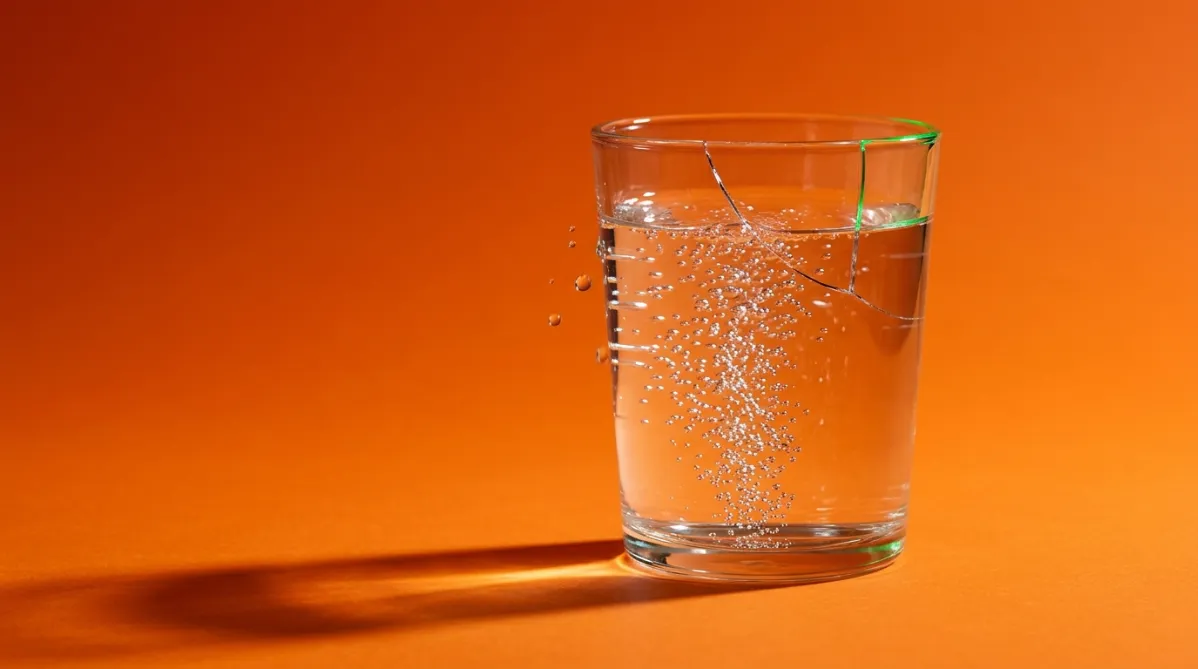
A single clear glass of water sits on a seamless saturated tangerine-orange backdrop, shot from a low three-quarter angle at eye level. Dense streams of tiny hydrogen bubbles rise through the water, but at the surface the glass has cracked in a thin, sharp fracture line that runs up the side, as if the "healthy" promise has split. A few droplets hang mid-air beside the crack. Hard directional studio light from the upper left casts a crisp, elongated shadow across the orange floor, and bright caustic highlights bend through the water. A tiny electric green (#00e676) reflection glints along the rim of the glass. The look is clean, graphic and photorealistic, with shallow depth of field. The mood is skeptical and tense, with a quiet sense of irony.
supplements

Hydrogen Water Backfired: Oxidative Damage Marker Rose in Trial

BY HELIX WARD ·

Hydrogen-rich water is marketed as an easy antioxidant win, but a randomized, blinded trial in people with chronic mountain sickness found the opposite signal. After 8 weeks of 990 mL/day, the hydrogen group's MDA, a marker of oxidative damage, rose more than placebo's, by +2.11 (p < 0.001). Total antioxidant capacity rose too, and the MDA increase was larger in people with a BMI of 24 or higher. Adverse events were more common with hydrogen water (50% vs 37%), mostly dizziness. The study was small and specific to altitude patients, so here is what it does and doesn't mean for hydrogen water fans.

**Approach: Macro science. Palette: D, bold color field (deep magenta).**

An extreme close-up photograph of a real spermidine crystalline powder deposit, pale ivory needle-like crystals fanning out in clustered rosettes, shot with a macro lens at a shallow 30-degree overhead angle. The crystals sit on a smooth, saturated magenta acrylic surface that fills the whole frame. Soft, directional studio light from the upper left creates crisp highlights along the crystal edges, translucent glints inside the needles, and short, clean shadows on the magenta. Depth of field is razor-thin, so the front cluster is sharp and the background dissolves into creamy pink bokeh. One tiny crystal tip catches a faint electric green reflection. The mood is precise, curious and quietly skeptical, like a specimen under evaluation. No text, no labels, no hands.
supplements

A Year of Spermidine Raised Precuneus Blood Flow, Not Memory

BY DR. SYNAPSE ·

A 12-month trial of 0.9 mg/day spermidine in older adults with subjective cognitive decline found higher blood flow in the precuneus and steadier white-matter integrity versus placebo. But this exploratory MRI analysis of 75 SmartAge participants showed no changes in brain volume, cortical thickness, or white-matter hyperintensities. Crucially, the imaging changes weren't linked to memory, and the parent trial found no memory benefit. Here's what the signal might mean, what it doesn't, and the practical details on dose and food sources.

Approach 1, macro science, in palette D, bold color field.

Extreme close-up of a single glass dropper releasing a plump droplet of deep ruby-amber pomegranate seed oil, shot at a slight low angle so the drop hangs at the pipette tip. Inside the droplet, a tiny inverted reflection of the room and a few suspended micro-bubbles are visible. Below it, a halved pomegranate is out of focus, its glossy translucent arils catching the light. The backdrop is a saturated, flat magenta-violet field with a clean, seamless gradient. Lighting is soft, directional studio light from the upper left, with a crisp specular highlight on the drop and a warm translucent glow through the oil. A hairline accent of electric green appears in the dropper's rubber bulb. Shallow depth of field, razor-sharp on the drop. Mood is precise, vivid, curious and cautiously optimistic.
supplements

Five Drops of This Seed Oil Beat Diet Alone on Memory in MCI Trial

BY NOVA CHEN ·

Five drops a day of pomegranate seed oil, added to a Mediterranean diet, was linked to better cognition in a one-year randomized trial of 80 people with mild cognitive impairment. Compared with diet alone, the oil group scored significantly better on global cognition (p=0.004), verbal episodic memory (p=0.009) and processing/executive function (p<0.001). But the control group got no placebo, so this was an open-label comparison. Here is what the oil actually is, how it differs from juice and urolithin A, who might consider it, and why the results are promising but not proof.

This page is available in