Quick flag up front: this is mouse and cell-culture research. Nothing here shows ursolic acid or oleanolic acid protects muscle in people, and it should not be read as a sarcopenia fix.
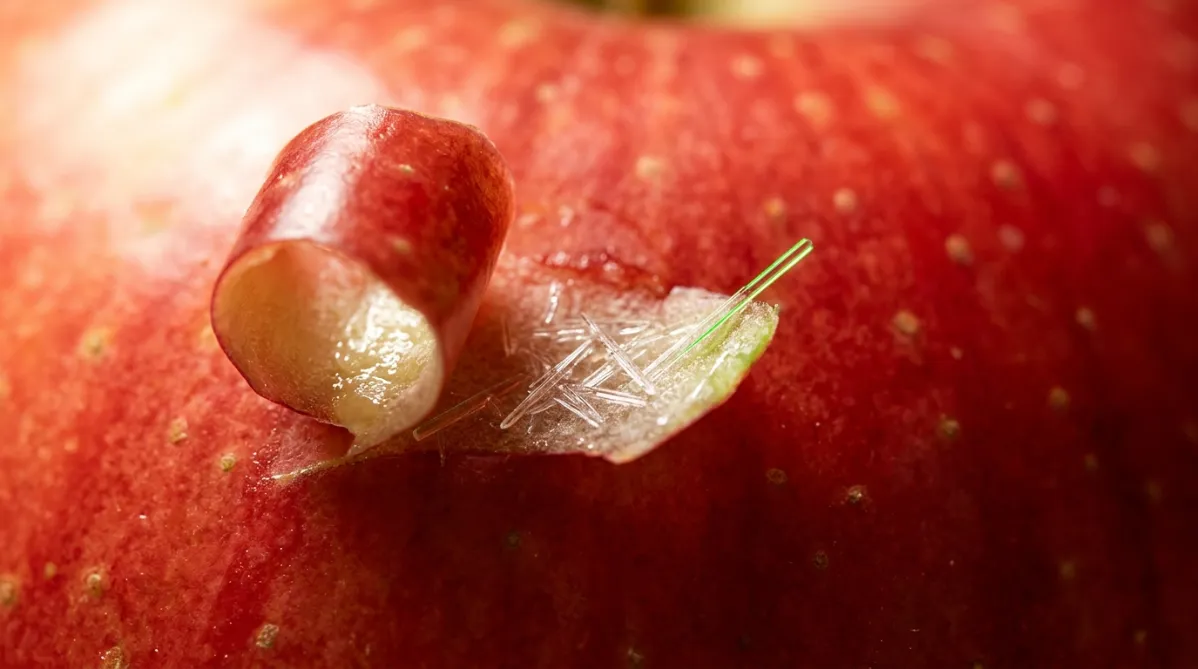
With that said, the finding is interesting. A compound concentrated in apple peel, ursolic acid (UA), and its chemical cousin oleanolic acid (OA) appear to keep muscle healthier in obese mice. They seem to do it by repairing the insulin signaling that obesity damages, not just by changing body weight.
The work, by He, Tong and Yu, was published in the Journal of Agricultural and Food Chemistry in 2026.
The problem: obesity quietly eats muscle
Obesity is usually discussed in terms of fat, but it also harms skeletal muscle. Excess lipids, chronic low-grade inflammation and insulin resistance can push muscle toward net protein breakdown. The result is sometimes called sarcopenic obesity, where fat mass rises while muscle quality and function fall.
Muscle is also the body's biggest sink for glucose after a meal. Losing it, or having it become insulin resistant, makes metabolic disease worse. That is why researchers want compounds that protect muscle during metabolic stress.
OA and UA are pentacyclic triterpenoids, plant compounds already known for anti-inflammatory and insulin-sensitizing properties. What was unclear was how they compare against obesity-related muscle atrophy specifically. This study set out to test both side by side.
How the study was run
The team used two models:
- Mice: C57BL/6J mice fed a high-fat diet (HFD) to induce obesity and metabolic dysfunction.
- Cells: C2C12 muscle cells treated with palmitic acid, a saturated fat, to mimic lipid overload in muscle.
Both compounds were evaluated for effects on glucose handling, muscle mass, blood lipids, inflammation and the molecular pathways behind them.
What they found
In the HFD mice, both OA and UA:
- improved glucose homeostasis
- attenuated muscle atrophy
- alleviated dyslipidemia
- reduced inflammation
In the cell experiments, both compounds improved mitochondrial respiration, ATP production and glucose uptake. These are the functional readouts you would want to see if the compounds were rescuing muscle cells from fat-induced stress.
The mechanisms: insulin signaling, catabolism and mitochondria
The paper points to several coordinated actions rather than one magic switch.
1. Reviving the IRS/PI3K/AKT/mTOR axis
Insulin signaling in muscle runs through IRS, PI3K, AKT and mTOR. This pathway promotes glucose uptake and protein synthesis, and obesity tends to blunt it. OA and UA activated this axis, which fits the improved glucose handling and the muscle-sparing effect.
2. Dialing down catabolic signals
Both compounds suppressed GSK-3β/FOXO1-mediated catabolism. FOXO transcription factors switch on genes involved in muscle protein breakdown when AKT signaling is weak. Restoring AKT activity and restraining FOXO1 would tilt the balance away from degradation.
3. Calming ER stress and rebalancing autophagy
The compounds also eased endoplasmic reticulum stress, a cellular strain response triggered by lipid overload, and regulated autophagy balance. Autophagy clears damaged components but can become excessive or dysfunctional under stress, so keeping it in balance matters for muscle.
4. Better mitochondria
OA and UA enhanced mitochondrial function and biogenesis. Healthy mitochondria help control oxidative stress, which the title highlights as another target. Reduced oxidative stress and improved energy output are consistent with healthier muscle cells.
5. A possible target: PSMB1
Transcriptomic and Connectivity Map (CMap) analyses suggested PSMB1, a proteasome subunit, as a potential target. This is a computational lead and should be treated as a hypothesis. The proteasome is central to protein turnover, so a link would fit the proteostasis theme, but the study does not establish PSMB1 as the proven mechanism.
Where these compounds show up in the diet
Ursolic acid is found in apple peel, which is where it earned its popular reputation. It also appears in herbs such as rosemary, thyme, basil and sage, and in some berries. Oleanolic acid is found in olives and olive leaf, as well as in plants such as garlic, clove and certain herbs.
Both are also sold as supplements, often as isolated extracts. A few practical cautions:
- Doses used in mouse studies do not translate directly into what a person gets from eating an apple or a supplement capsule.
- The study does not tell us what an effective human dose would be, or whether one exists.
- Absorption of triterpenoids can be poor, which complicates extrapolation.
- Anyone with a medical condition or taking medication should talk to a clinician before using concentrated extracts.
Eating apples with the peel, olives and herbs is a reasonable part of a varied diet, but that is a general nutrition point and not a claim supported by this paper.
What this does and doesn't mean for longevity
Muscle preservation is a major theme in healthy aging, and metabolic dysfunction accelerates muscle decline. A compound that targets both insulin resistance and muscle breakdown is attractive for that reason.
But the limits are clear:
- The work was done in HFD mice and a mouse muscle cell line.
- It does not show benefits in humans, in older adults, or in clinical sarcopenia.
- It does not show that either compound outperforms exercise, adequate protein or weight management, which remain the established strategies.
- The PSMB1 finding is predictive, not confirmed.
Bottom line
This study adds preclinical support for dietary triterpenoids as muscle-protective agents in the context of obesity. Both OA and UA improved insulin signaling, reduced catabolic drive and supported mitochondria in mice and muscle cells. The next steps would be dose-response and bioavailability work, target validation for PSMB1, and eventually well-designed human trials. Until then, it is a promising lead and not a treatment.