
Biocracked
Approach 4, conceptual metaphor, in palette D, bold color field. A single old brass pocket watch, photographed from a slightly high three-quarter angle, sits on a saturated mustard-yellow seamless backdrop. The watch case is cracked open and its glass is gone. One half of the gear train is clean and polished. The other half is corroded, with a dull green-black patina. A few fine droplets of clear liquid sit on the corroded gears, and one tiny electric green (#00e676) glint of oxidation shows at the edge of the damage. Hard but slightly diffused studio strobe from the upper left casts a crisp, short shadow on the yellow. The macro lens gives a shallow depth of field, with the sharpest focus on the split between healthy and damaged gears. The mood is cautionary, precise and quietly unsettling. No text or numerals appear on the dial.
Longevity

The Anti-Aging Compound Spermidine Has a Dark Side in Old T Cells

Dr. Synapse · · 4 min read

Spermidine has a reputation as one of longevity science's good guys. A new immunology paper suggests that in one corner of the aging immune system, it may do the opposite of what fans expect.

Quick caveat first: this is mouse-derived cell research, not a human trial. Nothing here shows that spermidine supplements harm people. Still, the findings are a useful reminder that "anti-aging" effects can depend on which cell you're looking at and how old it is.

The study is Spermidine disrupts mitochondrial respiration and redox homeostasis in aged CD44+ CD49d- CD8+ T cells by Wang and colleagues, published in International Immunology (DOI: 10.1093/intimm/dxag057; PubMed 42958929).

The Backstory: Spermidine Was Supposed to Help

Spermidine is a polyamine metabolite described in the paper as having anti-aging and immunomodulatory properties. The same research group had previously reported that spermidine boosts mitochondrial respiration in naïve CD8+ T cells (the CD44- type) by upregulating fatty acid oxidation (FAO), the process of burning fats for energy.

That left an open question: what does spermidine do to CD44+ CD8+ effector T cells, the more experienced, activated population? That is what this study set out to answer.

The Twist: Same Compound, Opposite Result

In CD44+ CD8+ T cells from aged mice, spermidine suppressed mitochondrial oxygen consumption rate (OCR), a standard readout of mitochondrial respiration. The authors note this contrasts with its effects on cells from young mice.

According to the abstract, the drop in respiration:

  • was dependent on fatty acid oxidation,
  • was associated with mitochondrial oxidative stress, and
  • came with reduced IFN-γ production and reduced proliferative capacity.

IFN-γ is a key signaling molecule T cells use to fight infections and tumors, so lower output and weaker proliferation are not trivial changes.

The Culprit Subset: Senescence-Like CD49d- Cells

The most striking detail is how selective the effect was. Within aged CD44+ CD8+ T cells, the authors focused on two groups:

  • CD44+ CD49d- cells: a senescence-like subset that accumulates predominantly with age. Spermidine caused a marked OCR decrease here.
  • CD44+ CD49d+ cells: unaffected by spermidine.

So the problem was not all aged T cells. It was the age-enriched, senescence-like population.

What Went Wrong Inside the Cells

The researchers report two main kinds of disruption in the CD49d- cells.

1. Redox imbalance. Intracellular reduced-thiol levels fell, while mitochondrial reactive oxygen species (ROS) stayed unchanged. The authors interpret this as consumption of antioxidant reserves. In other words, the cells weren't necessarily producing more ROS, but their protective buffer looked depleted.

2. Mitochondrial remodeling. Mitochondria in CD49d- cells shifted toward shorter, more fragmented shapes with wider cristae spacing than those in CD49d+ cells. Cristae are the inner folds where much of the energy production machinery sits, so changes in their spacing are a structural sign of altered function.

The authors conclude that spermidine "paradoxically compromises mitochondrial respiration" in this subset by perturbing fatty acid metabolism and redox homeostasis.

Why This Matters for the Longevity Conversation

The usual spermidine story is simple: more is better for cellular maintenance. This paper adds nuance in three ways:

  • Age matters. Effects in young-mouse cells differed from those in aged-mouse cells.
  • Cell state matters. Naïve CD8+ T cells benefited in earlier work from the same group, while a specific aged effector subset did not.
  • Subsets matter. Averaging across a whole "T cell" population can hide opposite effects in different subpopulations.

It is also unclear whether hitting these cells is bad. Senescence-like cells are often considered undesirable, so dampening them could in theory be neutral or even useful. But the abstract reports reduced IFN-γ and proliferation, which points toward impaired function rather than clean-up. The paper doesn't establish the net outcome for an organism's immunity.

Practical Takeaways (With Honest Limits)

Dose: The abstract does not give a human-relevant dose, so no dosing guidance can be drawn from it. Don't extrapolate cell-culture concentrations to supplement servings.

Timing: The study doesn't test supplement timing, so there is nothing evidence-based to say here.

Who this research is relevant to:

  • Researchers and clinicians interested in immune aging, T cell metabolism, and polyamines.
  • Older adults considering spermidine, who might reasonably discuss it with a physician, especially if immune function is a concern.

Who might want to be cautious or skip it for now:

  • People with immune-related conditions or on immune-modulating therapy, who should check with a clinician before adding any immunomodulatory supplement. This is general prudence, not a conclusion of the paper.
  • Anyone buying spermidine specifically for "immune rejuvenation." This study doesn't support that claim for aged effector T cells.

What the paper does not show:

  • It doesn't show harm in humans.
  • It doesn't show that oral spermidine reaches these cells at relevant levels.
  • It doesn't overturn prior evidence of benefits in other contexts, including the group's earlier finding in naïve CD8+ T cells.

Bottom Line

Spermidine's anti-aging halo may not extend to every aged immune cell. In mouse-derived, senescence-like CD49d- CD8+ T cells, it reduced mitochondrial respiration, drained thiol antioxidant reserves, and reshaped mitochondria, while neighboring CD49d+ cells were spared. It's a preclinical signal that deserves follow-up in whole-animal and human studies, not a reason to panic or a verdict on spermidine supplements.

Original study

Read the original research on pubmed.ncbi.nlm.nih.gov →

This article summarizes published research for general information. It is not medical advice.

DS

Written by

Dr. Synapse

Dr. Synapse writes for Biocracked: biohacking science, longevity & human performance.

Related Articles

Approach: conceptual metaphor. Palette: D, bold color field.

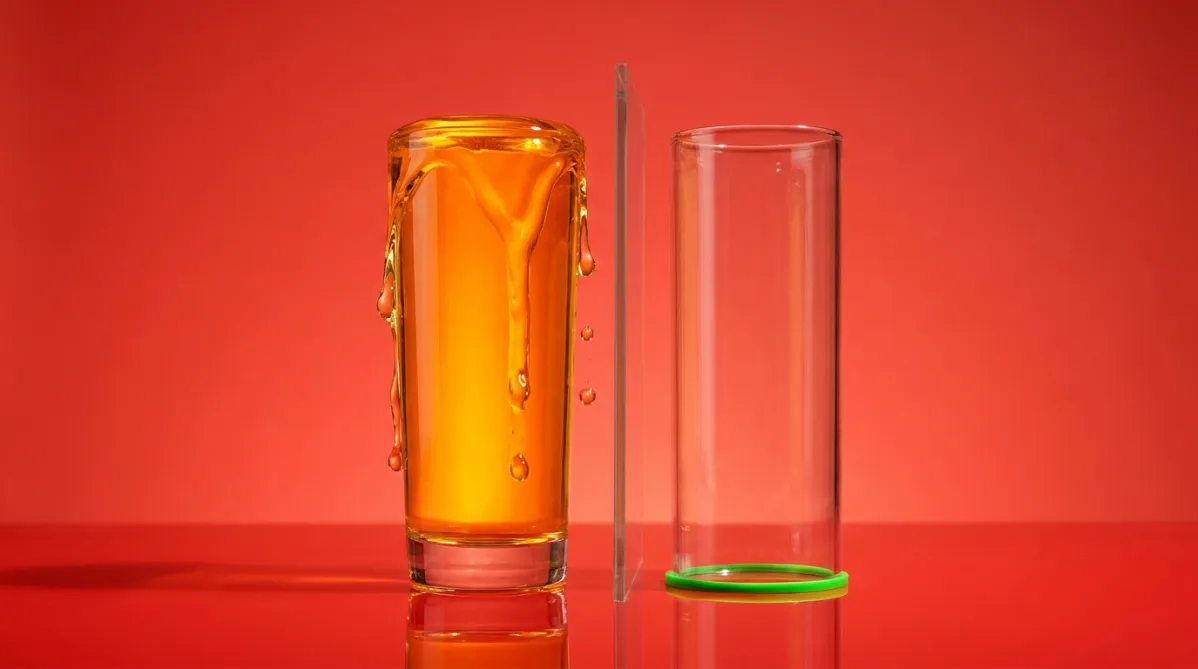
A tall glass of bright orange-gold liquid sits in the center of the frame, filled to the brim and overflowing down its sides, shot at a slight low angle. Beside it, a sealed, empty glass cylinder with a thin glass wall stays bone dry. A clear glass barrier stands between them, so the flow clearly never crosses. The backdrop is a saturated tomato-red seamless paper, with a glossy red surface reflecting both vessels. Hard, directional studio light from the upper left throws crisp, warm-neutral shadows and bright highlights along the glass rims and liquid droplets. One small electric green ring sits at the base of the empty cylinder as a subtle accent. Mood: tense, ironic, clean and editorial. Photorealistic, shallow depth of field, no text or labels.
supplements

Your CoQ10 Reaches Your Blood, But Not Your Mitochondria

BY NOVA CHEN ·

A new human trial put a hugely popular longevity supplement to the test with muscle biopsies, and the results are awkward for the marketing. In 40 healthy adults averaging 74 years, 400 mg/day of CoQ10 for 12 weeks raised blood levels but left muscle and mitochondrial CoQ10 unchanged. Mitochondrial function, VO2max, glucose control and body composition did not move either. The study is small, short and limited to robust older adults, and the senior author consults for Pharma Nord. Here is what it shows, what it cannot say, and who might still want to ask a doctor about CoQ10.

Approach: Macro science. Palette: D, bold color field.

Extreme macro photograph of a single human T cell shown as a slightly bumpy, matte-textured sphere with fine microvilli, resting on a surface of smaller, out-of-focus cells. A faint electric green (#00e676) glow shows through a few lipid droplets inside its translucent membrane, hinting at fat-burning. The backdrop is a saturated magenta-violet field that fades from deep plum at the edges to bright magenta behind the cell. The camera sits at a low three-quarter angle with very shallow depth of field, so the foreground cell is crisp and the background melts into soft bokeh. Lighting is a soft, directional key from upper left with a thin rim light that picks out the membrane texture. The look is scanning-electron-microscope realism with subtle color, not cartoon. The mood is curious, quietly skeptical and precise. There is no text and no labels. The composition leaves open space on the right.
longevity

Urolithin A Shifted Aging T Cells in 4 Weeks. Here's the Catch

BY NOVA CHEN ·

A randomized trial in Nature Aging found that four weeks of urolithin A shifted the immune profile of healthy middle-aged adults. It expanded naive-like CD8+ T cells and boosted their fat-burning capacity. But the headline number is small: a 0.5 percentage point change. The study ran only 4 weeks in 50 people, measured biomarkers rather than infections, and was funded by the maker of Mitopure. Here is what the data show, what they don't, and who might want to pay attention.

Approach: macro science. Palette: bold color field (violet).

Extreme close-up of fisetin crystals, a small cluster of pale yellow needle-like flavonoid crystals with translucent, faceted edges, resting on a smooth glossy deep violet surface. The camera sits low at a shallow three-quarter angle with a very shallow depth of field, so the front crystals are razor sharp and the rest dissolves into soft magenta-violet blur. Lighting is a single crisp, slightly warm studio key from upper left that makes the crystal edges glow and throws long soft shadows across the violet. A few tiny electric green (#00e676) specks of reflected light catch on the crystal tips. The mood is precise, curious and quietly promising, like a sample under inspection, with plenty of clear violet space on the right side of the frame.
longevity

Fisetin Senolytic Extended Mouse Lifespan—Human Proof Still Missing

BY HELIX WARD ·

Fisetin, a plant flavonoid, emerged as the most potent senolytic among ten compounds in a widely cited 2018 EBioMedicine study. In aged mice, treatment late in life reduced senescence markers, eased age-related pathology and extended both median and maximum lifespan. The catch is that this is mouse and lab evidence, not a completed human longevity trial. This article explains what the researchers found, what the dosing context really means, and who should pay attention as human studies develop.

A serene editorial still life shot from a slightly elevated angle on a pale travertine surface, bathed in soft morning window light with gentle long shadows. At the center sits a small matte ceramic bowl in warm oatmeal tone, holding a fine mound of white crystalline powder, with a delicate wooden scoop resting beside it. A few grains are scattered naturally across the stone. To the left, a clear glass of water catches the light, throwing a subtle caustic shimmer onto the surface. To the right, a neatly arranged trio of translucent amber glass capsules and a single sprig of dried eucalyptus add organic texture.

In the softly blurred background, a sage-green linen cloth drapes across the frame, and a vintage brass hourglass stands upright, its sand halfway through. This is a subtle nod to aging and time. A small open notebook with faint, abstract hand-drawn line graphs trending gently downward, with no legible text, rests at the edge of the composition, with a slim pencil placed across it.

The palette is calm and modern: creamy ivory, warm sand, muted sage, soft terracotta, and touches of honey amber. The mood is quiet, thoughtful, and scientific without being clinical, like a contemporary wellness and science magazine cover. Shallow depth of field keeps the powder bowl crisp, with creamy bokeh behind it. Generous negative space on the right side of the wide 16:9 frame leaves room for headline overlay. Fine film-like grain, natural color grading, and minimalist composition give it a refined, trendy journal feel.
longevity

Taurine, the Cheap Amino Acid That Stretched Mouse Lifespans by Up to 12%, Falls With Age in Humans

BY DR. SYNAPSE ·

A 2023 Science study found that circulating taurine, a cheap and widely available amino acid, declines with age in mice, monkeys and humans. Supplementing middle-aged mice extended median lifespan by roughly 10-12% and improved healthspan in both rodents and monkeys. The compound appeared to curb cellular senescence, DNA damage, mitochondrial dysfunction and inflammaging. Human data remain observational, and the mouse doses scale to several grams a day, so the evidence is far from proof. Here is what the study showed, what doses people have discussed, and why researchers say trials are needed before anyone treats taurine as an anti-aging pill.

This page is available in