What if a 12-gram daily scoop of fish-derived peptides moved ferritin, red blood cell count and inflammation markers in ways whey protein did not? That is the headline-grabbing claim from a new pilot trial of a salmon protein hydrolysate called ProGo®. Before anyone rushes to the supplement aisle, here is the catch: it enrolled just 14 people and was industry-sponsored. The results are intriguing, but they are a signal to follow up, not a verdict.
What Are Salmon Peptides (Salmon Protein Hydrolysate)?
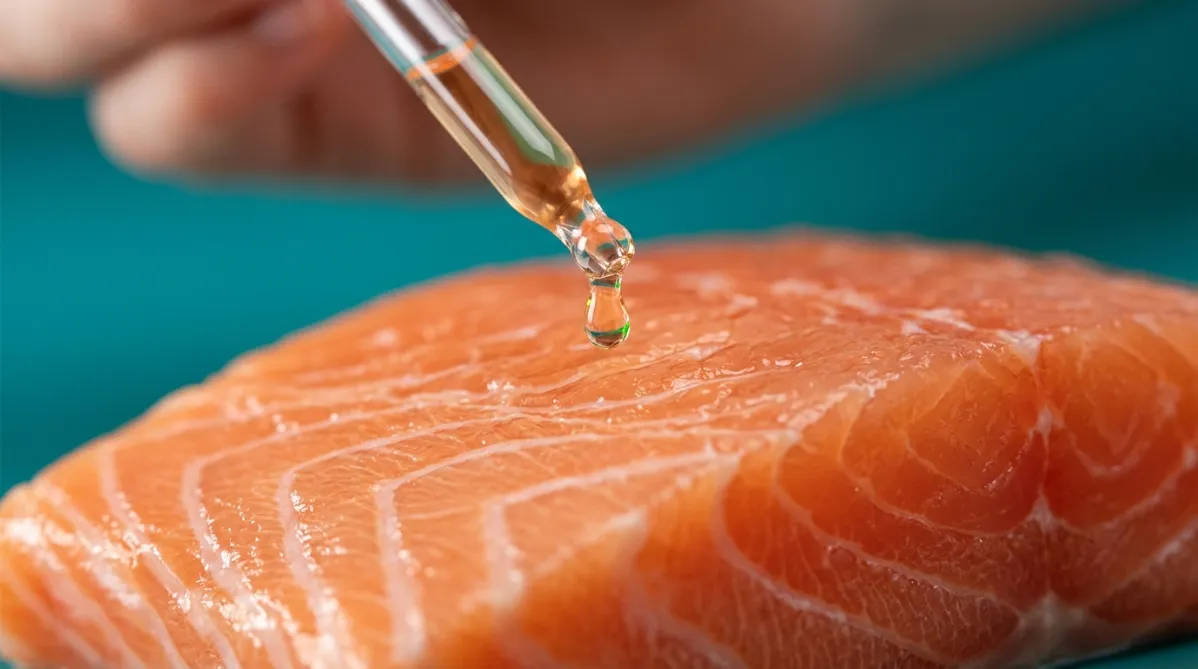
A fish protein hydrolysate is made by taking fish protein, in this case Atlantic salmon, and breaking it into smaller fragments with enzymes. This process, called enzymatic hydrolysis, yields a mix of free amino acids, short peptides (typically 2-20 amino acids long) and some larger fragments.
The idea behind bioactive peptides is that certain fragments do more than supply amino acids. Once released, some may interact with receptors, enzymes or gene-expression pathways. Researchers have studied food-derived peptides for blood pressure, glycemic control, antioxidant activity and immune signaling. Which fragments do what depends heavily on the source protein and the specific enzymes used, so one hydrolysate cannot be assumed to behave like another.
ProGo® is a proprietary salmon hydrolysate from Norway's Hofseth BioCare. Earlier work on the ingredient has pointed to effects on iron metabolism, inflammation and metabolic health, and the ferritin effect has been linked to upregulation of the FTH1 gene, which encodes a ferritin subunit. The ingredient also carries a Health Canada claim related to ferritin and hemoglobin.
The Study: 12 g/Day vs Whey for 56 Days
Published in Biomedicines (2026) by Currie, Myklebust, Bjerknes and Framroze, the trial was a randomized, double-blind, active-controlled pilot in overweight adults aged 25-65, run in Norway with Hofseth BioCare and the Møre og Romsdal Hospital Trust.
- Participants: 14 overweight adults
- Intervention: 12 g/day ProGo® salmon protein hydrolysate
- Comparator: 12 g/day whey protein isolate, matched for nitrogen (iso-nitrogenous)
- Duration: 56 days (8 weeks)
- Primary outcomes: hematological parameters and a composite hair, nail and skin (integumentary) score, with Holm-Bonferroni correction for multiple comparisons
- Secondary outcomes: body composition, inflammatory cytokines and glucose metabolism
The active control matters. Because whey provided the same amount of nitrogen, any difference is harder to explain as simply "more protein."
The Results: What Changed?
Blood markers
Compared with whey, the salmon group showed significant improvements in hemoglobin (about 4%), red blood cell count (about 7%) and ferritin (about 13%), the figures reported in trade coverage of the paper. Ferritin reflects stored iron, while hemoglobin and red cell count reflect oxygen-carrying capacity. Because these were primary outcomes with multiplicity adjustment, they are the study's most credible findings.
Hair, skin and nails
A composite integumentary score improved in the salmon group. This is a subjective-leaning outcome, so it deserves particular caution, though it was a pre-specified primary endpoint.
Body composition
Secondary analyses showed reductions in percent body fat and BMI, with lean body mass preserved. Preserving lean mass while losing fat is relevant to aging, where muscle loss is a major driver of frailty.
Inflammation and glucose
Pro-inflammatory cytokines fell, as did HbA1c and fasting blood glucose. Whey had minimal effect on any of these outcomes.
Note the distinction: the blood and skin outcomes were primary endpoints; body composition, inflammation and glucose were secondary and should be treated as more exploratory.
Why Might Peptides Act Beyond Basic Nutrition?
The authors argue that results are "consistent with a bioactive rather than a purely nutritional effect." Their reasoning is straightforward: both groups got equal nitrogen, but only one group's markers moved.
Plausible mechanisms, some still speculative, include:
- Iron handling: Gene-expression effects on ferritin (FTH1) could alter how iron is stored or mobilized.
- Inflammation signaling: Inflammation raises hepcidin, which blocks iron absorption and release. Lower cytokines could, in theory, improve iron availability and red cell production.
- Metabolic signaling: Small peptides can influence gut hormones and insulin sensitivity pathways.
The study did not definitively test these mechanisms. Also, salmon hydrolysate could contain trace minerals or other components, and the trial could not isolate which fragment, if any, is responsible.
Practical Takeaways
Dose used: 12 g/day for 56 days. That is the only regimen with data here; more is not known to be better.
Who might be curious:
- People with low or borderline ferritin, though the participants were not selected for iron deficiency, so it is unknown whether the effect holds in deficient people. Low ferritin needs medical evaluation to find the cause.
- Older adults concerned with anemia risk, inflammation and muscle preservation, a group not studied here (ages 25-65).
- Pescatarians or people who want a marine-derived protein option.
How it differs from collagen peptides: Collagen peptides are hydrolyzed from collagen-rich tissues (bovine hides, fish skin and scales) and are mostly studied for skin elasticity, joints and bone. This salmon product is a protein hydrolysate with a different composition and a different evidence base focused on iron markers, inflammation and metabolism. They are not interchangeable.
Cautions: Anyone with fish or seafood allergy should avoid it. People with iron overload conditions such as hemochromatosis, those on blood-related medications, or those managing diabetes should speak to a clinician first, since glucose and iron markers could shift.
The Caveats: Read This Before Buying Anything
- Tiny sample. Fourteen participants split across two arms cannot reliably detect real effects or rule out chance, especially for secondary outcomes.
- Industry involvement. The study was sponsored by the ingredient's maker. That does not invalidate it, but independent replication is essential.
- Short duration. Eight weeks says nothing about long-term safety, durability or clinical outcomes like anemia, fractures or disease risk.
- Surrogate markers. Changes in ferritin, cytokines and HbA1c are not the same as better health outcomes.
- Overweight population. Results may not generalize to lean, elderly or iron-deficient people.
- Subjective endpoint. The hair, skin and nail score is vulnerable to bias, even with blinding.
- Mechanism unproven. "Bioactive" is an inference, not a demonstrated mechanism.
The authors themselves call the findings "hypothesis-generating" and say confirmation in larger studies is warranted.
The Bottom Line
Salmon protein hydrolysate is an interesting candidate in the bioactive peptide field, and the whey-controlled design makes the signal more notable than a simple protein-versus-placebo comparison. But with 14 participants and sponsor involvement, this is a starting gun for bigger trials, not a reason to treat salmon peptides as a proven way to raise ferritin or slow aging. If you are worried about iron or blood health, get proper lab work first, and let larger, independent trials settle the rest.