Biocracked
Approach: Macro science. Palette: B, warm.

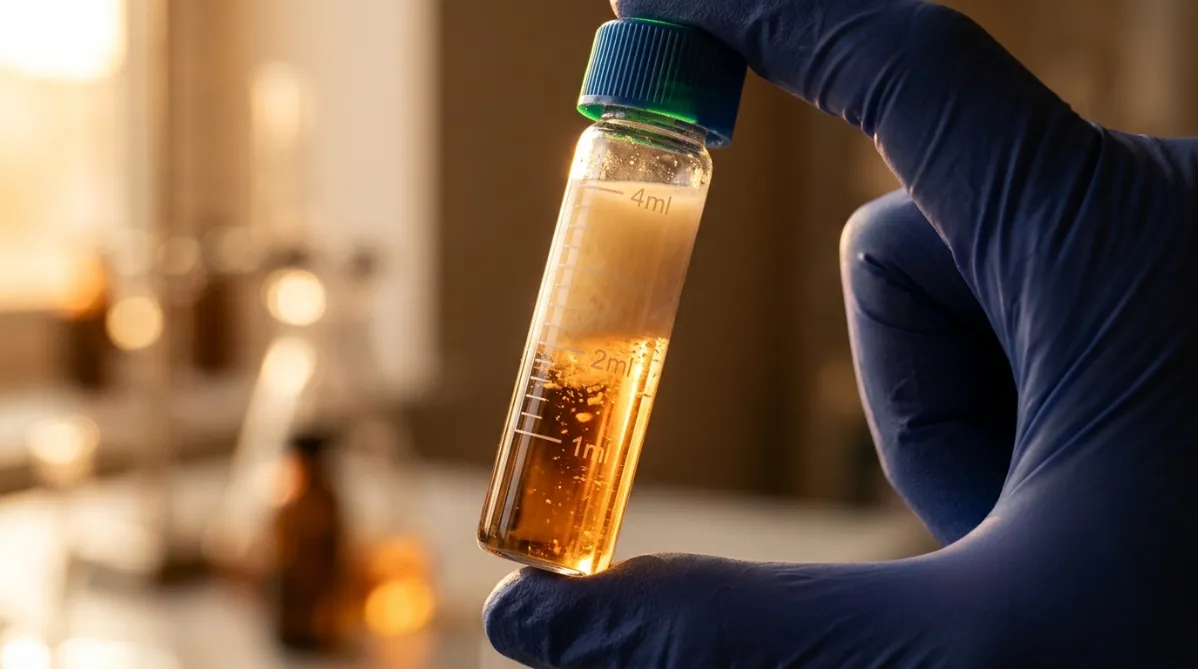
Extreme macro photograph of a clear glass vial of blood plasma held in a gloved hand, shot at a slight low angle so the camera looks up through the tube. The plasma is cloudy and creamy at the top, where large fat-rich particles gather, and it clears to translucent golden amber toward the bottom, showing the drop in triglyceride particles. Tiny suspended droplets catch the light as bright specks. Warm honey-colored backlight from a low window-like source glows through the liquid and casts copper highlights across the glass. The background is a soft blur of warm brown and amber, with a faint electric green reflection on the rim of the vial cap. The mood is calm, precise and cautious, with a shallow depth of field and a real clinical texture on the glass. No text or labels.
Metabolism

Retatrutide Cut Large Triglyceride Particles 84%—But Read This First

Dr. Synapse · · 4 min read

The number that stops the scroll

Weight loss gets the headlines for retatrutide, the once-weekly triple agonist that Eli Lilly is developing. But a new post hoc analysis of two phase 2 trials, published in Diabetes, Obesity & Metabolism by Ruotolo and colleagues, looks at what happened to the blood. The most striking result is a drop of up to 84.4% in large triglyceride-rich lipoprotein particles in adults with type 2 diabetes (T2D), and up to 76.6% in adults without it.

Before anyone gets excited, three caveats. This is a post hoc analysis. Retatrutide is not approved anywhere. And it is a prescription-class investigational drug, not a supplement. With that said, the data are worth a close look.

What the researchers actually did

The team pooled biomarker data from two randomized, double-blind, placebo-controlled phase 2 trials (ClinicalTrials.gov NCT04881760 and NCT04867785):

  • Study 1: Adults with obesity/overweight and T2D received once-weekly retatrutide (0.5, 4, 8 or 12 mg), dulaglutide 1.5 mg, or placebo for 36 weeks. Mean BMI was 35.4 kg/m².
  • Study 2: Adults with clinical obesity but no T2D received once-weekly retatrutide (1, 4, 8 or 12 mg) or placebo for 48 weeks. Mean BMI was 37.4 kg/m².

Fasting blood samples were taken at baseline and during treatment. The panel covered lipids, apolipoproteins, lipoprotein particle subclasses and inflammatory markers. The authors used mixed models for repeated measures to estimate placebo-adjusted change from baseline. Significance required a false discovery rate-adjusted p < 0.05.

The lipid findings: ApoB, LDL particles and triglyceride-rich lipoproteins

In both studies, retatrutide was associated with significant reductions in markers of atherogenic particle burden. The abstract reports the largest placebo-adjusted changes as "up to" values (Study 1 / Study 2):

Marker Study 1 (T2D) Study 2 (no T2D)
Non-HDL cholesterol up to −21.0% up to −26.9%
Apolipoprotein B −21.4% −24.2%
Total triglyceride-rich lipoprotein (TRL) particles −22.5% −33.7%
Large TRL particles −84.4% −76.6%
TRL cholesterol −29.4% −38.6%
Total LDL particles −19.7% −23.5%
Small LDL particles −32.6% −32.3%

ApoB matters because each atherogenic particle, whether LDL, VLDL remnant or others, carries one ApoB molecule. A fall in ApoB therefore suggests fewer artery-penetrating particles, not just less cholesterol per particle. The drop in small LDL particles and large TRLs points to a shift in the whole particle profile, beyond the standard LDL-C number.

The inflammation signal: hsCRP and IL-6

In Study 2, the trial without T2D, retatrutide was associated with a 54.8% reduction in high-sensitivity C-reactive protein and a 29.6% reduction in interleukin-6. These changes were not significant in Study 1.

The abstract does not explain the difference. The studies differed in population, duration (36 vs 48 weeks) and dose ranges, so it would be a mistake to read much into the gap without the full paper.

What about Lp(a) and the dose-by-dose breakdown?

If you came here for Lp(a) numbers, the abstract does not report any, so no claim about retatrutide and Lp(a) can be drawn from it. The abstract also gives only the maximum "up to" changes. It does not tie each figure to a specific dose, so a dose-response claim would go beyond what the abstract shows. For per-dose figures, including any lipoprotein(a) results, readers should consult the full text (DOI: 10.1111/dom.71200).

Why this matters

Obesity and T2D drive cardiovascular risk partly through atherogenic dyslipidemia: more triglyceride-rich remnants, more small LDL particles and more inflammation. The authors conclude that retatrutide was associated with reductions in atherogenic lipoproteins and inflammatory biomarkers linked to cardiovascular disease risk. That is encouraging, but biomarkers are not outcomes. These trials were not designed to show fewer heart attacks or strokes, and the analysis cannot say whether the changes translate into fewer events.

The lipid changes may also partly reflect weight loss rather than a separate drug effect. This analysis cannot separate the two.

Practical takeaways

Dose and timing. There is no dose you can follow. Retatrutide is investigational. In these trials it was given once weekly by the study protocol, at 0.5–12 mg in Study 1 and 1–12 mg in Study 2, for 36 or 48 weeks. Those are trial regimens, not recommendations.

Who the data apply to. The participants were adults with obesity or overweight, with or without T2D. Their mean BMI was in the mid-to-high 30s, and they were monitored in clinical trials.

Who should skip it. Anyone hoping to get retatrutide outside a regulated trial should skip it. That includes buying gray-market or "research chemical" vials online. The product is unapproved, and the purity, dose and sterility of such products cannot be verified. This is not a supplement and should not be treated like one. People with cardiovascular risk should discuss approved options and proven lipid management with a clinician.

What to watch. Larger phase 3 trials and cardiovascular outcome data will show whether these biomarker shifts hold up and matter clinically.

The bottom line

In two phase 2 trials, retatrutide was associated with large placebo-adjusted reductions in ApoB, non-HDL cholesterol, LDL particles and triglyceride-rich lipoproteins. It was also associated with lower hsCRP and IL-6 in the non-diabetic trial. The numbers are impressive, but they come from a post hoc analysis of an unapproved drug and show biomarker changes, not proven clinical benefit.

Source: Ruotolo et al., "Retatrutide-Associated Improvements in Cardiovascular Risk Biomarkers in Adults With Obesity With or Without Type 2 Diabetes," Diabetes, Obesity & Metabolism. PubMed: 42608321. DOI: 10.1111/dom.71200.

Original study

Read the original research on pubmed.ncbi.nlm.nih.gov →

This article summarizes published research for general information. It is not medical advice.

DS

Written by

Dr. Synapse

Dr. Synapse writes for Biocracked: biohacking science, longevity & human performance.

Related Articles

Approach: Macro science. Palette: D, bold color field.

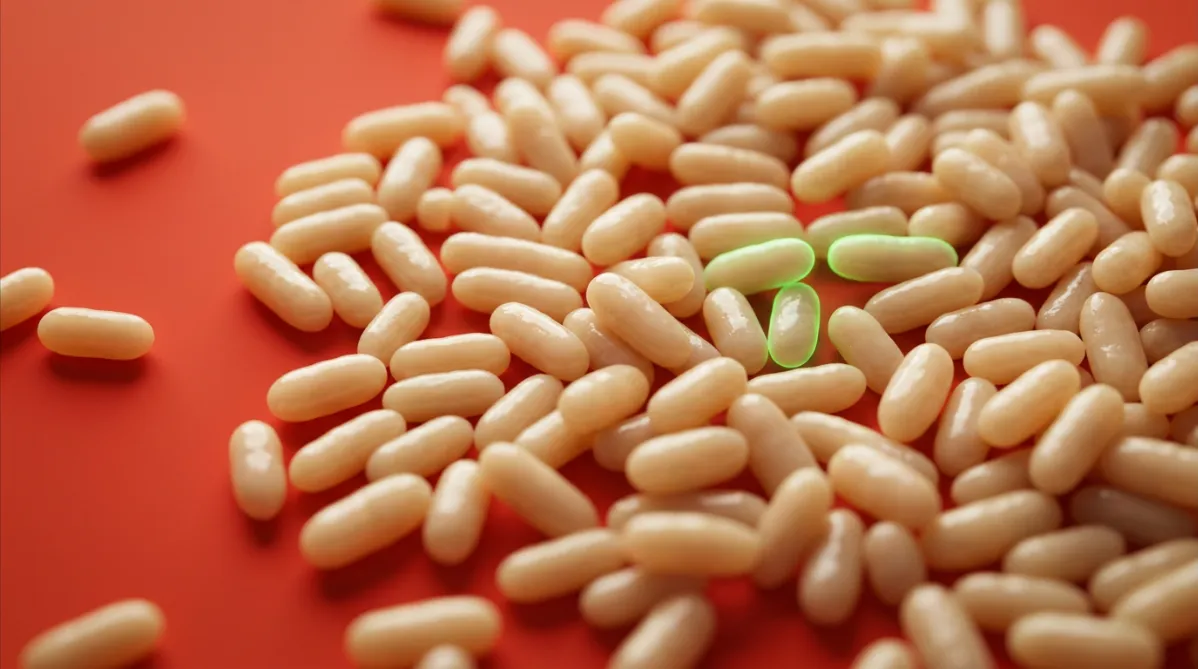
Extreme close-up microscopy-style image of a dense cluster of oval, rod-shaped bacteria with a slightly mucous, glossy membrane texture, shot from a shallow top-down angle with a razor-thin focal plane. Most of the colony sits in the sharp center, softening into creamy blur at the edges. The cells are warm ivory with subtle translucent depth, resting on a saturated tomato-red backdrop. A scattering of sparser, isolated cells on one side suggests "low baseline" and hints at the subgroup story. One or two cells carry a faint electric green (#00e676) fluorescent rim glow. Lighting is soft, directional studio light with gentle specular highlights on the cell walls and clean shadows in warm red tones. Mood: curious, precise, quietly skeptical, with a vivid but grounded look. No text and no blue cast.
supplements

Akkermansia Missed Its Main Goal—Except in People Who Lacked It

BY NOVA CHEN ·

A pasteurized gut bacterium often pitched as a "natural GLP-1 booster" just faced a 142-person, double-blind trial, and it missed its primary insulin-sensitivity endpoint. But exploratory analyses showed a post-glucose GLP-1 rise, and people with low baseline Akkermansia saw better insulin sensitivity and less trunk fat. Those subgroup results are hypothesis-generating, sit close to the significance threshold, and come from a study with heavy industry involvement. Here is what the data show, what they don't, and who might care.

Approach: conceptual metaphor. Palette: bold color field.

A single oversized brass balance scale sits on a saturated tomato-red seamless backdrop, photographed at a low three-quarter angle. One pan holds a small, glowing ember-orange coal that is cooling and dimming to grey ash at its edges, standing for inflammation. The other pan holds a tightly coiled, freshly cut green plant sprout with a tiny electric green (#00e676) tip, standing for repair and growth. The scale tips slightly toward the ember, leaving the viewer unsure which side is better. Hard but clean studio key light from upper left casts a crisp, graphic shadow across the red surface. Brass shows real fingerprints and fine scratches, and the ash has a visible powdery texture. The mood is tense, thoughtful and questioning, with the whole image shot at shallow depth of field and the fulcrum in sharp focus. No text, no markings on the scale.
supplements

NMN Calms Muscle Inflammation After Training—But at What Cost?

BY NOVA CHEN ·

NMN is sold as a cellular-energy booster, but a new muscle-biopsy study found a surprising tradeoff. After a damaging blood flow restriction workout, 1,200 mg/day of NMN suppressed inflammatory signals like TNF-α and IL-10. It also delayed a repair-related marker and erased the 171% mitochondrial increase seen with placebo. The study is tiny (11 untrained young men), so it can't settle anything. It does challenge the assumption that less post-workout inflammation is always better.

**Approach:** Conceptual metaphor, in a bold color field palette (D).

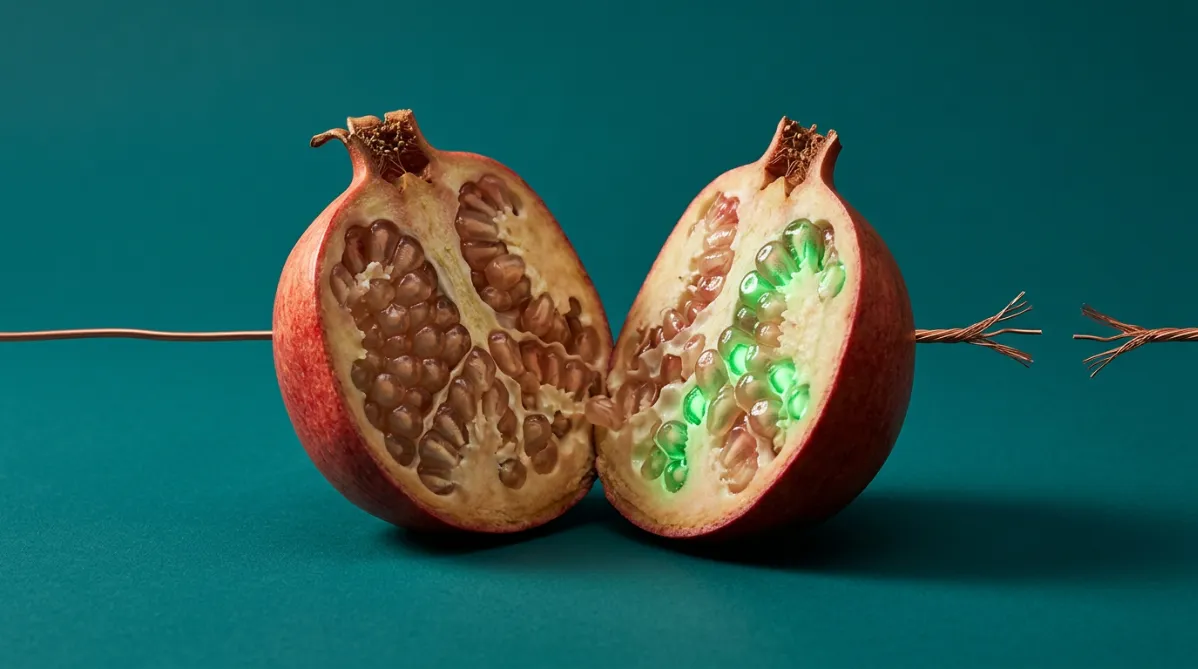
A single ripe pomegranate, split open, on a saturated teal backdrop. It is the natural source of urolithin A's precursors. The camera sits at a slightly low three-quarter angle, close enough to show glossy, translucent arils. On the left half, the arils sit dull and tightly packed. On the right, a few arils hold a faint electric green glow, as if lit from within, hinting at a selective response in one place and not another. Behind the fruit, a thin copper wire runs across the frame and is unbroken on one side and fraying on the other, standing for arteries versus brain vessels. Soft, directional studio light from the upper left casts crisp shadows. Mood: curious, restrained, quietly hopeful. No text anywhere.
supplements

Urolithin A Didn't Fix Arteries in 4 Weeks, but the Brain Responded

BY NOVA CHEN ·

A double-blind trial of 50 adults aged 40-64 with obesity found that 1,000 mg of urolithin A daily for four weeks did not improve flow-mediated dilation, the study's primary endpoint. Peripheral microvascular measures were also unchanged. Yet task-evoked cerebrovascular hemodynamic responses were significantly greater with urolithin A than with placebo, even though task performance did not budge. Because the brain result is a secondary outcome from a short, small trial, it is a lead rather than a conclusion. Here is what the data show, what they don't, and what it means for anyone considering the supplement.

Approach: Macro science. Palette: D, bold color field.

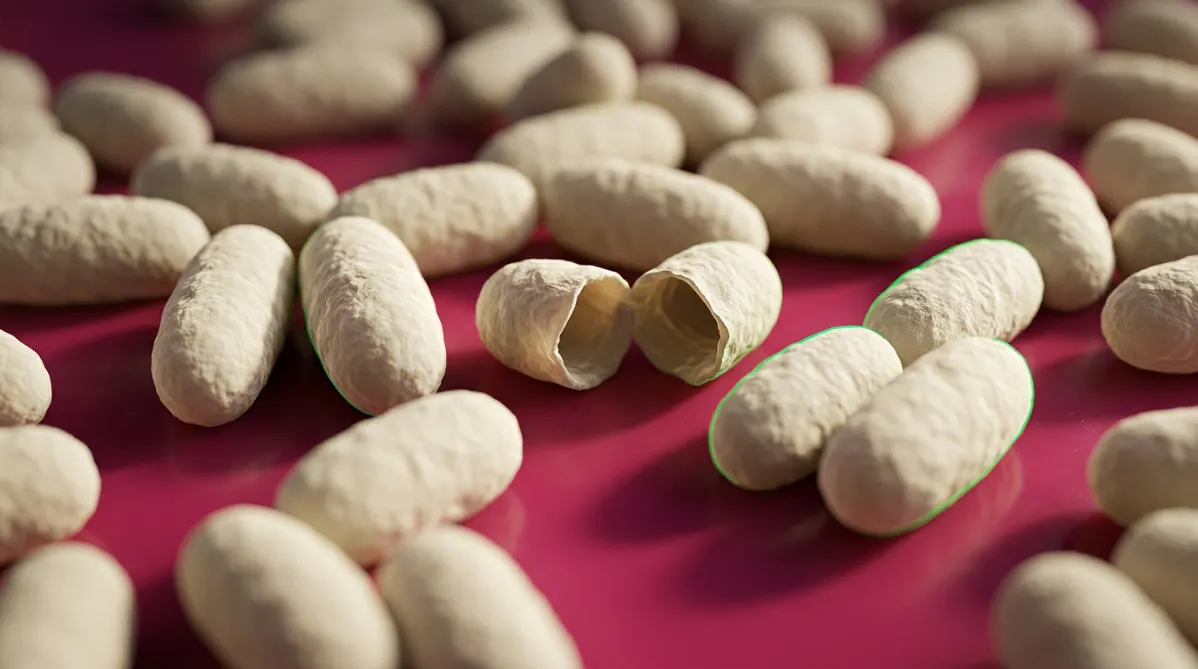
Extreme close-up microscopy-style photograph of a dense cluster of oval, rod-shaped bacterial cells, rendered as slightly wrinkled, matte, pale cream-white forms with visible surface texture. They rest on a smooth, saturated magenta-pink gel surface. Several cells in the foreground are crisp, while the rest fall into soft shallow depth of field. One cell near the center is split open and visibly hollow, to suggest a dead, heat-treated organism. Camera is a low three-quarter angle, as if through a scanning microscope. Lighting is a single hard, warm-white side light that casts short crisp shadows and creates bright rim highlights. A thin electric green (#00e676) line of reflected light traces the edge of one cell. The mood is stark, curious and quietly skeptical. There is no text and no labels.
metabolism

The Gut Bacterium That Worked Better Dead: Akkermansia's 29% Edge

BY HELIX WARD ·

In the first human trial of Akkermansia muciniphila, the pasteurized (heat-killed) version, not the live one, produced the headline results. Insulin sensitivity rose 28.62% and fasting insulin fell 34.08% versus placebo in overweight, insulin-resistant adults. The weight and fat changes everyone hopes for did not reach statistical significance, and several authors hold patents and co-founded a company selling the bacterium. Here is what the study found, what it can't tell you, and what to check before buying a supplement.

This page is available in