Biocracked
Approach: conceptual metaphor. Palette: D, bold color field.

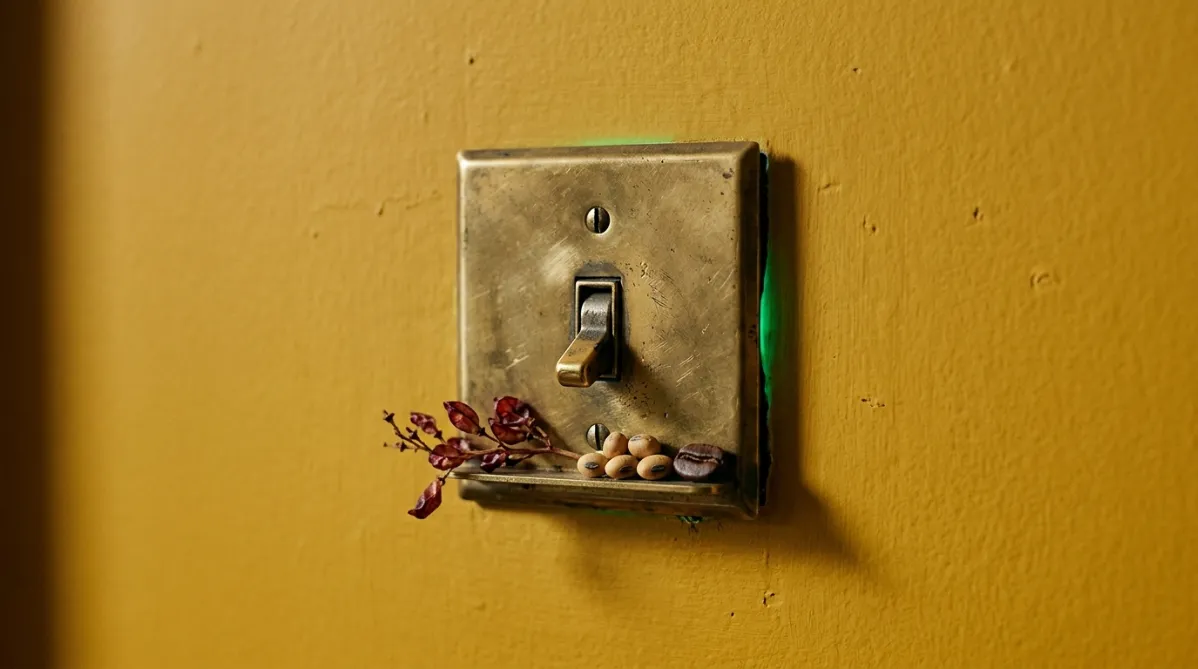
A single old-fashioned brass light switch mounted on a saturated mustard-yellow painted wall, photographed straight on at a slight low angle. The toggle is pushed halfway down, stuck in an ambiguous position. A thin sprig of red grape skins and a few soybeans rest on the small ledge beneath it, while one roasted coffee bean sits nearby. A faint electric green glow spills from the gap behind the switch plate, a small natural accent. Soft, directional window light casts a crisp, short shadow to the right, and the brass shows fine scratches and fingerprints. The mood is skeptical and quietly witty, a reality check rather than a celebration. Shallow depth of field, sharp on the toggle. No text or markings anywhere.
Supplements

Resveratrol May Dampen Nrf2 in Humans—Isoflavones Won Instead

Helix Ward · · 3 min read

You've seen the pitch: polyphenols "switch on Nrf2," your body's master antioxidant regulator, and your cells supposedly become more resilient. A new systematic review and meta-analysis in Nutrition and Health tested that story in humans. The results are messier than the supplement aisle suggests, and one of biohacking's favorite molecules, resveratrol, came out looking like the odd one out.

The headline finding: resveratrol went the wrong way

The researchers, from the Universidad Autónoma de Chihuahua, pooled nine human trials covering 552 participants (376 men, 176 women). The trials were randomized controlled or pre-experimental studies that compared polyphenol supplementation with placebo and measured Nrf2 activation.

The overall result is the first thing to know: polyphenol supplementation as a group did not significantly change Nrf2 expression in humans. The blanket claim that polyphenols reliably activate Nrf2, which holds up reasonably well in animal models, did not hold up here.

The compound-by-compound breakdown is where it gets interesting. Resveratrol supplementation was associated with significantly lower Nrf2 activation (p = 0.03). That is not what most longevity enthusiasts expect from a headline "pathway activator." It is a statistical signal from a small pool of studies, not proof that resveratrol harms your antioxidant defenses. It does suggest the animal-to-human leap is not guaranteed.

The winner: isoflavones

Isoflavones, the soy-associated polyphenols, showed the most pronounced upregulation of Nrf2 (p < 0.00001). The combination of chlorogenic acid and N-methylpyridinium, compounds associated with coffee, came next (p = 0.0008).

Treat these as leads, not verdicts. The authors stress that the favorable effects appeared in individual studies, and that the evidence base is small and carries a risk of bias. A very small p-value from a handful of trials is not the same as a robust, replicated effect.

The no-shows: curcumin, sulforaphane, bilberry

Three popular candidates did not show statistically significant differences in Nrf2 activation:

  • Curcumin
  • Sulforaphane
  • Bilberry pomace extract

This does not mean these compounds do nothing. It means that in the trials analyzed, with the Nrf2 measures used, no clear signal emerged. Sulforaphane in particular is famous in preclinical work as an Nrf2 inducer, so a null result here highlights how much the outcome depends on dose, formulation, tissue sampled, and how Nrf2 is measured.

Why the human data are so slippery

Several caveats matter before you rebuild a stack around this paper:

  • Only nine studies. Splitting them by compound leaves very few trials per polyphenol.
  • Risk of bias. The authors flag methodological limitations in the included trials.
  • Mixed designs. Including pre-experimental trials weakens causal inference compared with pure randomized trials.
  • Measurement matters. Nrf2 "expression" in blood cells may not reflect what happens in liver, muscle, or brain tissue.
  • Nrf2 activity is not the same as health outcomes. The review looked at the pathway marker, not lifespan, disease, or performance.

The evidence here is human, but it is a small, low-certainty synthesis. It cannot show that any compound extends life or improves health.

Practical takeaways: dose, timing, who it's for

Dose and timing: The abstract does not report specific doses, durations, or timing protocols, and the pooled analysis cannot support a recommended regimen. Anyone claiming a "proven Nrf2 dose" from this paper is overreaching. If you use any of these compounds, follow the product's labeling or your clinician's guidance rather than this study.

Who might care:

  • Resveratrol users: Don't panic, but don't assume it is an Nrf2 booster. If your goal is specifically to support this pathway, the human evidence is weaker than the marketing implies. Resveratrol may have other effects, but this review does not address them.
  • Soy and isoflavone-curious readers: Dietary sources of isoflavones, such as soy foods, are a low-risk area to watch. This review does not prove that they raise Nrf2 in a meaningful way, and isoflavone supplements have their own considerations. People with hormone-sensitive conditions or thyroid issues should talk to a clinician first.
  • Coffee drinkers: The chlorogenic acid plus N-methylpyridinium signal is intriguing, but it does not justify changing your caffeine habits on its own.
  • Curcumin and sulforaphane fans: The null results say "unproven for Nrf2 in humans," not "useless."

The smart play: Treat Nrf2 as a hypothesis, not a dial you can reliably turn with a capsule. If you track biomarkers, compare changes over time rather than trusting a pathway story.

The bottom line

The most striking result is not a miracle compound but a reality check. Across human trials, polyphenols as a class did not significantly move Nrf2, resveratrol appeared to push it down, and isoflavones plus coffee-related compounds showed promise that still needs confirmation. The authors call for methodologically sound clinical trials, and until those arrive, the Nrf2-activating supplement narrative remains stronger in animal models than in people.
Original study

Read the original research on pubmed.ncbi.nlm.nih.gov →

This article summarizes published research for general information. It is not medical advice.

HW

Written by

Helix Ward

Helix Ward writes for Biocracked: biohacking science, longevity & human performance.

Related Articles

**Approach:** Macro science. **Palette:** D, bold color field.

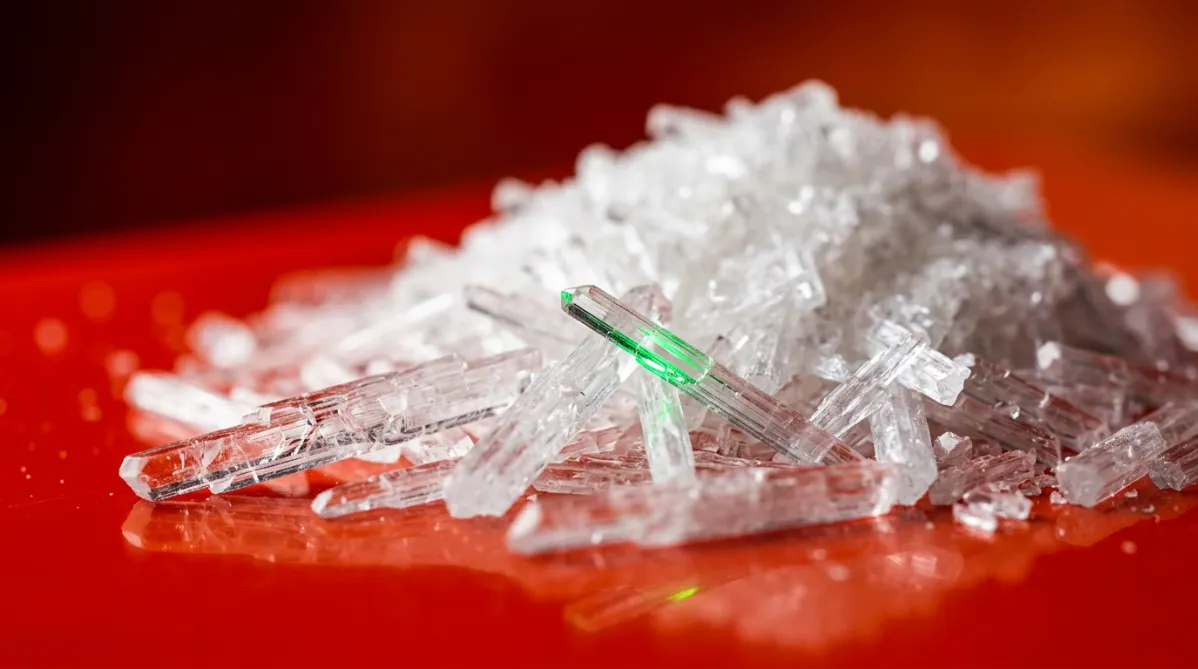
Extreme close-up of a small mound of white taurine crystals, needle-like and prismatic, shot at a 35-degree angle with a macro lens and shallow depth of field. The front crystals are razor sharp, with faceted edges that catch light and show tiny internal fractures. The mound sits on a glossy, saturated tomato-red acrylic surface that reflects a soft, blurred mirror image of the crystals. A large softbox from the upper left gives crisp highlights and warm red bounce in the shadows. A single crystal near the focal point carries a faint electric green (#00e676) refraction glint. The background melts into an out-of-focus gradient of deep red and orange. The mood is precise, energetic and confident, with a clean scientific feel. No text, no labels, no containers.
supplements

Taurine's 1.5–3 g Sweet Spot: What 34 Trials Found on Sugar and BP

BY NOVA CHEN ·

Taurine is best known for its anti-aging buzz, but a new meta-analysis of 34 randomized trials looked at everyday health markers instead. Supplementation was linked to lower fasting glucose, HbA1c, triglycerides, cholesterol, blood pressure and inflammation. The benefits clustered at 1.5–3 g per day, and the duration findings were surprising: glucose and lipids improved most after 8 or more weeks, while blood pressure and inflammation looked better in shorter trials. The effects are modest and the trials were varied, so here is what the paper does and doesn't show, and who might want to be cautious.

Approach: Macro science. Palette: D, bold color field.

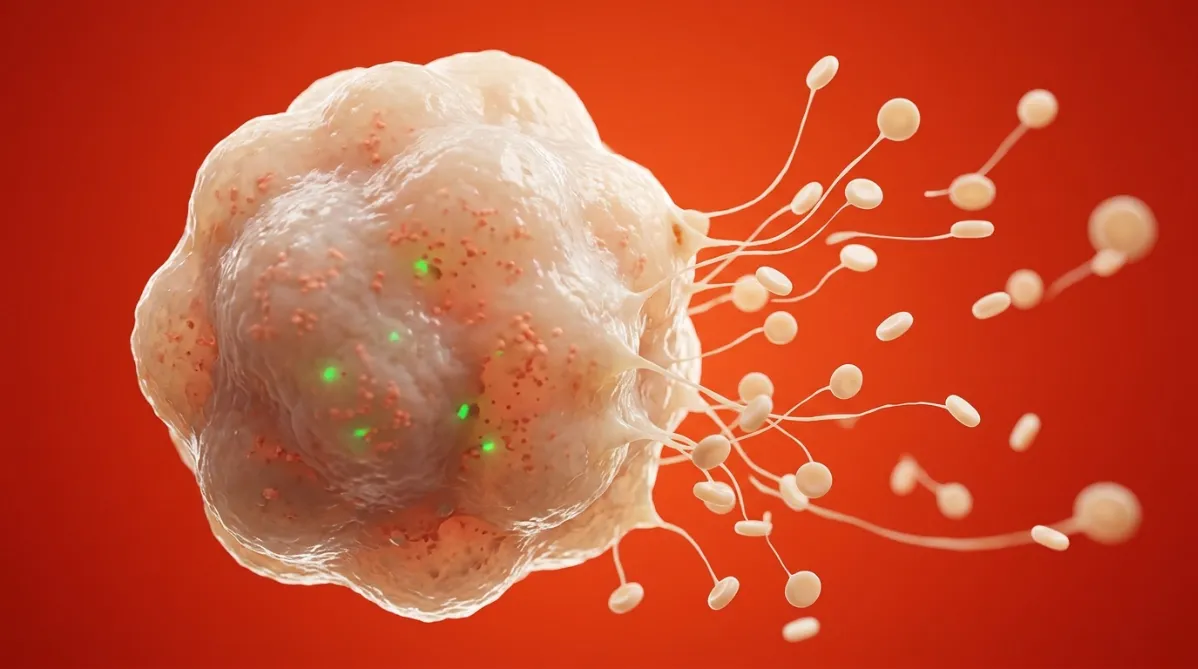
An extreme close-up microscopy-style photograph of a single giant megakaryocyte cell, a large lumpy, lobed cell with a textured, slightly translucent surface, budding off dozens of tiny, smooth, disc-shaped platelets that drift away on fine stringy extensions. The cell and platelets are a warm pearly ivory with subtle coral-pink internal granules and a few small electric green (#00e676) fluorescent specks inside, suggesting recycling vesicles. The backdrop is a saturated, even tomato-red to deep orange color field with a soft gradient. Shot from slightly above at a three-quarter angle, with shallow depth of field so the nearest platelets are crisp and the distant ones melt into soft blur. Lighting is clean, diffuse and glowing from behind, giving gentle rim highlights. Mood: curious, precise, quietly cautionary. No text.
longevity

CoQ10 Calmed 'Old' Platelets in Aged Mice—Here's the Catch

BY NOVA CHEN ·

A new Aging Cell study reports that CoQ10 improved the function of aged megakaryocytes, the bone marrow cells that make platelets, in mice. Treated animals showed reduced platelet aggregation and activation, though platelet counts didn't change. The effect appeared to run partly through COPS3 and autophagy, the cell's recycling system. But this was mouse and cell-line research with no human data and no proof of clot prevention. Here is what it means, what it doesn't, and why people on blood thinners should talk to a doctor first.

**Approach 1: Macro science, Palette D: Bold color field**

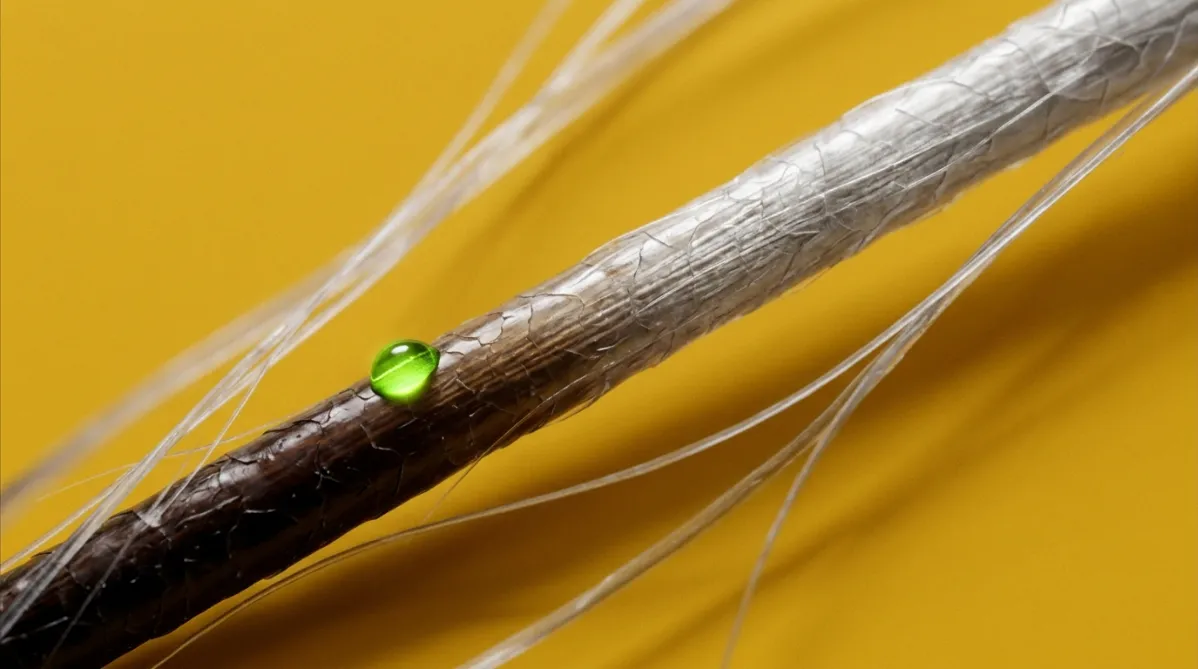
Extreme macro photograph of a single human scalp hair strand, shot at a slight diagonal. It is pigmented dark brown at the root and fades into silvery-white along its length, with the cuticle scales and fine texture visible. Beside it, a few pure white strands cross the frame. The backdrop is a smooth, saturated mustard-yellow field with no pattern. A soft, wide key light from the upper left gives the strands a glossy, translucent sheen and a gentle shadow on the yellow. Shallow depth of field blurs the far end of the hair into creamy softness. One tiny electric green droplet of serum clings to the strand near the root, catching a bright highlight. The mood is crisp, curious and optimistic, with a scientific tone.
supplements

Grey Hair Dropped 13% in 24 Weeks With a Pill-Plus-Serum Combo

BY NOVA CHEN ·

In a 24-week, double-blind trial of 173 adults, people using a supplement plus a serum saw grey hair counts fall 13.0%, while placebo users ended up 9.7% greyer. The result held across hair counts, photo grading and self-reported observation. But the benefit was shown for the combination, not either product alone, and the formulas are proprietary blends from a single company. Here's what the numbers show, what they don't, and who they apply to.

Approach: macro science, close-up of the oil itself. Palette: warm (B).

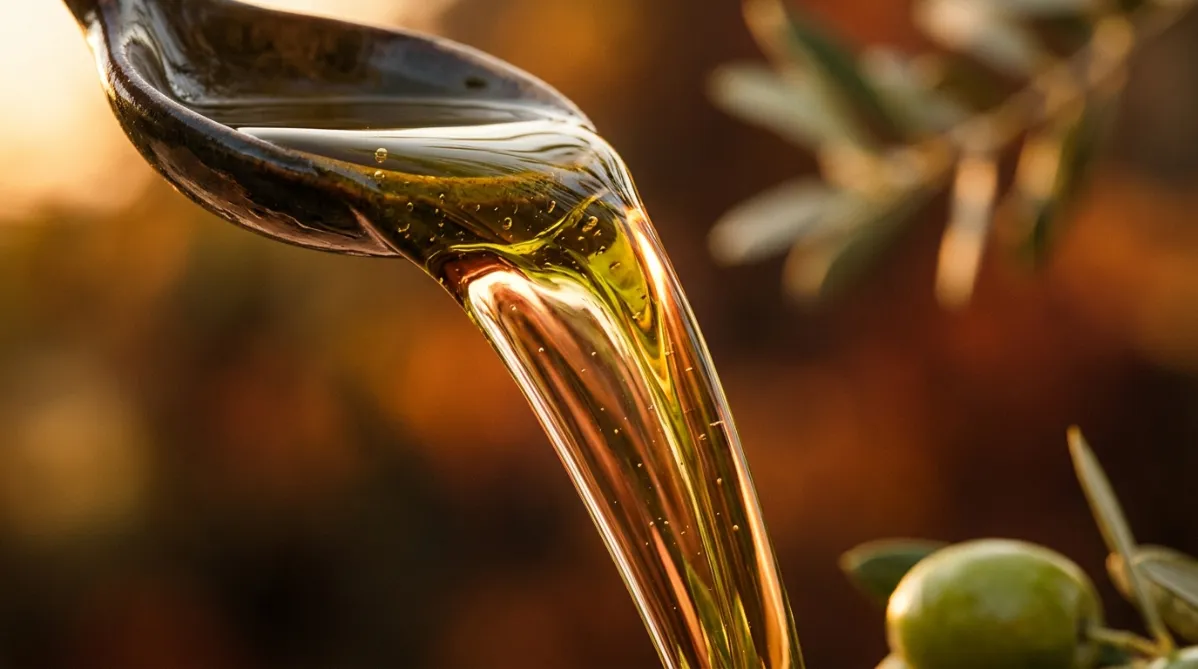
Extreme macro photograph of a thick stream of extra virgin olive oil pouring from a dark ceramic spoon, shot at a low side angle with a shallow depth of field. The oil is a glowing golden-green and forms a smooth, glassy ribbon with tiny suspended bubbles and light refractions inside it. Low golden-hour sunlight enters from behind and to the left, so the stream looks backlit and translucent, with a bright copper rim light along its edges. The background is a soft blur of warm amber and deep brown, with a faint olive branch out of focus in the distance. A single fresh green olive in the lower corner adds a small natural green accent. Crisp, sensual and warm in mood, with no text or labels.
longevity

Why 4 Tablespoons of Olive Oil May Change How Aging Feels

BY NOVA CHEN ·

Spanish researchers found that among 180 active adults aged 41 to 80, those eating 4 or more tablespoons of extra virgin olive oil a day showed no significant link between age and worse physical health or pain scores, while lower-intake eaters did. It's a striking pattern, but the study is cross-sectional and can't prove olive oil is the cause. The paper also never compared EVOO with refined olive oil, so the 'type matters' idea rests on EVOO's polyphenol and fat profile rather than direct testing. Here's what the data show, what they don't, and how to use the findings sensibly in your own kitchen.

This page is available in