How does CBL-514 work? Here's the science
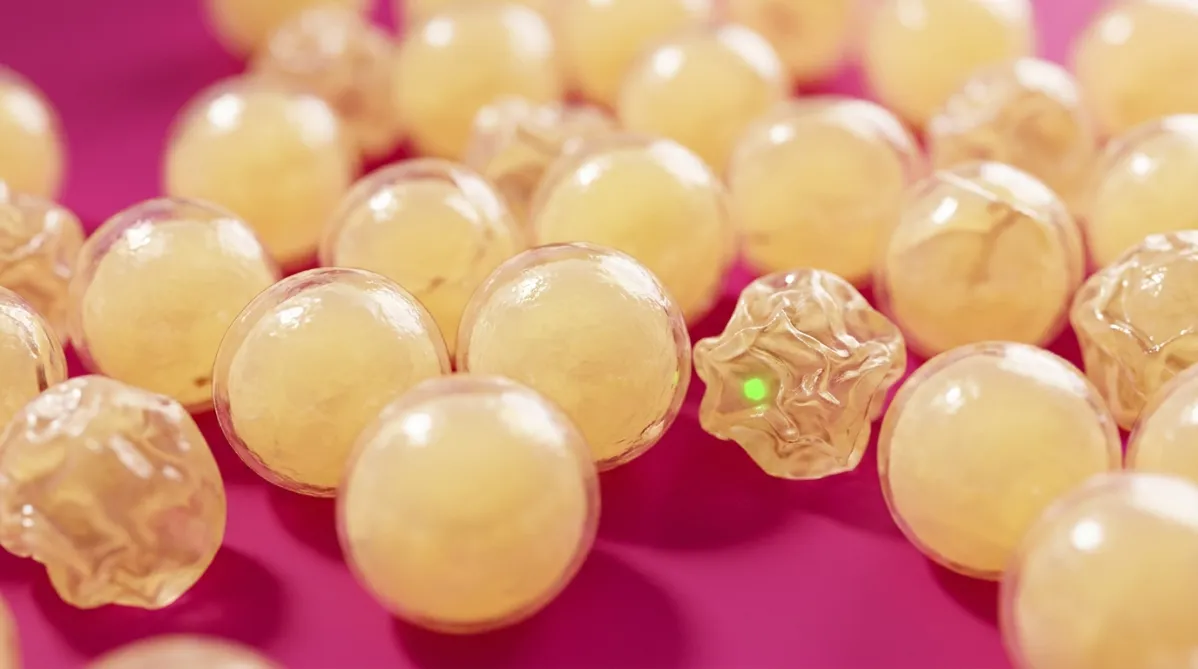
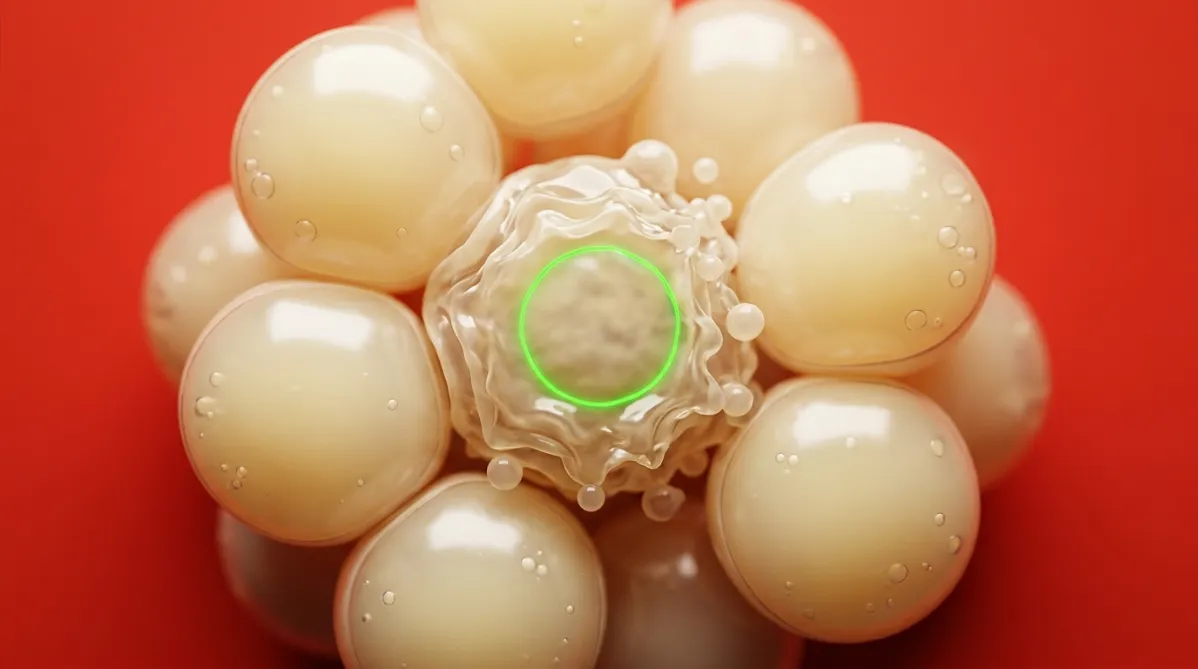
The interesting claim about CBL-514 is not that it "melts" fat. The claim is that it nudges fat cells toward programmed cell death, a process called apoptosis, inside the area where it is injected. That distinction shapes everything else about the compound: what it is supposed to do, what researchers measured, and what the evidence does and does not show.
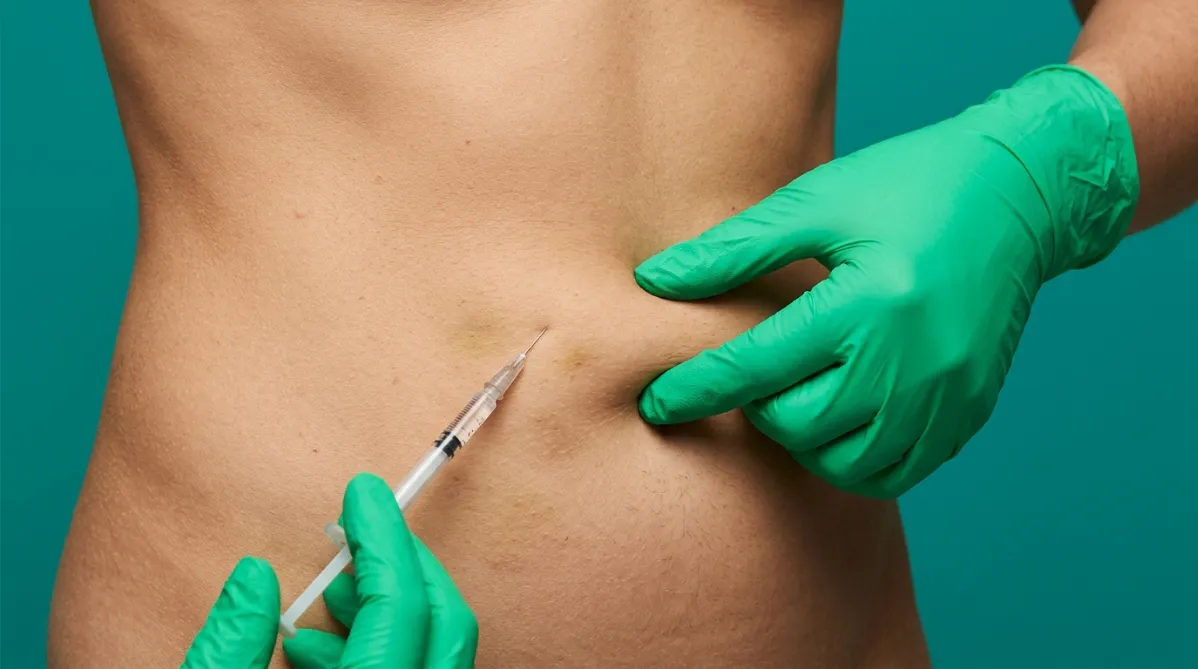
A note on naming: the compound is CBL-514, not "CL-514". It is an investigational small-molecule injectable from Caliway Biopharmaceuticals (New Taipei City, Taiwan). It is not a supplement, not an oral pill, and not an approved consumer product. In the research discussed here, investigators in a clinical trial gave it as subcutaneous injections into abdominal fat.
The molecular claim: DYRK1b, caspase 3, and Bax/Bcl-2
The 2025 Phase 2 paper describes CBL-514 as "a small-molecule injection lipolysis agent that promotes adipocyte apoptosis and targeted subcutaneous fat reduction in nonclinical studies." The more specific mechanism comes from the earlier Phase 2a paper (Goodman et al., 2022). It states that nonclinical studies showed CBL-514:
- inhibits DYRK1b, a cell-survival kinase;
- upregulates the apoptosis mediators caspase 3 and Bax/Bcl-2; and
- induces dose-dependent adipocyte apoptosis in vitro and in vivo.
The Phase 2a paper also reports lipolysis in vitro and reduced subcutaneous adiposity in targeted areas in animal studies.
In plain terms, the proposal is that the drug interferes with a survival signal in fat cells and tips the balance toward the cell's own death machinery. Caspase 3 is a key executioner enzyme in apoptosis. The Bax/Bcl-2 balance is a standard readout of whether a cell is leaning toward death or survival.
What we don't know
There are important caveats. These nonclinical findings are cited to unpublished, confidential Caliway reports, so they are company-reported and not independently detailed in the Phase 2 paper's methods. The published papers also do not disclose the chemical structure of CBL-514. Without that, nobody outside the company can say what the molecule is, how it binds DYRK1b, or whether DYRK1b inhibition is the whole story.
Local fat-cell death, not a metabolic boost
The proposed mechanism is not about raising metabolic rate or increasing whole-body energy expenditure. The strategy is local: inject into abdominal subcutaneous fat, trigger fat-cell death there, and look for a measurable drop in fat thickness and volume on ultrasound.
The Phase 2 trial's weight data fit that framing. Mean body-weight change was minimal: +0.45 kg at the 4-week follow-up and +0.02 kg at 8 weeks in the CBL-514 group, versus -0.76 kg and -0.26 kg with placebo. The authors report no significant changes in mean weight or BMI, and they say localized fat loss occurred even in some participants who gained more than 1 kg (data not shown). This is a local fat-volume story, not a weight-loss story.
What the human trial measured
The Phase 2 study (Gold et al., Aesthetic Surgery Journal, 2025) was randomized, single-blind, and placebo-controlled, run at five centers in the United States and Australia. Participants received up to four treatments at 4-week intervals. Each injection delivered 2.4 mL of CBL-514 at 2 mg/cm², up to 600 mg per treatment, or saline placebo. Fat volume was estimated from ultrasound thickness at four scan points multiplied by a defined 300 cm² treatment area.
The authors report that the trial met its primary endpoint. In the intention-to-treat analysis, 63.9% of CBL-514 participants (23/36) had at least 150 mL fat-volume loss at the 4-week follow-up, versus 17.4% (4/23) with placebo. At 8 weeks the figures were 69.6% (16/23) versus 0.0% (0/16). Least-squares mean change from baseline in the CBL-514 group was -199.80 mL at 4 weeks and -209.46 mL at 8 weeks.
Those are the outcomes. They are not mechanism evidence. The trial measured volume, thickness, photographs, and safety. It did not present human biopsy or caspase data, so nothing in the paper shows that DYRK1b inhibition or adipocyte apoptosis occurred in the people treated. The human data show that fat thickness on ultrasound fell. The apoptosis explanation remains a hypothesis carried over from nonclinical work.
Reading the results with caution
Several limitations matter for anyone weighing the mechanism story:
- Single-blind only. Participants were blinded, but investigators, site staff, and the sponsor were not.
- High dropout. Of 75 treated participants, 37 (49.3%) did not complete the study. Denominators shrank at each follow-up, and the per-protocol population was only 30 people.
- Sponsor involvement. Caliway took part in study design, data collection and analysis, interpretation, writing, and the decision to submit.
- Exploratory sample size and no adjustment for multiple testing.
- Participants were mostly women (94.0% in the CBL-514 group).
The authors say results are "comparable to that achieved with liposuction" and that the trend "appears to be larger" than in some cryolipolysis studies. These are the authors' interpretations. Measurement methods differed, and there was no head-to-head comparison.
How this differs from ATX-101
The only FDA-approved injectable for fat reduction mentioned in the paper is ATX-101 (deoxycholic acid, Kybella), approved only for submental (under-chin) fat. That drug works through adipocytolysis, a different framing from CBL-514's proposed programmed cell death, and the papers raise tissue-selectivity concerns about it. CBL-514 is described as promoting targeted fat reduction without skin necrosis, ulceration, or nerve injury in nonclinical work. The Phase 2 authors report none of those events in their trial.
That is an observation from one mid-stage study, not proof of a long-term safety advantage. The trial was small, had substantial attrition, and was not designed to settle comparative safety questions.
Bottom line
CBL-514's proposed mechanism is specific: inhibit DYRK1b, upregulate caspase 3 and Bax/Bcl-2, and drive dose-dependent adipocyte apoptosis in the treated area. The human data show a local ultrasound-measured fat reduction versus placebo. The link between the two has not been shown in people, and the molecular evidence comes from unpublished company reports. CBL-514 remains investigational, and this article is not guidance for use.
Sources
- Phase 2: Gold M, et al. Aesthet Surg J. 2025;45(6):611-620. Full text (PMC12080885) | PubMed | DOI
- Earlier Phase 2a (open-label): Goodman GJ, et al. Aesthet Surg J. 2022;42:NP662-NP674. PMC9384315 | DOI
More from this CBL-514 series
This article is part of our CBL-514 series. For the full Phase 2 trial overview, start here: CBL-514 Injection Lipolysis: A Phase 2 Map of the Evidence.