CBL-514 Injection Lipolysis: A Phase 2 Map of the Evidence
CBL-514 is an investigational injection that aims to trigger fat-cell apoptosis in a treated abdominal area. In a 2025 Phase 2 trial of 76 randomized participants, it produced large ultrasound-measured fat-volume losses versus saline while mean body weight stayed flat. This hub maps the design, the 2 mg/cm² dosing, the exact efficacy figures with their shrinking denominators, and the company-reported DYRK1b/caspase mechanism. It also spells out the caveats: single-blind design, sponsor involvement, about 49% non-completion, short follow-up and a mostly female sample. Five deeper explainers are linked for readers who want to go further.
CBL-514 Dosages - what does science say?
CBL-514 trials are investigational injection protocols, and the "600 mg" figure is a per-treatment cap, not a supplement dose. This article walks through the Phase 2a dose-finding study (1.2, 1.6 and 2.0 mg/cm² over 150 cm², n=43, open-label) and explains where the much-quoted 24.96% figure comes from. It then covers the placebo-controlled Phase 2, which kept 2.0 mg/cm² but doubled the area to 300 cm² and raised the cap to 600 mg. You will see why mg totals cannot be compared across studies, what safety was reported, and why this is still not approved or advice.
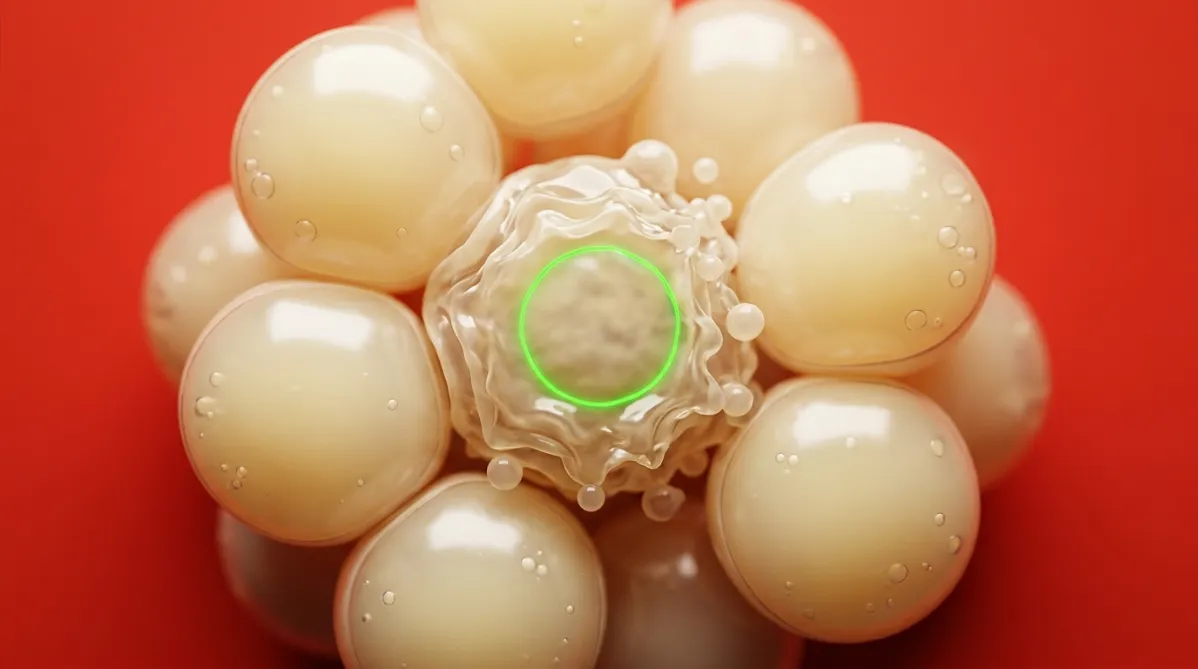
How does CBL-514 work? Here's the science
CBL-514 is not framed as a fat-melting or fat-burning drug. The proposed claim is that it inhibits the survival kinase DYRK1b and pushes fat cells toward apoptosis through caspase 3 and Bax/Bcl-2. That evidence comes from unpublished company reports cited in the Phase 2a and Phase 2 papers, and the chemical structure has not been disclosed. The 2025 Phase 2 trial measured ultrasound fat volume, photos, and safety, with no human biopsy or caspase data. This article separates the molecular hypothesis from what was actually measured in people, including the high dropout and single-blind design.