Biocracked
←

#oxidative-stress

1 article
Approach: Macro science. Palette: D, bold color field.

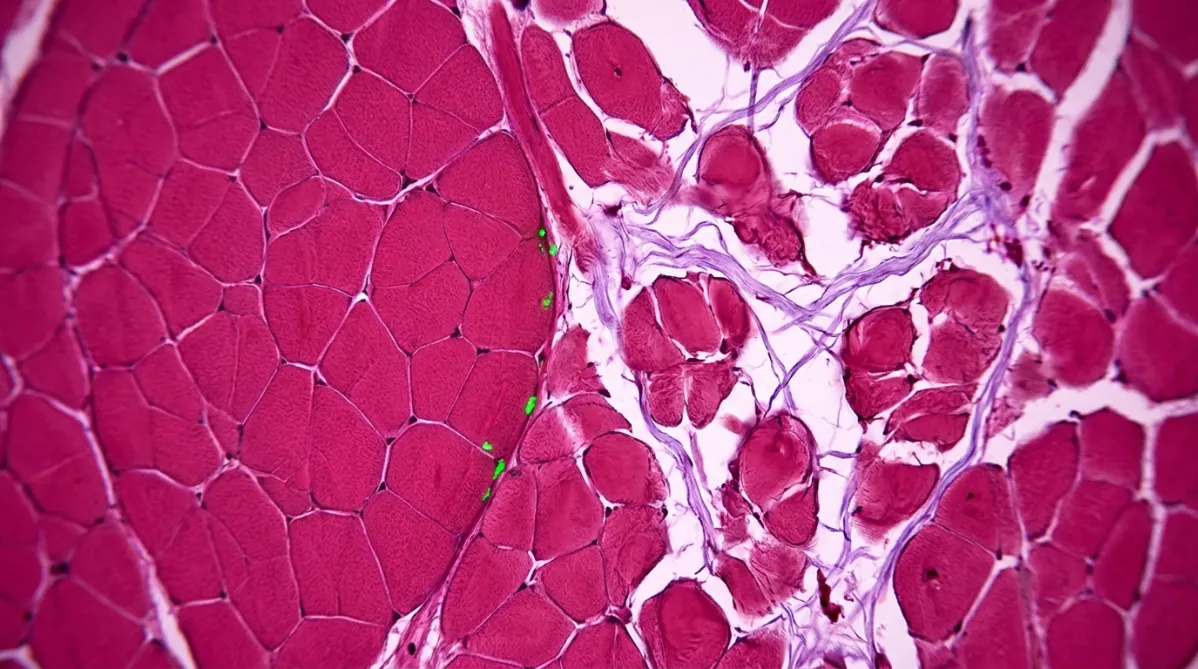
Extreme close-up microscopy-style photograph of a stained rat skeletal muscle cross-section, shot straight down through the microscope objective. Polygonal muscle fibers fill the frame in saturated magenta and pink eosin tones. A cluster of fibers on the left is neatly packed and uniform. On the right, the tissue is disrupted, with swollen gaps and thin, fibrous collagen strands in pale violet threading between damaged cells. A few tiny electric green fluorescent specks sit along one fiber edge as a subtle accent. Lighting is bright, even transmitted light with crisp focus at the center and soft falloff at the edges. The mood is analytical and tense, a rescue only partly complete. No text, no labels.
peptides

BPC-157 Protected Rat Muscle From Blood-Flow Injury—With a Catch

BY NOVA CHEN ·

Cut off blood flow to a muscle and then restore it, and the comeback itself can do serious damage. A new rat study found that BPC-157 given at the end of ischemia was linked to lower oxidative stress, less apoptosis signaling, less inflammation and partial recovery of VEGF. Tissue staining also showed better muscle structure and less collagen buildup. But the study used just 6 rats per group, one intraperitoneal dose of 20 µg/kg and only 2 hours of reperfusion. BPC-157 is not an approved drug, and this is animal-only research that doesn't justify human use.

This page is available in