Biocracked
←

#bifidobacterium

1 article
Approach 1, macro science, in palette D, bold color field.

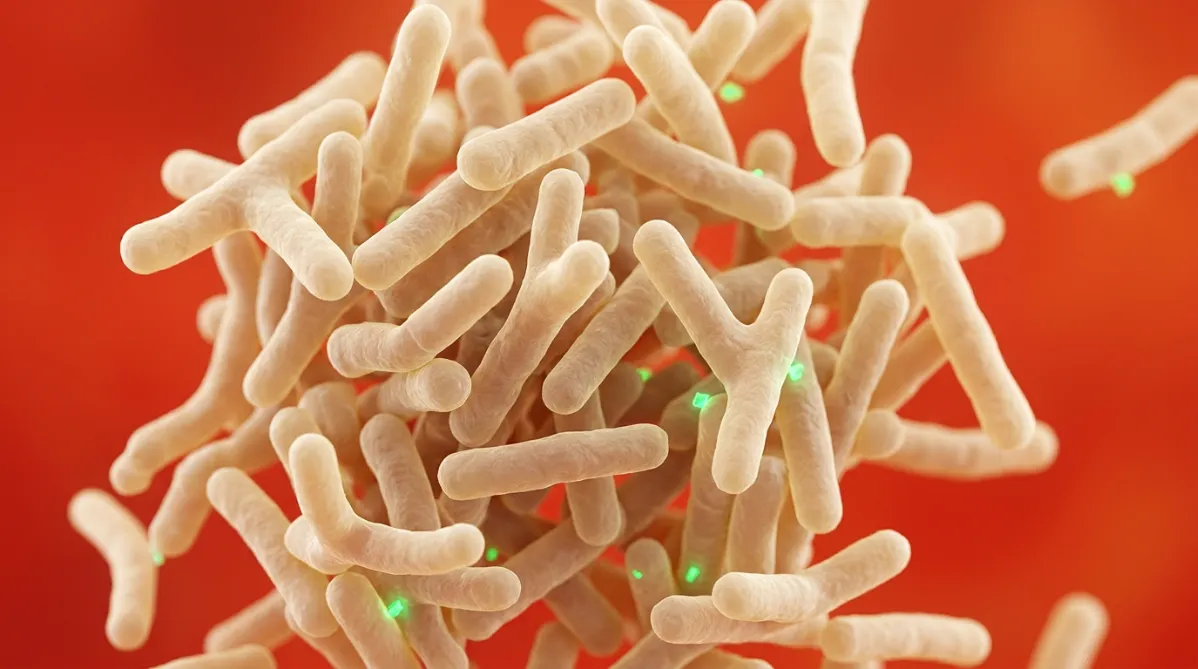
Extreme close-up microscopy-style photograph of a dense colony of rod-shaped, slightly branched Bifidobacterium cells, rendered as real textured organic forms with soft translucent walls and subtle surface detail. The cells are warm cream and ivory, clustered in the center and thinning toward the edges. The whole backdrop is a saturated tomato-red to orange field, smooth and out of focus, so the bacteria stand out in sharp contrast. A few scattered tiny crystalline metabolite specks glow faintly electric green (#00e676) near the colony. Camera angle is straight-on, slightly oblique, with a very shallow depth of field. Lighting is soft, diffuse backlight with gentle rim highlights on the cell edges and no harsh shadows. The mood is vivid, curious and hopeful, scientific but warm, with no blue cast anywhere. No text.
longevity

Questo microbo intestinale produce 5‑AVAB, una molecola che ha domato l’inflammaging

BY NOVA CHEN ·

Un microrganismo intestinale che scompare silenziosamente con l’età potrebbe fare più di quanto pensassimo. Uno studio pubblicato su *Nature Aging* ha individuato *Bifidobacterium pseudocatenulatum* come costantemente in diminuzione negli anziani di diverse coorti cinesi. Nei topi invecchiati naturalmente, l’assunzione orale di questo batterio ha attenuato l’inflammaging multisistemico e ha prolungato la salute. I ricercatori hanno collegato parte dell’effetto a un metabolita chiamato 5‑AVAB, il cui livello cala anch’esso con l’età umana.

This page is available in