Biocracked
←

#pilot-study

1 article
**Approach 1: Macro science. Palette C: Natural.**

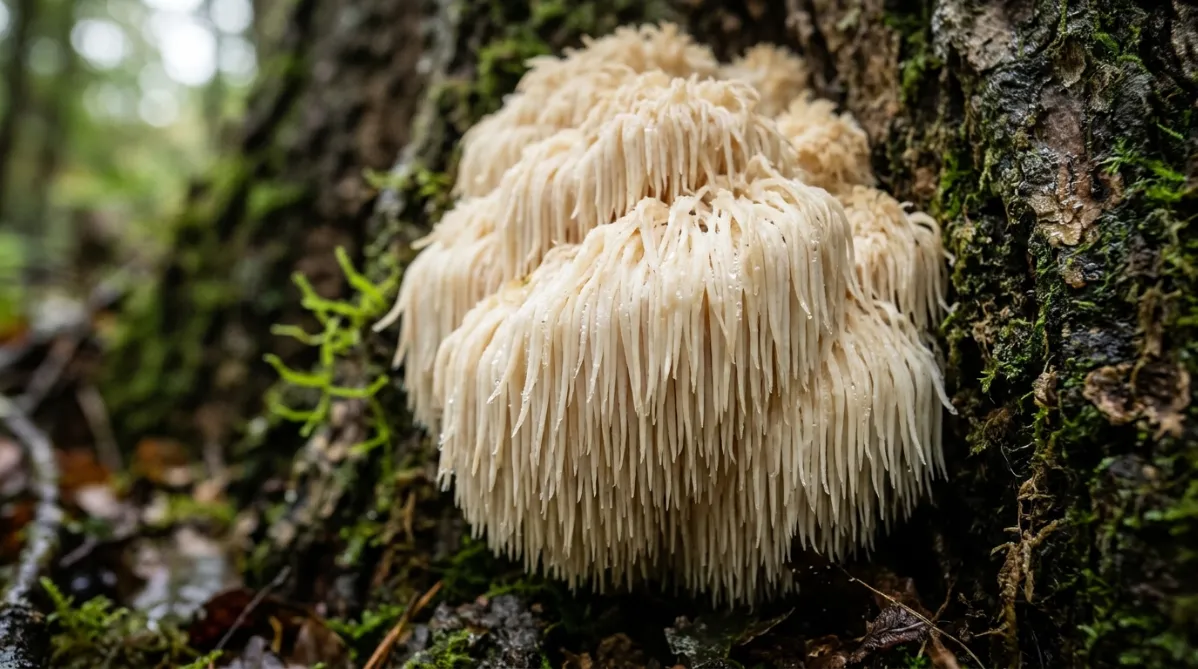
Extreme close-up of a fresh lion's mane mushroom (Hericium erinaceus), shot at a slight low three-quarter angle with a macro lens and shallow depth of field. Its cascading white-cream spines hang in dense, delicate strands, and the nearest tips are sharp and slightly translucent, with tiny beads of moisture. Behind it, soft out-of-focus oak bark and moss glow in green and brown. Diffuse overcast daylight from the upper left gives gentle shadows and a faint warm rim light on the spines. A few strands of bright electric green moss in the blurred background pick up the brand accent. The mood is quiet, curious and measured, the look of careful observation rather than hype. Photorealistic, with no text or labels.
supplements

2 g de crinière de lion pendant 4 semaines : Que s’est‑il passé avec le BDNF et la concentration ?

BY NOVA CHEN ·

La crinière de lion est vendue comme le champignon qui booste le cerveau, mais que se passe‑t‑il quand 10 adultes en bonne santé prennent 2 g par jour pendant 28 jours ? Une petite étude pilote publiée dans *Nutrients* a mesuré la fonction exécutive et le BDNF plasmatique, et aucun résultat n’a atteint la signification statistique. Les tailles d’effet sont modestes (flanker d = 0,48 ; DCCS d = 0,25 ; BDNF d = 0,31) et le supplément a été bien toléré. En l’absence de groupe placebo, avec un échantillon très réduit et des liens industriels déclarés, il s’agit plus d’une indication que d’une preuve. Voici ce que les données peuvent et ne peuvent pas vous dire, et comment aborder la crinière de lion si vous êtes curieux.

This page is available in