Biocracked
←

#pilot-study

1 article
**Approach 1: Macro science. Palette C: Natural.**

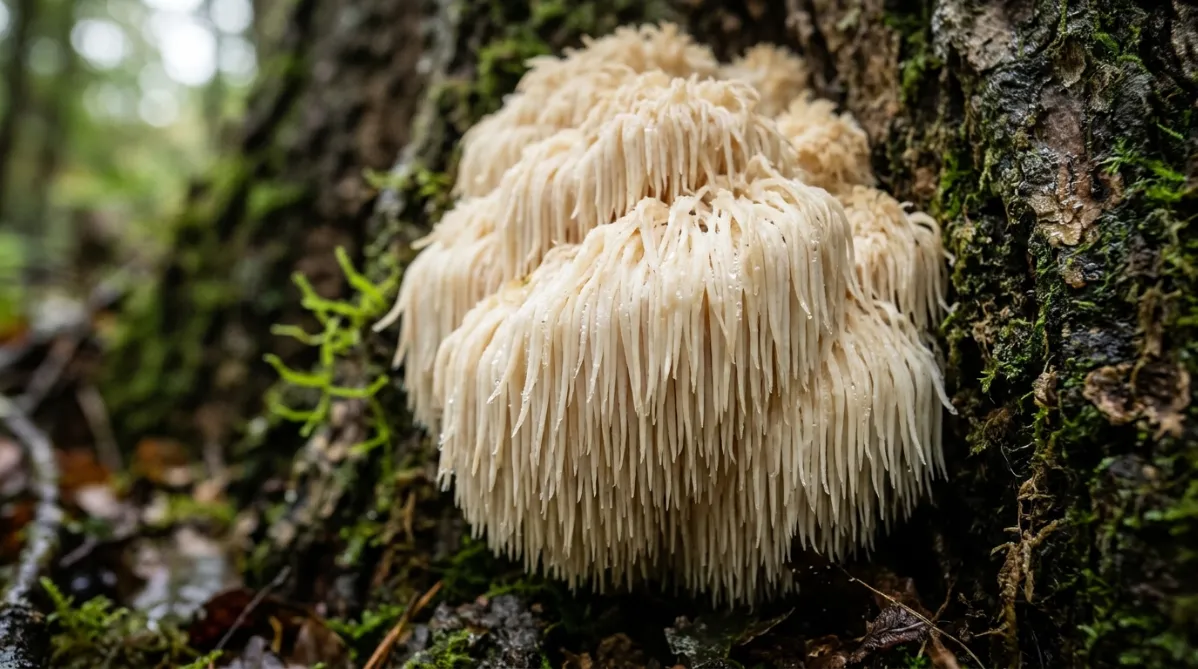
Extreme close-up of a fresh lion's mane mushroom (Hericium erinaceus), shot at a slight low three-quarter angle with a macro lens and shallow depth of field. Its cascading white-cream spines hang in dense, delicate strands, and the nearest tips are sharp and slightly translucent, with tiny beads of moisture. Behind it, soft out-of-focus oak bark and moss glow in green and brown. Diffuse overcast daylight from the upper left gives gentle shadows and a faint warm rim light on the spines. A few strands of bright electric green moss in the blurred background pick up the brand accent. The mood is quiet, curious and measured, the look of careful observation rather than hype. Photorealistic, with no text or labels.
supplements

2 g de Lion’s Mane pentru 4 săptămâni: Ce s‑a întâmplat cu BDNF și concentrarea?

BY NOVA CHEN ·

Lion’s mane este promovată ca „ciupercă pentru creier”, dar ce se întâmplă când 10 adulţi sănătoşi iau 2 g pe zi timp de 28 de zile? Un studiu pilot publicat în *Nutrients* a evaluat funcţia executivă şi nivelul plasmatic al factorului neurotrofic derivat din creier (BDNF). Niciun rezultat nu a atins semnificaţie statistică; dimensiunile efectului au fost mici spre moderate (flanker d = 0,48, DCCS d = 0,25, BDNF d = 0,31), iar suplimentul a fost bine tolerat. Fiind un studiu fără grup placebo, cu eșantion foarte mic şi cu legături industriale declarate, datele reprezintă un indiciu, nu o dovadă. Iată ce ne poate şi ce nu ne poate spune studiul şi cum să abordezi lion’s mane dacă ești curios.

This page is available in