Biocracked
←

#gip

1 article
**Approach:** Lab in action. **Palette:** Bold color field, mustard yellow.

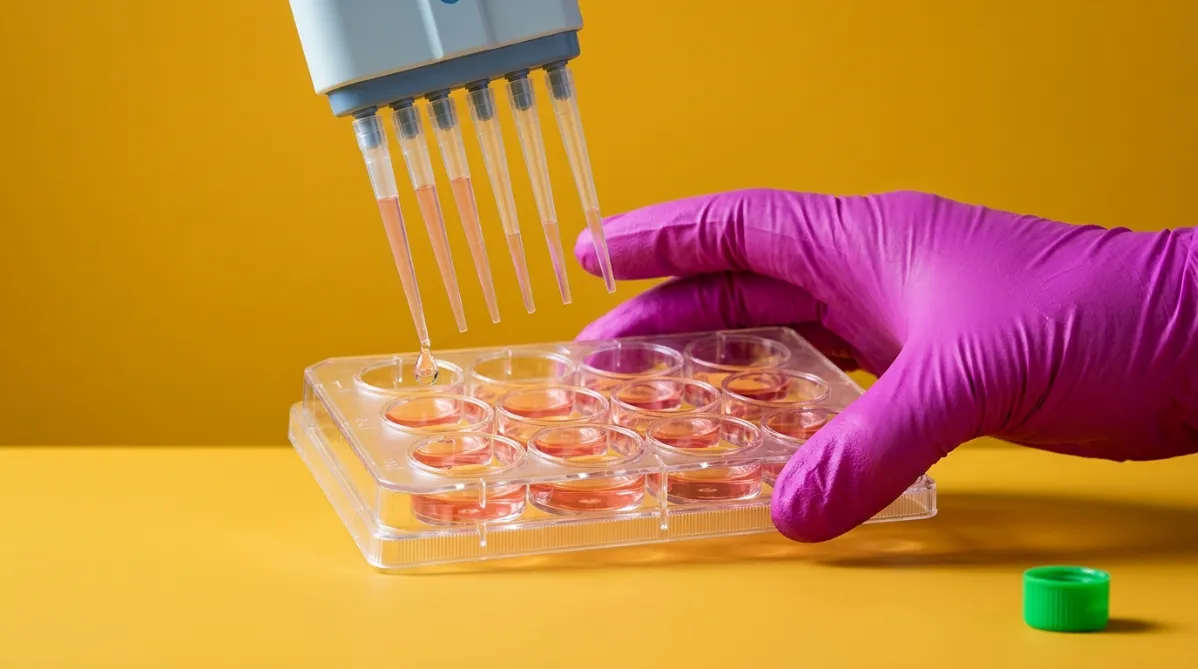
A close, slightly high three-quarter view of a hand in a magenta-purple nitrile glove holding a clear 12-well cell culture plate. Each well is filled with salmon-pink culture medium. A multichannel pipette hovers over one well, with a single droplet caught just before it falls. The background is a seamless, saturated mustard-yellow surface and wall, with a soft shadow under the plate. Bright, even studio light comes from the upper left, giving crisp highlights on the plastic rims and a soft glow through the liquid. The depth of field is shallow, so the far wells blur gently. A tiny electric-green cap on a tube sits in the corner of the frame. The mood is calm, precise and curious, with a clean, graphic, editorial feel. No text or labels.
peptides

Semaglutida no provocó atrofia de células musculares humanas. Entonces, ¿por qué se pierde músculo?

BY DR. SYNAPSE ·

¿Realmente la semaglutida consume tu músculo? Un nuevo estudio en GeroScience aplicó el fármaco directamente a células musculares humanas primarias de adultos mayores con obesidad, y las células no se atrofiaron. No se activaron genes de atrofia ni se detectaron alarmas en el secretoma, y el GIP incluso aumentó el grosor de los miotubos tras ocho días. La semaglutida redujo modestamente la producción de ATP glicolítica, y los receptores GLP‑1 apenas se detectaron. Los hallazgos apuntan a causas indirectas de la pérdida de masa magra, como el déficit calórico y la disminución de la carga mecánica, aunque una placa de cultivo no es un cuerpo.

This page is available in