The Headline Is Tempting. The Fine Print Matters More.
Can a daily supplement make your aging immune cells act younger in a month? A new randomized trial in Nature Aging suggests urolithin A, a gut-derived compound linked to pomegranates, nudged T cells in that direction. The shift was real in the data, but it was small, and nobody measured whether participants got sick less often. Here is what the study found, what it didn't, and who might care.
What Is Urolithin A?
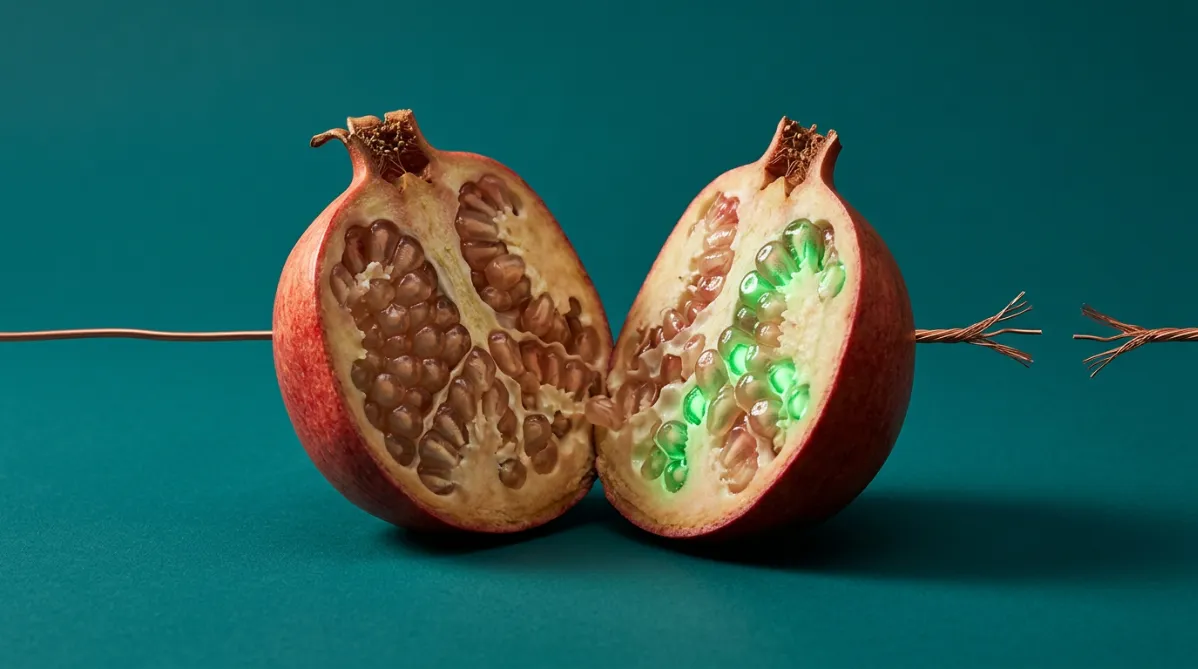
Urolithin A (UA) is a postbiotic: a metabolite made by gut bacteria, not a nutrient you eat directly. Microbes convert ellagitannins and ellagic acid, found in pomegranates, walnuts, and some berries, into UA. The catch is that conversion varies widely from person to person, and a glass of pomegranate juice may deliver very little UA to someone whose microbiome lacks the right bugs.
UA is best known as a mitophagy inducer. Mitophagy is the cellular housekeeping process that clears out worn-out mitochondria so healthier ones can replace them. Mitochondrial dysfunction is a hallmark of aging, which is why UA keeps turning up in longevity research.
Why Immune Aging Is the Target
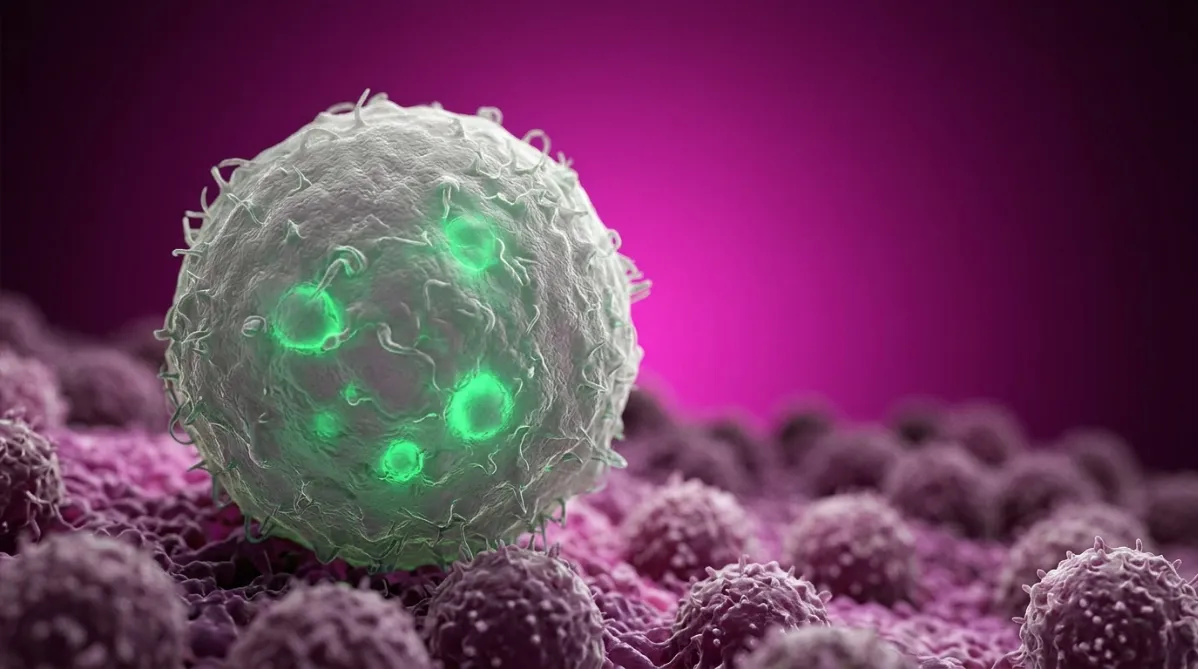
The immune system declines with age, a process called immunosenescence. Fewer fresh, "naive" T cells are available to meet new threats, while more cells become exhausted or pro-inflammatory. The result is weaker responses to infections and vaccines, plus a low-grade, chronic inflammatory state often called inflammaging.
The study authors point to mitochondrial dysfunction and stem cell exhaustion as drivers of this decline. They note that clinical interventions aimed at immune aging are largely lacking. Earlier work from the same group showed UA expanded T memory stem cells and naive T cells in mice. This trial asked whether anything similar happens in people.
How the Trial Worked
- Design: randomized, double-blind, placebo-controlled
- Participants: 50 healthy, middle-aged adults
- Intervention: 1,000 mg/day of oral urolithin A (as Mitopure) or placebo
- Duration: 4 weeks, with samples at baseline and day 28
- Primary outcomes: changes in peripheral CD3+ T cell subsets and immune metabolic remodeling
- Registration: ClinicalTrials.gov NCT05735886
What They Found
Naive-like CD8+ T cells went up. UA expanded peripheral naive-like, less terminally exhausted CD8+ cells. The treatment difference was 0.50 percentage points (95% CI 0.16 to 0.83; P = 0.0437). That is statistically detectable but a small absolute change, and the paper's own numbers show it. Nobody should read it as "immune system reset."
CD8+ fat-burning capacity rose more clearly. Fatty acid oxidation capacity in CD8+ cells increased by 14.72 percentage points (95% CI 6.46 to 22.99; P = 0.0061). This is the stronger signal in the paper. It suggests UA changed how these cells use fuel, consistent with its mitochondrial mechanism.
Secondary findings pointed the same way:
- Greater mitochondrial biogenesis in CD8+ cells
- More CD56dimCD16bright NK cells
- More nonclassical CD14loCD16hi monocytes
- Improved activation-triggered TNF secretion in T cells
- Better bacterial uptake by monocytes
- Exploratory single-cell RNA sequencing showing shifts in inflammation and metabolism pathways
Together, these suggest short-term UA supplementation changes both the makeup and function of immune cells. The authors frame this as support for UA's potential to counter age-related immune decline and inflammaging.
The Caveats You Shouldn't Skip
- It was only 4 weeks. We don't know whether the changes persist, grow, or fade.
- It was only 50 people. That is small, and the participants were healthy middle-aged adults, not older or immunocompromised people.
- Biomarkers only. The study did not measure clinical outcomes such as fewer infections, better vaccine responses, or lower disease risk. A shift in cell populations is not proof of better health.
- The primary effect was modest. A 0.5-point change with a P value of 0.0437 is not overwhelming evidence, and the secondary and single-cell results are exploratory.
- The company funded it. Amazentis, maker of Mitopure, funded the trial and supplied the product. Several authors are employees or executives, and another has received consulting fees. That doesn't invalidate the work, which appeared in a peer-reviewed journal, but independent replication matters.
- There is a published erratum. Nature Aging issued a correction in 2026, so read the latest version of the paper.
This is also a different study from the earlier 2019 mitochondrial trial of UA, so don't conflate the two.
Practical Takeaways
Dose used: 1,000 mg/day, which is the amount tested here. It's a research dose, not a guarantee of results at lower amounts.
Product tested: Mitopure, the branded UA from Amazentis. Results from one product shouldn't be assumed to apply to others.
Who it's for: The trial enrolled healthy middle-aged adults, so the plausible audience is longevity-minded people around 40 and up who want to support mitochondrial and immune health. It is not a treatment for any condition, and anyone on immune-modulating medication or with a medical condition should talk to a clinician first.
Why not just drink pomegranate juice? UA isn't in the fruit. Your gut bacteria make it from ellagitannins, and people differ a lot in how much they produce. Even efficient producers are unlikely to reach anything like the 1,000 mg/day tested here through food alone. That is the core rationale for supplementing UA directly.
The Bottom Line
This trial is a credible early signal that a mitophagy inducer can move human immune cells in a younger-looking, more metabolically flexible direction within a month. It does not show that UA prevents infections, improves vaccine responses, or extends life. For now, treat it as promising mechanistic evidence. The real test is longer, larger, independently run trials that track outcomes people actually feel.