Biocracked
Approach: macro science. Palette: C, natural.

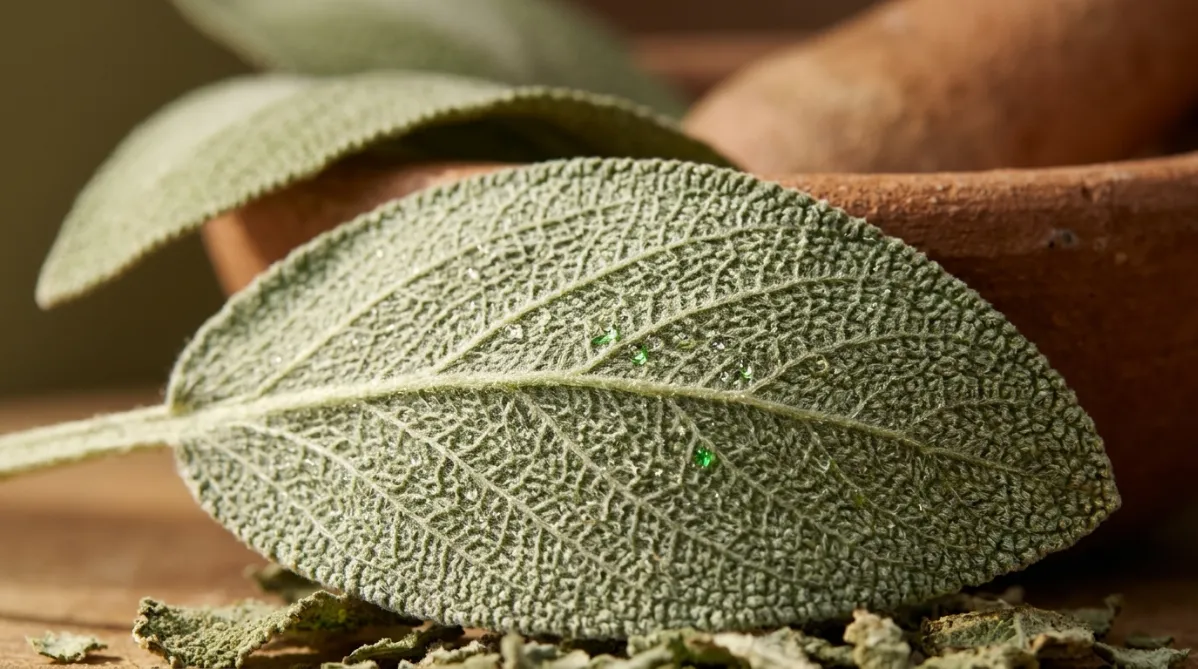
An extreme close-up macro photograph of a single dried sage leaf, shot from slightly above at a 30-degree angle, with its velvety, silvery-green surface and fine network of veins filling the frame. Tiny trichome hairs and glandular oil droplets catch the light like frosted glass. Soft window daylight comes from the left, giving gentle shadows and a warm, earthy feel. The shallow depth of field blurs a second leaf and a rough terracotta mortar in olive and clay tones behind it. A few crumbled leaf fragments rest at the bottom edge. One faint, vivid electric green reflection glints in an oil droplet as a subtle accent. The mood is calm, focused and fresh, with a natural botanical look. The image has no text and no blue cast, and the tones stay green, brown and amber.
Supplements

The Kitchen Herb That Sharpened Stress Multitasking in an Hour

Nova Chen · · 5 min read

Your spice rack may hold a surprisingly interesting cognitive tool. In a double-blind lab study, a single dose of dried sage leaf improved performance on a punishing multitasking test, and volunteers also reported feeling more alert and calm. The twist is that a smaller dose did not do the same thing. In some respects it backfired.

The research comes from a team at the University of Northumbria in the UK. It was published in Neuropsychopharmacology in 2006 and looked at common sage (Salvia officinalis) as a natural nootropic for stress and focus. Here is what it found, what it did not prove, and how to think about it sensibly.

Why Sage? The Acetylcholine Angle

Acetylcholine is a neurotransmitter closely tied to attention, learning and memory. Enzymes called cholinesterases break it down. Block those enzymes and acetylcholine hangs around longer. That is the logic behind several prescription drugs used in Alzheimer's disease.

Sage has drawn interest because lab work suggests it has cholinesterase-inhibiting properties. Earlier research had also linked it to better memory performance and mood in healthy young people. In a concomitant experiment in this paper, a sage leaf extract inhibited acetylcholinesterase in a dose-dependent way. It inhibited butyrylcholinesterase, a related enzyme, to an even greater extent.

That was an in vitro result, meaning it was done in the lab and not in the volunteers. It offers a plausible mechanism, not proof that this is how sage affected the participants.

The Stress-Battery Study

The researchers wanted to know whether sage helps when people are under pressure, so they designed a demanding test.

  • Participants: 30 healthy young adults
  • Design: double-blind, placebo-controlled, counterbalanced crossover. Everyone tried every treatment.
  • Visits: three lab days, each 7 days apart
  • Treatments: placebo, 300 mg dried sage leaf, or 600 mg dried sage leaf, all as single doses
  • Mood measures: Bond-Lader mood scales and the State Trait Anxiety Inventory (STAI), taken before dosing and again at 1 and 4 hours afterward
  • The stressor: 20 minutes of the Defined Intensity Stress Simulator (DISS), a computerized multitasking battery that loads people with several simultaneous tasks

Mood was measured before and after the DISS at each time point. That let the team separate how people felt at rest from how they felt after the pressure test.

Results by Dose

600 mg: the clear winner

The higher dose looked good on several fronts:

  • Higher ratings of alertness, calmness and contentedness before the stressor
  • Better DISS multitasking performance at both the 1-hour and 4-hour sessions

A single dose improved both how people felt and how they performed under load, and the performance benefit was still there four hours later.

300 mg: the plot twist

The lower dose was more complicated. It reduced anxiety in the pre-stressor mood scores, which sounds promising. But that calming effect disappeared once participants completed the DISS. The same dose was also linked to reduced alertness during the task, and to worse task performance at the later testing session.

So the same herb produced different effects at different doses. A little sage was not simply a weaker version of more sage.

The 300 vs 600 mg Lesson

The study does not explain why the doses diverged, and it would be a mistake to over-interpret it. One reasonable reading is that the lower dose gave a relaxing effect without enough of the alertness-supporting effect to carry people through a demanding task. That is speculation, not a finding.

The practical point is that dose matters. Anyone reading "sage reduces anxiety" and taking a small amount before a high-pressure task might get a very different outcome from what the 600 mg group saw.

Limitations You Need to Know

This is interesting science, but it is not a final answer.

  • Single doses only. The study says nothing about taking sage daily for weeks.
  • Small sample. Thirty people is modest, and the participants were healthy young adults. Results may not carry over to older adults or people with medical conditions.
  • Lab setting. A computerized multitasking battery is a controlled stand-in for stress, not an actual exam or a stressful workday.
  • Age of the research. It dates from 2006. Later work has explored sage further, but this paper alone cannot settle the question.
  • Mechanism not confirmed. The cholinesterase inhibition was shown in a test tube. The paper does not demonstrate that it explains the effects in people.

Practical Takeaways

If you want to apply what this study actually tested, the picture looks like this. This is not medical advice.

  • Dose studied: 600 mg of dried sage leaf produced the benefits. The 300 mg dose did not.
  • Timing: mood and performance were assessed 1 hour after dosing, so taking it roughly an hour before demanding work matches the study design.
  • Duration: performance benefits at 600 mg were still seen at the 4-hour session.
  • Who might be interested: students facing exams, and people with high-pressure cognitive work. The participants were healthy young adults, so that is the group the evidence best fits.
  • Product matters: the study used dried sage leaf. Concentrated extracts and essential oils are different products, and this research does not support swapping them in.

Safety Notes

Sage is a culinary herb, but "natural" does not mean "anything goes."

  • Thujone. Sage contains thujone, a compound that can be harmful in high amounts. Stick to modest, label-guided amounts of dried leaf products and do not exceed recommended doses.
  • Avoid high-dose essential oil. Sage essential oil is highly concentrated and should not be swallowed in large amounts.
  • Pregnancy. Pregnant women are commonly advised to avoid medicinal doses of sage. Breastfeeding women and people with seizure disorders should also talk to a clinician first.
  • Medications and health conditions. If you take prescription drugs, especially for epilepsy, diabetes or cognitive conditions, check with a doctor or pharmacist before experimenting.

The Bottom Line

This study offers an intriguing, evidence-backed hint that a humble herb can influence alertness, calmness and multitasking under pressure, but only at the right dose. The 600 mg result is encouraging, and the 300 mg result is a useful warning. Because the findings come from single doses in 30 young adults in a lab, treat sage as a promising subject for more research and not a proven study aid.
Original study

Read the original research on pubmed.ncbi.nlm.nih.gov →

This article summarizes published research for general information. It is not medical advice.

NC

Written by

Nova Chen

Nova Chen writes for Biocracked: biohacking science, longevity & human performance.

Related Articles

**Approach: Macro science, with Palette C (natural).**

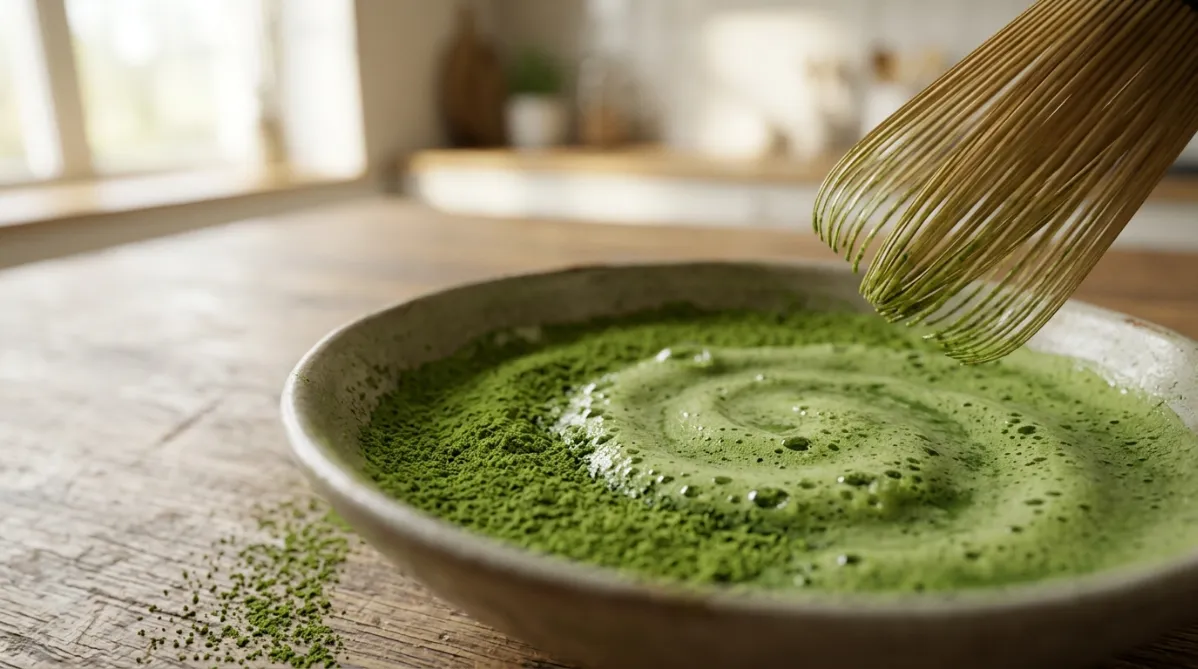
Extreme close-up, shot from a low 30-degree angle, of finely sifted matcha powder in a shallow matte ceramic bowl. A bamboo whisk's tines have just lifted from the surface, leaving a swirl of vivid green foam with a few tiny bubbles. Individual powder grains and the soft ridges of the foam are sharp in the foreground, and the background falls into a creamy blur. Soft side light from a window at left picks out the velvety texture and a faint sheen on the bubbles. The palette is grassy greens, with a worn wooden table in warm brown and a hint of pale daylight. The mood is calm and focused, with a clean, airy, natural feel. The green is the vivid, near-electric tone of fresh matcha. No text, no logos.
supplements

Matcha Beat Plain Caffeine for Working Under Stress, Study Finds

BY NOVA CHEN ·

Caffeine gets the credit for most of our morning focus, but a randomized placebo-controlled trial in middle-aged and older Japanese adults suggests matcha may offer something extra. A single caffeine dose sharpened attention, yet only continuous daily matcha intake increased work output on a stress-inducing arithmetic test. The authors credit matcha's pairing of caffeine with amino acids like L-theanine. The study has real limits, including mild lab stress, one population and no isolated theanine arm, so the takeaways come with caveats. Here is what the findings mean for matcha versus coffee, daily habits versus one-off doses, and who might benefit.

Approach 4, conceptual metaphor, in palette C, natural.

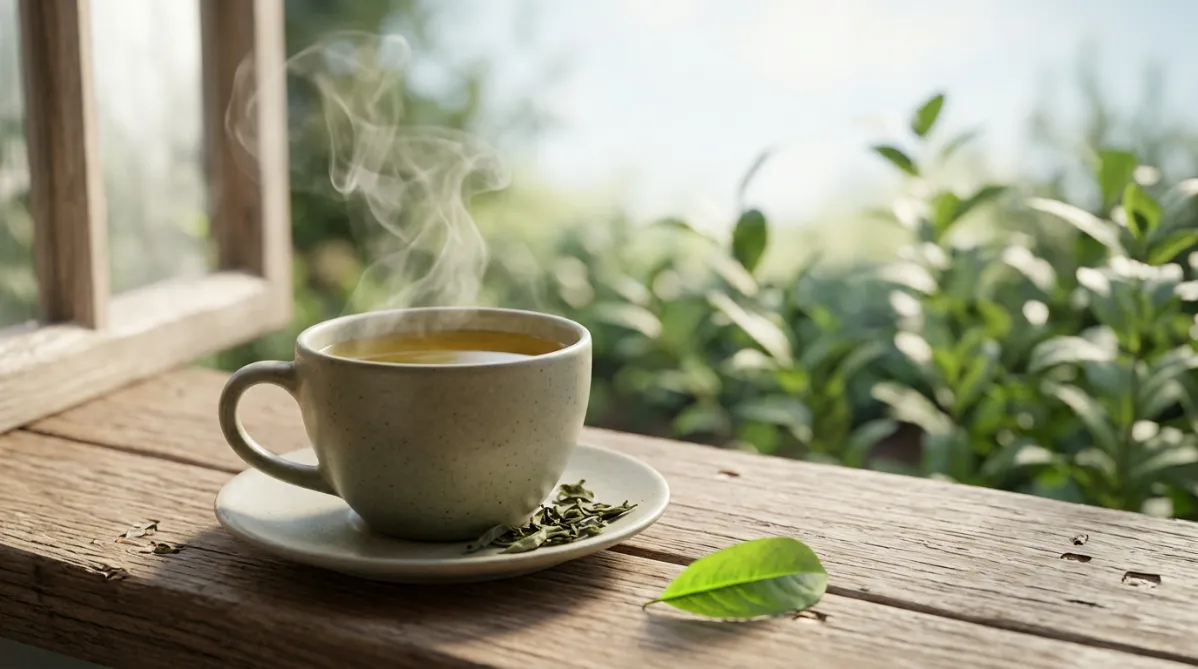
A single ceramic cup of freshly brewed green tea sits on a weathered wooden windowsill, photographed from a low three-quarter angle at eye level. Steam curls upward and catches soft, directional morning daylight from a window on the left. The tea is clear amber-green, with a few loose unfurled tea leaves resting on the saucer. Behind the cup, a softly out-of-focus garden of leafy green plants and a bright, hazy sky gives shallow depth of field. The wood has realistic grain and small chips, and the ceramic has a matte, slightly speckled glaze. A single tea leaf in the foreground has a faint electric green tint where light passes through it. The mood is calm, quiet and unhurried, with warm skin-tone wood against cool plant greens. No text, no labels.
supplements

L-Theanine Calms Without Sedation: What Doses Actually Work

BY NOVA CHEN ·

L-theanine, the amino acid in tea, is said to calm you without making you drowsy, and a new Frontiers in Nutrition mini-review tests that claim against human trial evidence. It reports doses of 100-400 mg for small cognitive gains (especially with caffeine), 200-400 mg/day for stress without sedation, and 200-450 mg/day for better sleep quality. The effects are small, and the paper does not report a pooled sample size. Both authors work for a British American Tobacco subsidiary that sells L-theanine products. Here is what the numbers say, who it may suit, and who should skip it.

Approach: conceptual metaphor. Palette: bold color field.

A single glass hourglass stands center-frame on a saturated tomato-red seamless backdrop, photographed at a low three-quarter angle just above tabletop level. The upper chamber holds only a thin layer of pale sand, while the lower chamber is heaped with it. A narrow stream of fine grains falls through the neck, and a few of them glow faintly electric green (#00e676) as they pass the waist. Beside it, a second hourglass has been tipped onto its side, its sand motionless. This stands for the age cutoff. Soft, large-source studio light comes from the upper left and casts crisp, warm-grey shadows on the glossy red surface. Fine scratches and dust show on the glass. The shallow depth of field blurs the background hourglass slightly. The mood is playful but precise, curious and a little skeptical.
supplements

2 Grams of Carnosine Boosted Brain Speed, But Only Under 35

BY NOVA CHEN ·

A trial built to test air-pollution defenses ended up revealing something odd about carnosine and the brain. In adults aged 23 to 35, 2 grams a day for up to 12 weeks was linked to better overall cognitive speed and efficiency, while older groups saw few or no gains. The catch is big: it was a post-hoc, subgroup analysis of a randomized trial of 299 people. Here's what the NEAT trial actually found, how carnosine differs from beta-alanine, and who might (and might not) want to pay attention.

Approach: macro science. Palette: natural.

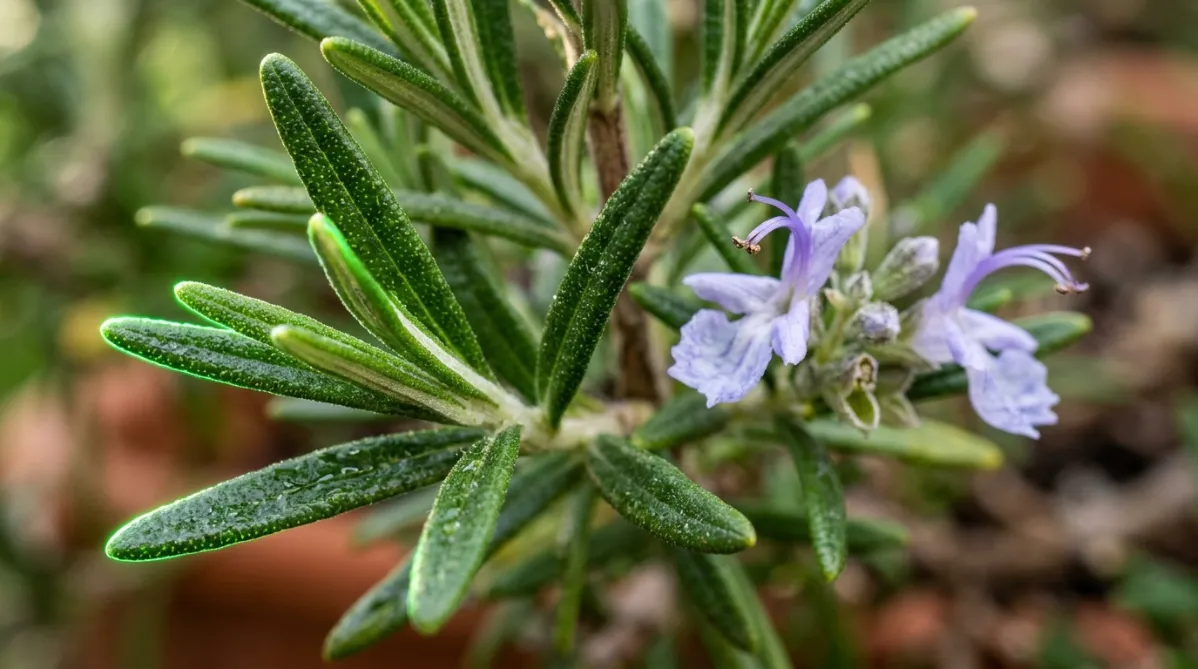
Extreme close-up of a fresh rosemary sprig shot at a slight overhead angle with a macro lens at a shallow depth of field. The needle-like leaves fill the frame. Their glossy dark-green upper surfaces and pale, felted undersides are sharp in the foreground. Tiny oil glands and fine hairs catch the light, and a few beads of aromatic oil glisten on the leaf edges. A small pale-violet rosemary flower sits in the mid-ground. Soft morning daylight comes through a window from the left and gives warm, natural highlights. The background melts into a creamy blur of garden greens and earthy terracotta brown. One needle tip glows with a subtle electric green (#00e676) rim light. The mood is calm, fresh and curious, with a quiet scientific intimacy and no text.
supplements

This Supermarket Herb Moved Memory, Anxiety and Sleep Scores

BY NOVA CHEN ·

A humble supermarket herb just posted some surprisingly broad results in a randomized, double-blind trial. In 68 university students, 1 g/day of rosemary for a month beat placebo on self-reported memory, anxiety, depression and most sleep measures. Only sleep latency and sleep duration failed to budge. But every outcome was a questionnaire, the study ran at a single center, and the abstract gives no effect sizes. Here is what the trial actually found, what it can't tell us, and how to try rosemary sensibly if you're curious.

This page is available in