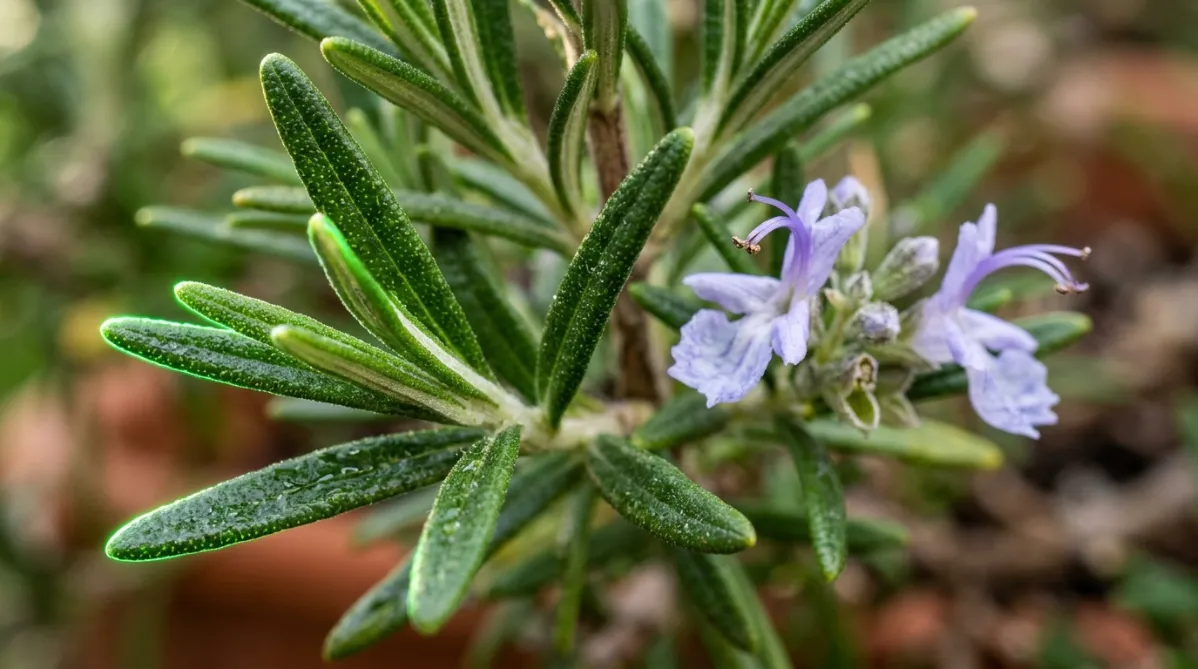
A cheap herb from the spice aisle improved memory, anxiety and sleep scores in a month. That is the headline from a randomized, double-blind trial in university students. It is also a study with real limits, so read the fine print before you add rosemary to your stack.
What the study did
Researchers at Kerman University of Medical Sciences in Iran ran a double-blind, placebo-controlled trial published in Complementary Therapies in Clinical Practice in 2018. The lead author was Nematolahi, with Mehrabani, Karami-Mohajeri and Dabaghzadeh.
The setup:
- Participants: 68 university students
- Intervention: 500 mg of rosemary (Rosmarinus officinalis L.) twice daily, 1 g/day total, taken as powdered dried leaf capsules
- Control: matching placebo, same schedule
- Duration: one month
- Measurements: taken at baseline and after one month, using three questionnaires
- Prospective and Retrospective Memory Questionnaire (PRMQ)
- Hospital Anxiety and Depression Scale (HADS)
- Pittsburgh Sleep Quality Inventory (PSQI)
PRMQ covers two kinds of memory. Prospective memory is remembering to do things later, like the meeting or the pill. Retrospective memory is recalling things that already happened. Students are a sensible test group, since memory slips, stress and bad sleep are common in that population.
What it found
The headline result is broad. After one month, scores on all scales and subscales except two were significantly lower in the rosemary group than in the control group. On these questionnaires, lower scores mean better outcomes, so that is the direction you want. The improvements covered:
- Prospective memory
- Retrospective memory
- Anxiety
- Depression
- Overall sleep quality (and most of its components)
The two exceptions were the sleep latency and sleep duration components of the PSQI. Rosemary did not significantly shift how long people took to fall asleep or how long they slept. Other aspects of sleep quality did improve, but the abstract does not tell us which ones.
The abstract also does not report effect sizes or exact score changes, so this article does not either. We know the direction and that the differences were statistically significant. We don't know from the abstract how large they were or whether a user would notice them day to day.
The authors concluded that rosemary could be used to boost both types of memory, reduce anxiety and depression, and improve sleep quality in university students.
The catch: read this before you buy a bulk bag
This is human data, not an animal or cell-culture study, which is a point in its favor. But several limits matter:
- Everything is self-reported. Memory, mood and sleep were all measured by questionnaire. No objective memory tests, sleep tracking or biomarkers were reported. Questionnaire scores can shift with expectation, and the placebo group helps control for that but doesn't remove every bias.
- Single center, one population. The participants were university students at one Iranian university. Results may not carry over to older adults, people with cognitive decline, or clinical depression and anxiety.
- One month only. We don't know whether the effect holds, fades or grows with longer use, or what happens after stopping.
- No mechanism shown. The trial tested a whole-leaf powder, not isolated compounds. Rosemary is known to contain carnosic acid and rosmarinic acid, and these are often discussed as general background for its antioxidant and neuroactive interest. Rosemary is also related to sage (Salvia genus), another herb with a memory reputation. But this study did not show that any one compound is responsible, so treat that as context, not explanation.
- Needs replication. One trial of 68 people is a promising signal, not settled science.
How to use it (if you want to experiment)
Here is what the trial used, and what the evidence does not cover:
- Dose: 1 g/day total, split into 500 mg twice daily.
- Timing: twice daily, as in the study. The paper doesn't say whether this was with meals or at specific times, so don't read precision into it.
- Form: capsules of powdered dried rosemary leaf. Sprinkling rosemary on dinner is a different thing. Culinary amounts are typically smaller and less consistent, and nobody has shown they deliver the same effect. Essential oil is a different product again and was not tested here. Don't swallow it.
- Duration: the study ran one month. Beyond that, you are off the evidence map.
- Tracking: because the outcomes were subjective, a biohacker's best move is to track your own. Use a simple weekly mood, sleep and forgetfulness log, ideally with a baseline period first.
Who it's for, and who should skip it
Who might reasonably try it: healthy adults, especially students or others under mental load, who are curious about a low-cost herbal option and are willing to treat it as an experiment.
Who should skip it or talk to a clinician first (general caution, not findings from this paper):
- Anyone pregnant or breastfeeding, since medicinal amounts of herbs are not well studied in these groups
- People on blood thinners, seizure medication or other prescription drugs, since herb interactions are possible
- Anyone with diagnosed depression, anxiety or a sleep disorder. A supplement is not a substitute for treatment, and this trial did not test clinical patients
The bottom line
The study's finding is real but modest in evidence terms: in 68 students, a month of 1 g/day rosemary beat placebo on self-reported memory, anxiety, depression and most sleep measures, though not on time to fall asleep or sleep duration. Whether it works as a nootropic in the strict sense, with objective cognitive gains, remains unproven. It is a cheap, low-risk-looking experiment for healthy people, and a good candidate for a larger trial with objective endpoints.