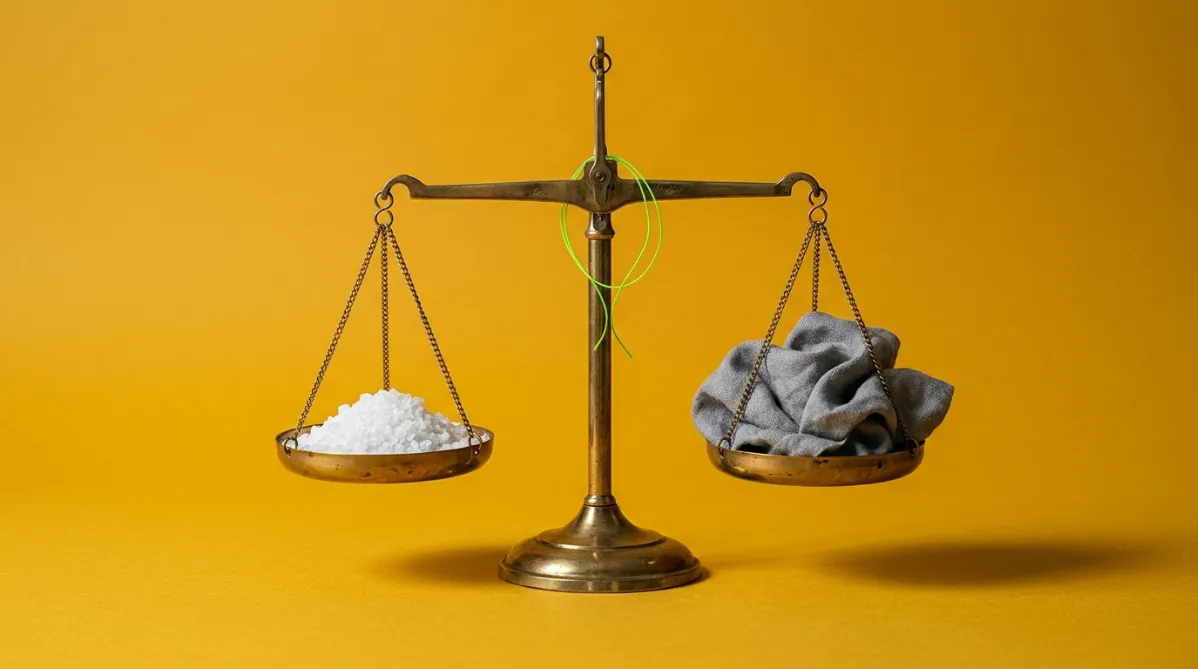
Magnesium is one of the most popular sleep supplements, and the marketing often promises a calmer night in a capsule. A new systematic review of human randomized controlled trials suggests the science is much less settled than the packaging implies. This is human trial research, but the verdict is cautious: the evidence does not support oral magnesium as a routine treatment for insomnia.
What the Review Actually Did
The paper, published in the Journal of Dietary Supplements (2026;23(5):553-581), comes from Adrian Lopresti, Stephen Smith and Peter Drummond of Clinical Research Australia and Murdoch University. It is a systematic review of randomized controlled trials, not a meta-analysis.
The team searched PubMed/MEDLINE, Scopus, Cochrane CENTRAL, ClinicalTrials.gov and the WHO trial registry platform from inception to 1 June 2026. To be included, a trial had to:
- Be randomized and involve adults.
- Test oral magnesium as the only active intervention, or include a magnesium-only arm.
- Report at least one sleep-related outcome.
The result was 12 randomized trials in the main analysis of sleep, insomnia or poor sleep. Another three trials on nocturnal leg cramps, restless legs syndrome or periodic limb movements were analyzed separately. One of those restless legs trials enrolled people aged 15-50 because adult-only data weren't available.
Risk of bias was assessed with the Cochrane RoB 2 tool, and certainty of evidence with GRADE.
The Headline Finding: Inconsistent, Low-Certainty
The authors concluded that magnesium "may provide modest benefits for selected subjective outcomes in some adults." They also stressed that the findings were inconsistent and that certainty of evidence was low to very low.
The inconsistency showed up across every kind of measurement:
- Subjective sleep reports (questionnaires and diaries)
- EEG-based measures
- Research-grade actigraphy
- Consumer wearable estimates
- Physiological markers
In practical terms, a result in one trial often didn't line up with results in another, and a benefit on one measure didn't reliably appear on others. Low-to-very-low GRADE certainty means future studies could easily shift our understanding.
Why the Studies Were So Hard to Compare
The authors say populations, magnesium formulations, elemental doses, treatment durations, outcome roles and measurement tools all varied substantially. That is why they used a narrative synthesis rather than pooling data statistically. Mixing such different trials into one average would have been misleading, and as a result the review offers no single effect size to quote.
The abstract also doesn't report a combined participant count, so no total sample size is cited here. Check the full paper for per-trial details.
Glycinate, Threonate, Oxide, Citrate: Does the Form Matter?
Online, the form of magnesium is often treated as the secret to better sleep. The review's own conclusion is only that formulations varied widely, which makes cross-trial comparison difficult. It does not rank forms.
Some general background, which is not a finding from this review:
- Oxide is cheap and widely sold, but it is typically considered less well absorbed and is more likely to loosen stools.
- Citrate is commonly used and also has a laxative effect at higher doses.
- Glycinate is a chelated form that is popular for evening use and is often marketed as gentler on the gut.
- Threonate is a newer, pricier form marketed for brain-related benefits.
Whether any of these is better for sleep is exactly the sort of question the current evidence can't answer. Marketing claims about a "best" form for sleep run ahead of the data.
Practical Takeaways
Who might still try it
- Adults whose diet is low in magnesium (limited nuts, seeds, legumes, whole grains, leafy greens).
- Older adults, who often have lower intakes, though the review doesn't confirm a special benefit in this group.
- People who want a low-cost, generally low-risk experiment and accept that it may do little.
The idea that people with low intake benefit most is plausible, but it is a reasonable hypothesis, not something this review established.
Dose and timing
The review does not establish an effective dose, form or schedule. For general safety context, the US upper limit for supplemental magnesium in adults is 350 mg of elemental magnesium per day. Many people take it in the evening, but timing isn't backed by this review. If you try it, start low, give it a few weeks, and track your sleep honestly so you can tell if anything changed.
Who should skip it or talk to a clinician first
- People with kidney disease, since the kidneys clear excess magnesium.
- Anyone on medications that can interact with magnesium, such as certain antibiotics, bisphosphonates or thyroid medication. Ask a pharmacist.
- Anyone with persistent insomnia. Magnesium isn't a substitute for evaluating sleep apnea, depression, anxiety, or other causes, or for proven approaches like cognitive behavioral therapy for insomnia (CBT-I).
Cheap and low-risk is not the same as proven. Digestive upset, especially diarrhea, is the most common issue at higher doses.
Limitations Worth Knowing
- No meta-analysis: the findings are narrative, with no pooled effect size.
- Heterogeneity: different people, forms, doses, durations and outcome measures.
- Low-to-very-low certainty under GRADE.
- Inconsistent results across subjective and objective measures, including wearables.
- Adult-only caveat: one separately analyzed restless legs trial included participants aged 15-50.
- The authors call for well-designed, adequately powered trials before any routine recommendation.
The Bottom Line
This review doesn't say magnesium is useless for sleep. It says the evidence isn't strong or consistent enough to recommend it as a routine insomnia treatment. Some people may notice modest subjective improvements, but the research can't yet say who, at what dose, or in which form. If you try it, treat it as a cheap, low-risk personal experiment and keep your expectations modest.