Biocracked
Approach: Macro science. Palette: D, bold color field.

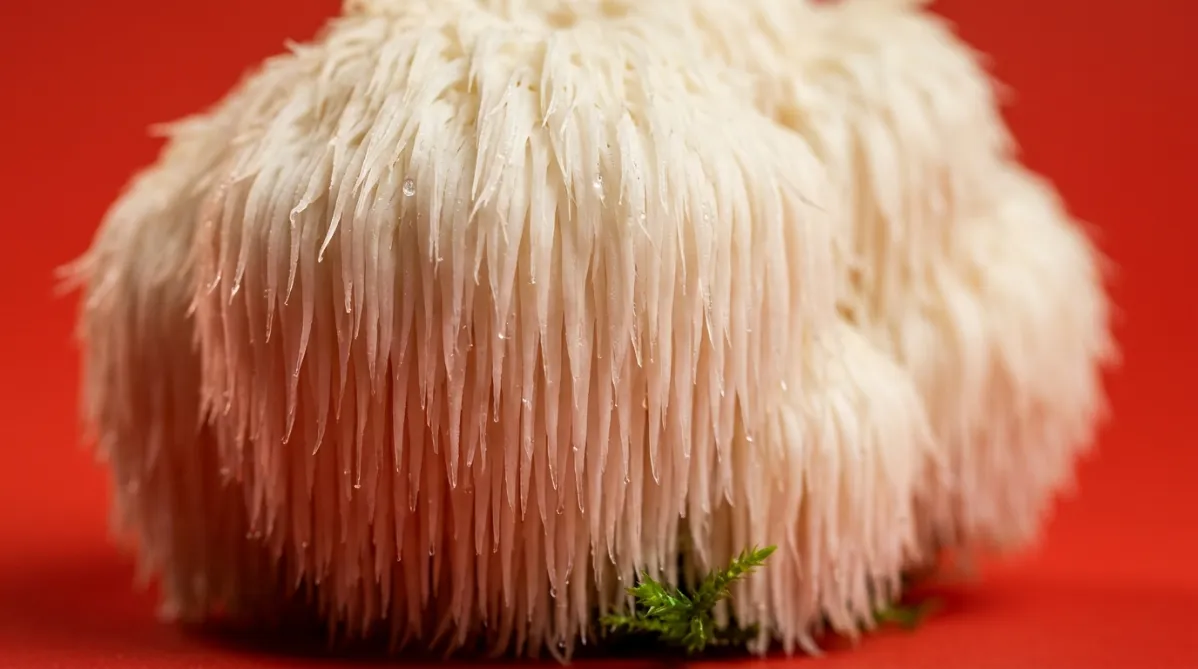
An extreme close-up macro photograph of a single Lion's mane mushroom (Hericium erinaceus), its cascading white spines hanging like dense icicles, shot from a low three-quarter angle with shallow depth of field. The foreground spines are tack-sharp, with tiny droplets of moisture and fine translucent tips, and the background spines melt into soft blur. The mushroom sits against a saturated tomato-red backdrop that fills the whole frame, so the creamy white fibers stand out in strong contrast. Soft directional studio light comes from the upper left and casts gentle warm-red shadows, with a thin rim light along the spine tips. One small electric green moss sprig at the base adds a subtle accent. The mood is vivid, alert and curious, like a quick spark of cognition.
Supplements

1.8 g of Lion's Mane Sped Up Brains in 60 Minutes. Here's the Catch

Nova Chen · · 4 min read

One hour. That is how long it took for a single 1.8 g dose of Lion's mane mushroom to make healthy young adults measurably faster on a classic attention test. It is the kind of result that sends supplement shelves into a frenzy. But the same study also reported a stress finding that missed statistical significance, along with null and even slightly negative results elsewhere. Here is what the data show, and what they don't.

What Is Lion's Mane, and Why Do Nootropic Fans Care?

Lion's mane (Hericium erinaceus) is a shaggy white edible mushroom used for centuries in East Asian cooking and traditional medicine. Its modern reputation rests on two families of compounds:

  • Hericenones, found mainly in the fruiting body (the mushroom you can see).
  • Erinacines, found mainly in the mycelium (the root-like network).

In cell and animal research, both groups have been linked to stimulation of nerve growth factor (NGF), a protein involved in the survival and maintenance of neurons. That is the biological story behind the "brain mushroom" nickname. It comes largely from preclinical work, so human trials matter far more than the mechanism.

The Study: Small, Tidy, and Honest About Its Limits

Researchers at Northumbria University in the UK, publishing in Nutrients in 2023, ran a randomized, double-blind, placebo-controlled, parallel-groups pilot study. The key details:

  • Participants: 41 healthy adults aged 18-45
  • Dose: 1.8 g of Hericium erinaceus
  • Acute test: 60 minutes after a single dose
  • Chronic test: after 28 days of daily supplementation
  • Funding note: the product was supplied by Sempera Organics, which had no role in the study design, data analysis, interpretation, or publication decision

Most Lion's mane research so far has focused on long-term supplementation in people who already have cognitive concerns. This study asked a different question: does it do anything for healthy young brains, and does it work fast?

What Improved

Stroop task speed, one hour after a single dose. Participants who took Lion's mane performed faster on the Stroop task than the placebo group (p = 0.005). The Stroop test asks you to name the ink color of a word while ignoring the word itself (for example, the word "RED" printed in blue). It is a standard measure of attention and cognitive control, so a speed gain here is interesting.

That p-value is solid by conventional standards. But it applies to one outcome at one time point in a small sample.

What Didn't (The Catch)

This is where the clickbait version of the story falls apart.

  • The stress result was a trend, not a finding. After 28 days, subjective stress was lower in the Lion's mane group, but the p-value was 0.051, just above the usual 0.05 cutoff. It is a hint, not proof.
  • Other measures came up empty. The authors report "null and limited negative findings" across the remaining cognitive and mood outcomes. The abstract doesn't itemize them, but the takeaway is clear: this was not a broad cognitive boost.
  • Sample size is small. With 41 people split across two groups, a pilot study can easily produce false positives or miss real effects. The authors themselves urge caution and call for larger trials.

The researchers describe their conclusions as tentative: Lion's mane may improve speed of performance and reduce subjective stress in healthy young adults.

How This Compares to Older-Adult Research

The best-known human work on Lion's mane involved older adults with mild cognitive impairment (MCI), typically using multi-week supplementation. In those studies, researchers looked for gradual improvements on cognitive scales, which fits the idea of a compound supporting neural health over time.

The Northumbria pilot differs in three ways:

  1. Population: healthy young adults with little room to improve, rather than people with measurable deficits.
  2. Timeframe: it tested an acute effect at 60 minutes, not only slow, cumulative change.
  3. Outcome: processing speed on a focused task, not overall cognitive scores.

This matters because healthy young brains tend to show a "ceiling effect." It is harder to improve something that already works well, so modest or inconsistent results are not surprising. An acute effect in this group is also hard to explain by NGF-driven neural growth alone, which presumably takes longer. The mechanism behind the fast Stroop result is unclear.

Practical Takeaways

If this study has piqued your interest, here is how to think about it sensibly.

Dose: The study used 1.8 g per day. That is a reasonable reference point, not a guaranteed sweet spot.

Fruiting body vs. mycelium: Check labels. Fruiting body products are the source of hericenones, while mycelium-based products may differ in composition and often contain leftover grain substrate. The abstract doesn't specify which form was used, so don't assume your product matches the trial's. Look for brands that state the extract type, the amount of mushroom per serving, and ideally third-party testing.

Timing: The one significant result appeared 60 minutes post-dose. If you want to test it yourself, taking it in the morning about an hour before demanding focus work lines up with the study's timeline. That is an inference from the data, not a proven protocol.

Who it might suit: Students and knowledge workers who want to experiment with an inexpensive, generally well-tolerated supplement. It is not a replacement for sleep, exercise, or caffeine.

Realistic expectations:

  • Expect, at most, a subtle effect on processing speed, and possibly none.
  • Don't expect a dramatic stress reduction; that signal was borderline.
  • Give it a fair trial, perhaps four weeks, and judge by your own focus and mood rather than hype.
  • Talk to a clinician first if you take medication, are pregnant, or have a mushroom allergy.

The Bottom Line

The headline result is real but narrow: faster Stroop performance one hour after 1.8 g of Lion's mane in a small, well-designed pilot. The 28-day stress benefit did not reach significance, and other outcomes showed nothing or slightly negative effects. Lion's mane is a promising candidate for further research, not a proven cognitive enhancer for healthy young people. Bigger, replicated trials will determine whether this is a genuine nootropic or just a tantalizing blip.
Original study

Read the original research on pubmed.ncbi.nlm.nih.gov →

This article summarizes published research for general information. It is not medical advice.

NC

Written by

Nova Chen

Nova Chen writes for Biocracked: biohacking science, longevity & human performance.

Related Articles

Approach 4, conceptual metaphor, in palette C, natural.

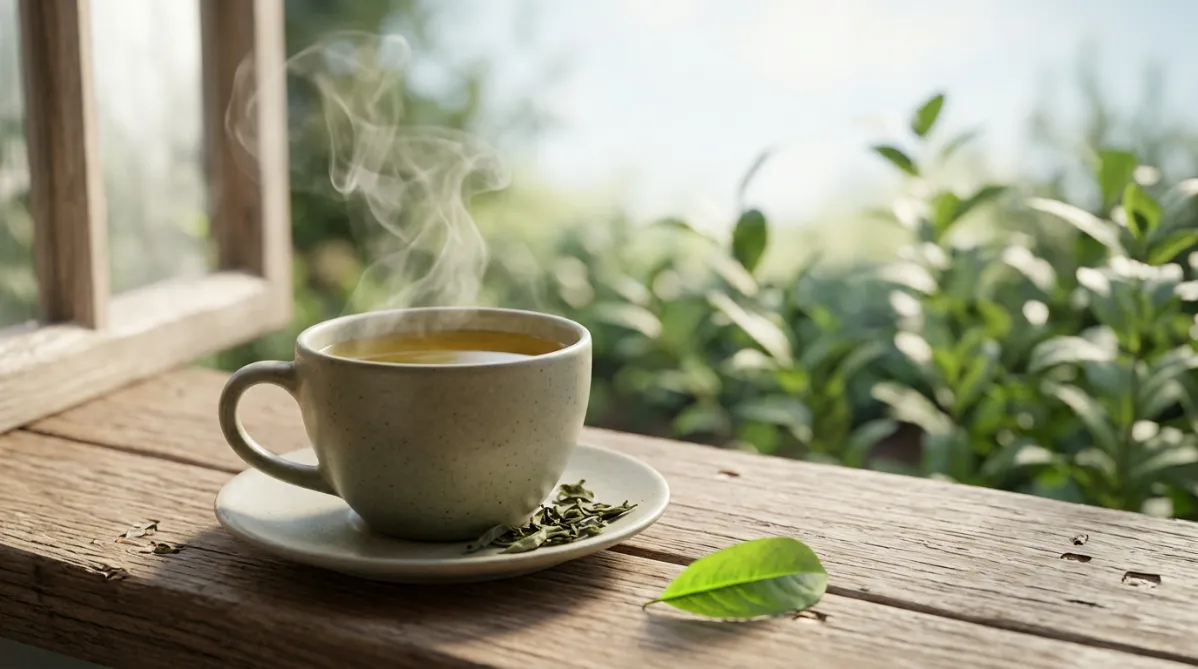
A single ceramic cup of freshly brewed green tea sits on a weathered wooden windowsill, photographed from a low three-quarter angle at eye level. Steam curls upward and catches soft, directional morning daylight from a window on the left. The tea is clear amber-green, with a few loose unfurled tea leaves resting on the saucer. Behind the cup, a softly out-of-focus garden of leafy green plants and a bright, hazy sky gives shallow depth of field. The wood has realistic grain and small chips, and the ceramic has a matte, slightly speckled glaze. A single tea leaf in the foreground has a faint electric green tint where light passes through it. The mood is calm, quiet and unhurried, with warm skin-tone wood against cool plant greens. No text, no labels.
supplements

L-Theanine Calms Without Sedation: What Doses Actually Work

BY NOVA CHEN ·

L-theanine, the amino acid in tea, is said to calm you without making you drowsy, and a new Frontiers in Nutrition mini-review tests that claim against human trial evidence. It reports doses of 100-400 mg for small cognitive gains (especially with caffeine), 200-400 mg/day for stress without sedation, and 200-450 mg/day for better sleep quality. The effects are small, and the paper does not report a pooled sample size. Both authors work for a British American Tobacco subsidiary that sells L-theanine products. Here is what the numbers say, who it may suit, and who should skip it.

Approach: macro science. Palette: C, natural.

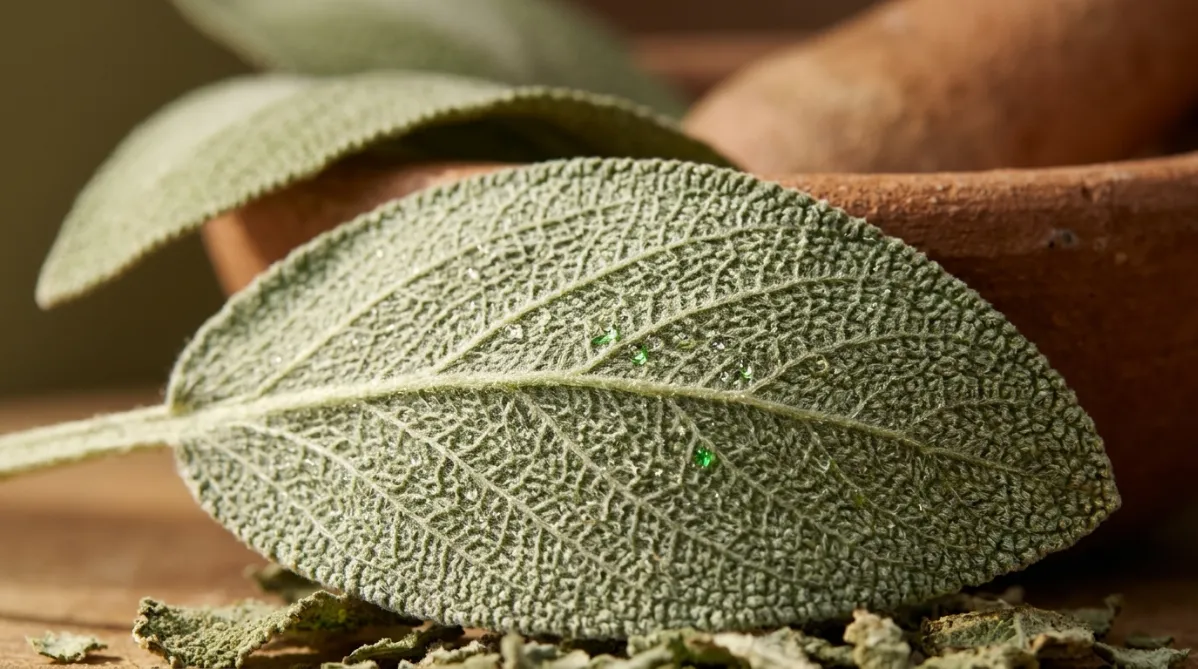
An extreme close-up macro photograph of a single dried sage leaf, shot from slightly above at a 30-degree angle, with its velvety, silvery-green surface and fine network of veins filling the frame. Tiny trichome hairs and glandular oil droplets catch the light like frosted glass. Soft window daylight comes from the left, giving gentle shadows and a warm, earthy feel. The shallow depth of field blurs a second leaf and a rough terracotta mortar in olive and clay tones behind it. A few crumbled leaf fragments rest at the bottom edge. One faint, vivid electric green reflection glints in an oil droplet as a subtle accent. The mood is calm, focused and fresh, with a natural botanical look. The image has no text and no blue cast, and the tones stay green, brown and amber.
supplements

The Kitchen Herb That Sharpened Stress Multitasking in an Hour

BY NOVA CHEN ·

A humble kitchen herb just got a surprising lab-tested reputation as a stress-time brain booster. In a double-blind study of 30 healthy young adults, a single 600 mg dose of dried sage leaf improved multitasking performance and boosted alertness, calmness and contentedness. But the twist is that a smaller 300 mg dose cut anxiety, then lost that effect under stress and even hurt later performance. Here is how the acetylcholine angle works, what the results really show, and the limits and safety notes you need before you reach for the spice rack.

**Approach: Macro science, with Palette C (natural).**

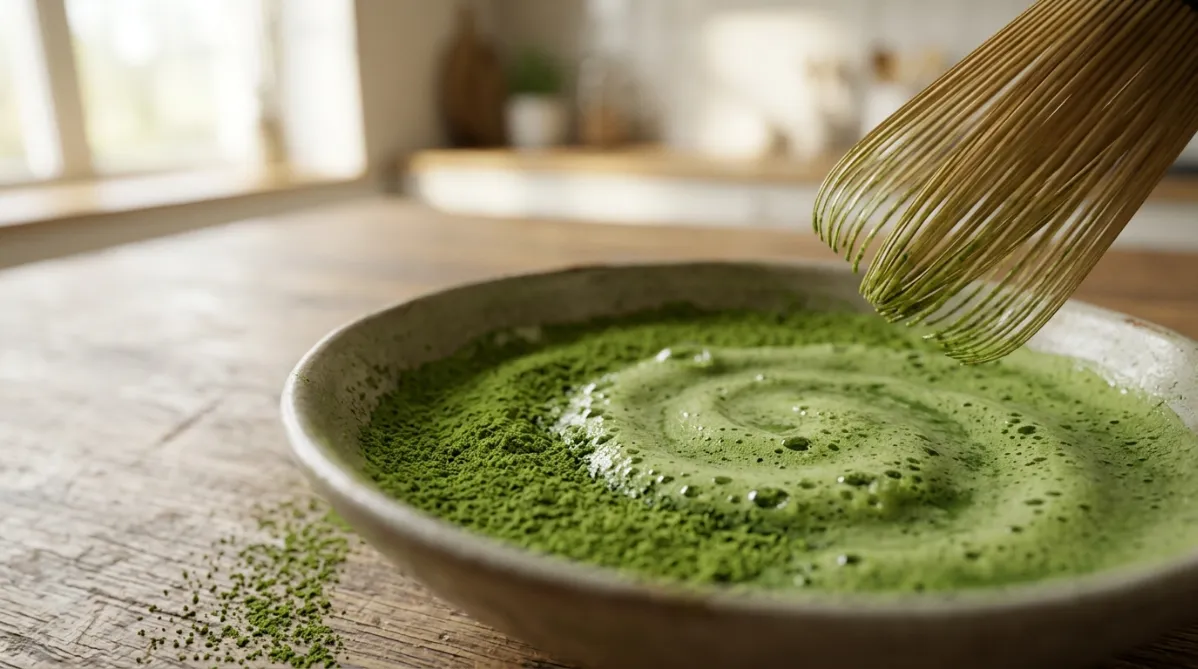
Extreme close-up, shot from a low 30-degree angle, of finely sifted matcha powder in a shallow matte ceramic bowl. A bamboo whisk's tines have just lifted from the surface, leaving a swirl of vivid green foam with a few tiny bubbles. Individual powder grains and the soft ridges of the foam are sharp in the foreground, and the background falls into a creamy blur. Soft side light from a window at left picks out the velvety texture and a faint sheen on the bubbles. The palette is grassy greens, with a worn wooden table in warm brown and a hint of pale daylight. The mood is calm and focused, with a clean, airy, natural feel. The green is the vivid, near-electric tone of fresh matcha. No text, no logos.
supplements

Matcha Beat Plain Caffeine for Working Under Stress, Study Finds

BY NOVA CHEN ·

Caffeine gets the credit for most of our morning focus, but a randomized placebo-controlled trial in middle-aged and older Japanese adults suggests matcha may offer something extra. A single caffeine dose sharpened attention, yet only continuous daily matcha intake increased work output on a stress-inducing arithmetic test. The authors credit matcha's pairing of caffeine with amino acids like L-theanine. The study has real limits, including mild lab stress, one population and no isolated theanine arm, so the takeaways come with caveats. Here is what the findings mean for matcha versus coffee, daily habits versus one-off doses, and who might benefit.

**Approach: Macro science. Palette: D, bold color field.**

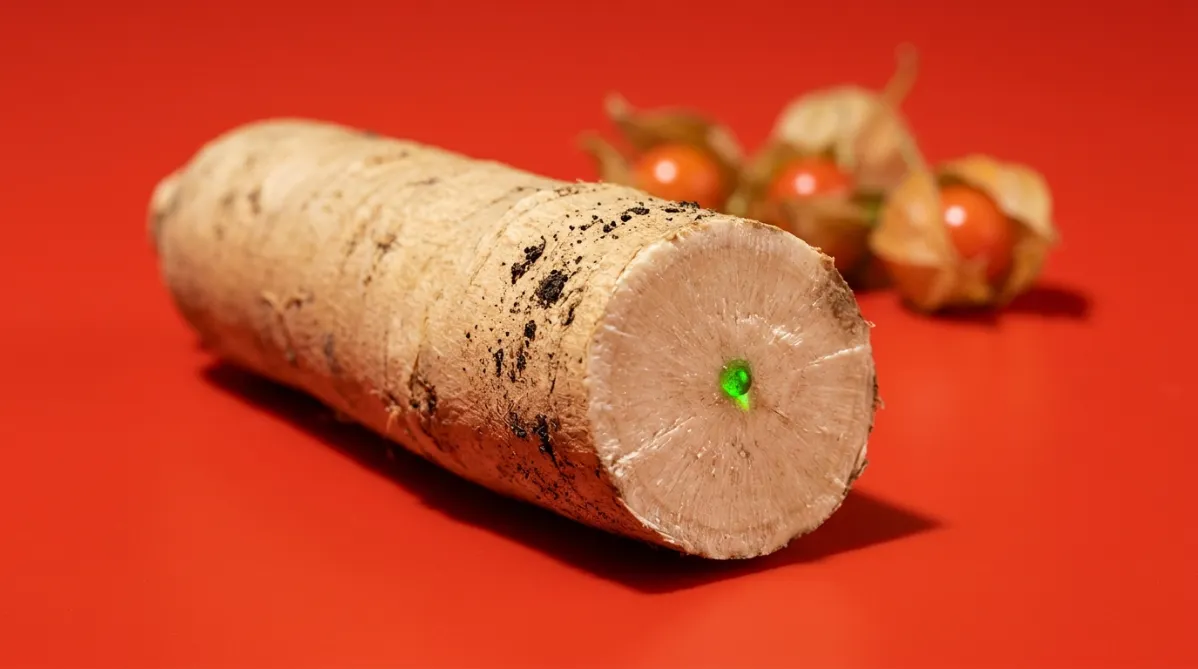
Extreme macro photograph of freshly dug ashwagandha root, shot from a low three-quarter angle with a 100mm macro lens at shallow depth of field. One thick, pale tan root is cut cleanly across, showing its dense starchy cross-section, fine fibrous grain and a few clinging soil specks. It sits on a smooth, saturated tomato-red acrylic surface. A few small orange-red ashwagandha berries in papery husks blur softly behind it. Hard, direct studio light from the upper left casts crisp, warm-neutral shadows and a clean highlight along the cut face. A single tiny droplet of sap on the cut surface catches a pinprick of electric green reflection, the only green in the frame. The mood is bold, precise and skeptical-curious, with no text and no blue cast.
supplements

Ashwagandha Cut Cortisol 29% in Stressed People With High BP

BY NOVA CHEN ·

Ashwagandha has a new headline number: a roughly 29% drop in serum cortisol in stressed, anxious adults who also have high blood pressure. A 60-day, double-blind, placebo-controlled Phase III trial of 60 patients also reported big drops in anxiety and perceived stress scores. But the percentages are within-group changes, blood pressure only showed favorable trends, and the authors have ties to the extract's manufacturer. Here is what the study found, what it can't prove, and who should be cautious.

This page is available in