Biocracked
Approach: conceptual metaphor. Palette: bold color field (saturated orange).

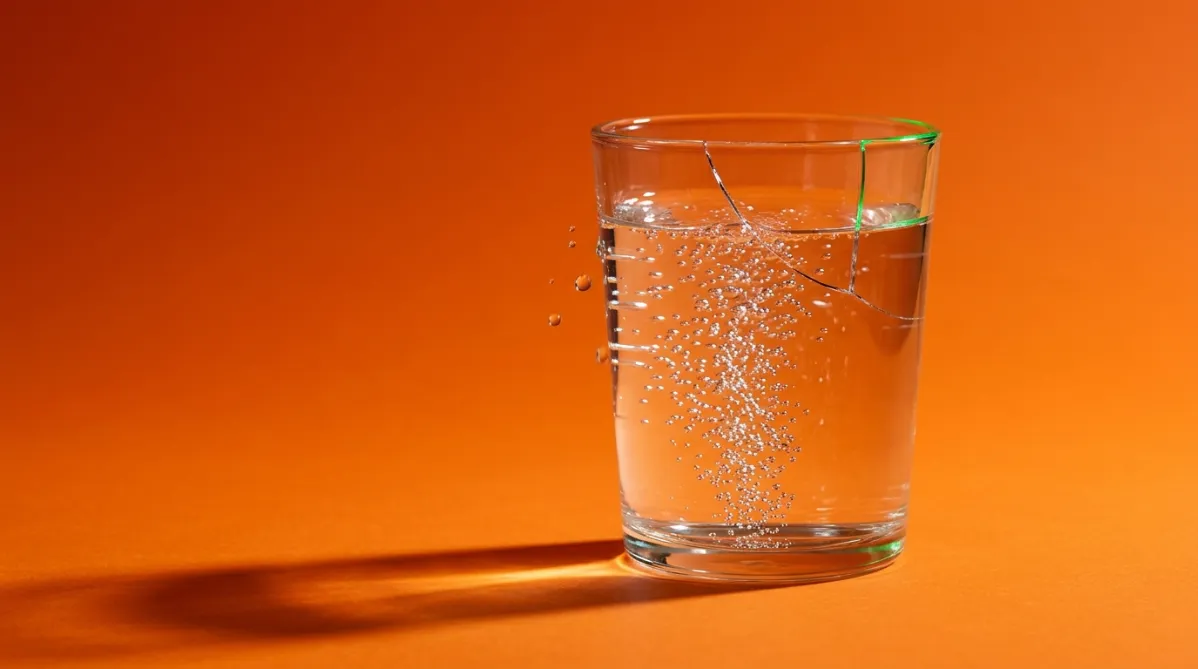
A single clear glass of water sits on a seamless saturated tangerine-orange backdrop, shot from a low three-quarter angle at eye level. Dense streams of tiny hydrogen bubbles rise through the water, but at the surface the glass has cracked in a thin, sharp fracture line that runs up the side, as if the "healthy" promise has split. A few droplets hang mid-air beside the crack. Hard directional studio light from the upper left casts a crisp, elongated shadow across the orange floor, and bright caustic highlights bend through the water. A tiny electric green (#00e676) reflection glints along the rim of the glass. The look is clean, graphic and photorealistic, with shallow depth of field. The mood is skeptical and tense, with a quiet sense of irony.
Supplements

Hydrogen Water Backfired: Oxidative Damage Marker Rose in Trial

Helix Ward · · 4 min read

Hydrogen-rich water is sold as an antioxidant shortcut: fizz a tablet, drink up, and calm the cellular fire. A new randomized, blinded, placebo-controlled trial in people living at high altitude found something awkward for that story. Over eight weeks, the hydrogen group's levels of malondialdehyde (MDA), a marker of oxidative damage, rose more than the placebo group's.

Before anyone pours their hydrogen water down the drain, the context matters. This was a small trial in a very specific population. But the result is a useful reality check for a product category that often runs ahead of its evidence.

What the researchers actually tested

The study, led by Zhang and colleagues and published in High Altitude Medicine & Biology (2026;27(3):133-142), asked a simple question: can hydrogen-rich water (HRW) reduce oxidative stress in people with chronic mountain sickness (CMS)?

CMS is a condition of long-term high-altitude residents. Oxidative stress is thought to contribute to it, which gave the team a rationale for testing an antioxidant approach.

The design:

  • Setting: Tibetan Hospital of Nagqu, China, from July to December 2024
  • Participants: Adults with untreated CMS (defined by the Qinghai score); 60 were randomized and 59 were analyzed, because one placebo participant never received treatment
  • Intervention: 990 mL per day of HRW versus placebo for 8 weeks
  • Allocation: 1:1 using a dynamic minimization method
  • Blinding: Participants, clinicians and investigators
  • Registration: ChiCTR2400082685

The primary endpoint was the change from baseline to week 8 in a panel of oxidative stress biomarkers: catalase, glutathione, MDA, superoxide dismutase, 8-hydroxy-2'-deoxyguanosine and total antioxidant capacity (T-AOC).

The twist: MDA went up, not down

At week 8, HRW produced greater changes than placebo in two markers:

  • MDA: +2.11 (95% CI 1.13 to 3.09; p < 0.001)
  • T-AOC: +2.86 (95% CI 0.09 to 5.64; p = 0.043)

MDA is widely used as a marker of lipid peroxidation, a form of oxidative damage, so a rise relative to placebo is the opposite of what an antioxidant therapy is supposed to deliver. T-AOC, a broader measure of antioxidant capacity, also rose.

The authors concluded that HRW showed both pro-oxidative and antioxidative effects in CMS. They also concluded that it did not reduce oxidative stress-induced damage.

The mixed signal is part of the story. Antioxidant capacity and a damage marker moved up together, so the picture is more complicated than "hydrogen water causes damage." The trial does not explain the mechanism.

Higher BMI, bigger signal

The subgroup finding is the most pointed one. In participants with a body mass index of 24 or higher, the MDA increase was more pronounced (Δ +2.57; p = 0.02 for interaction). The authors say HRW may increase oxidative risk in people with higher BMI.

This is a subgroup analysis in a small sample, so treat it as a flag for future research, not a settled rule. It does suggest that one-size-fits-all claims for hydrogen water deserve skepticism.

Safety: more adverse events, mostly dizziness

Adverse events occurred in 50% (15 of 30) of the hydrogen group and 37% (11 of 29) of the placebo group. Dizziness was the most common. The abstract doesn't break these down further, so it's hard to say how serious they were or whether the gap is meaningful with groups this small.

What this study can't tell you

This is where honesty matters, because the headline is easy to overgeneralize.

  • Specific population: All participants had chronic mountain sickness and lived at altitude. Healthy sea-level adults may respond differently.
  • Small sample: 59 analyzed participants is modest, and subgroup results are especially fragile.
  • Surrogate markers: The outcomes were blood biomarkers of oxidative stress, not symptoms or clinical outcomes. A change in MDA doesn't prove a change in health.
  • One regimen: The trial tested a single volume (990 mL/day) over eight weeks. It can't speak to other doses, products or hydrogen concentrations.
  • No sign of bias from funding: The authors declared no competing interests, which is reassuring, but it doesn't remove the design limits above.

Practical takeaways

What the trial used: 990 mL per day of hydrogen-rich water for 8 weeks. The abstract gives no information on optimal timing, and no benefit was shown at this dose, so there is no evidence-based schedule to recommend.

Who this finding is most relevant to:

  • People with chronic mountain sickness, or those considering HRW as an antioxidant treatment at altitude
  • People with a BMI of 24 or higher who are using hydrogen water specifically to cut oxidative stress

Who should be cautious or skip it for now:

  • Anyone with CMS: talk to a clinician instead of self-treating with hydrogen water
  • Higher-BMI users hoping for antioxidant protection, given the stronger MDA rise in that subgroup
  • People prone to dizziness, the most common adverse event reported

The bottom line: In this trial, hydrogen water did not lower oxidative damage and in fact raised MDA relative to placebo. That doesn't prove it's harmful for everyone, but it undercuts the assumption that more hydrogen means less oxidative stress. Larger trials in other populations, with clinical outcomes and a mechanistic explanation, are needed before the hype is justified.
Original study

Read the original research on pubmed.ncbi.nlm.nih.gov →

This article summarizes published research for general information. It is not medical advice.

HW

Written by

Helix Ward

Helix Ward writes for Biocracked: biohacking science, longevity & human performance.

Related Articles

Approach: conceptual metaphor. Palette: bold color field.

A single steel bathroom-style analog tape measure, pulled taut and wrapped around a ripe, glossy yellow-orange pear lying on its side, with the tape's tip locked at the same unmarked point, suggesting a waistline that did not shrink. The pear sits on a saturated magenta seamless backdrop, shot from a low three-quarter angle with a shallow depth of field, the stem sharp and the background softly blurred. Hard but slightly diffused studio key light from upper left casts a crisp, short shadow in deeper magenta on the surface. A tiny electric green sticky dot marks the tape's end, with no numbers or writing visible. Mood: playful, skeptical, deadpan, scientific restraint rather than hype.
longevity

Weekly Rapamycin for a Year: Safe, But Did Visceral Fat Budge?

BY REX MERIDIAN ·

Everyone wants to know whether weekly rapamycin can shrink visceral fat and boost healthspan, and the PEARL trial has an answer that may surprise you. After 48 weeks in healthy adults, the primary endpoint of visceral fat did not budge, yet safety looked comparable to placebo. Some secondary signals, including lean mass and pain in women on 10 mg and better well-being on 5 mg, hint at benefits. But those are subgroup and self-reported findings, the drug was compounded, and no one has shown that it extends human lifespan. Here is what the data supports and what it does not.

Approach: conceptual metaphor. Palette: D, bold color field.

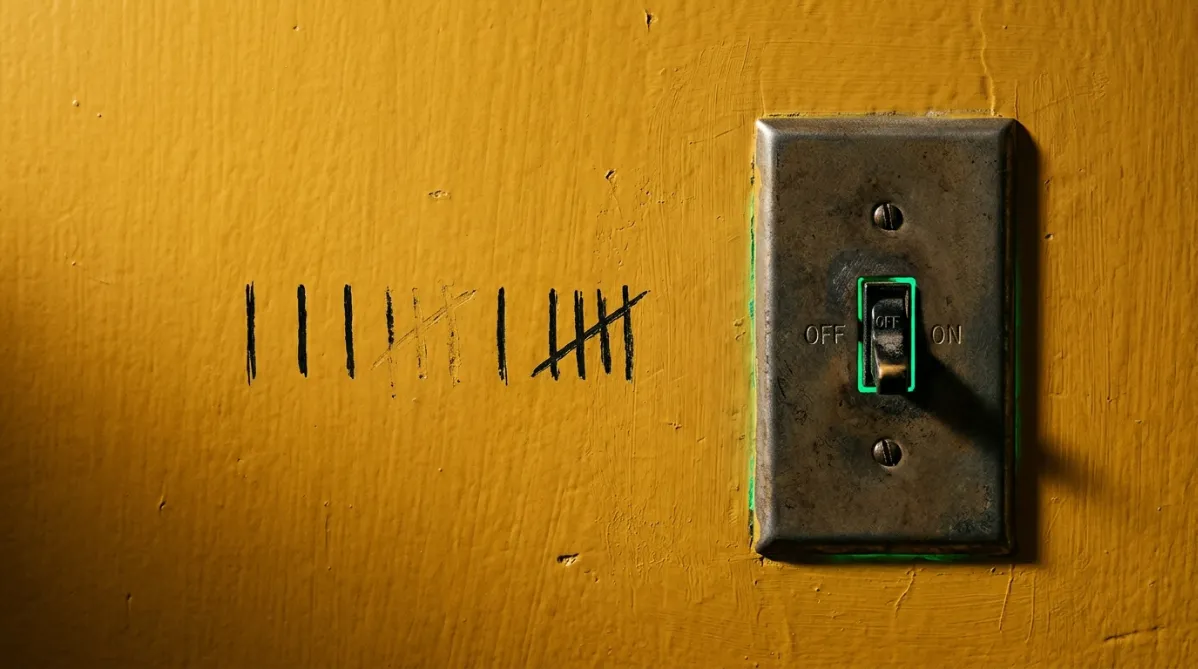
Subject: a single old-fashioned mechanical light switch, photographed straight on, with its toggle stuck halfway between on and off. It is mounted on a saturated mustard-yellow painted wall. A thin electric green (#00e676) glow leaks from the gap behind the toggle and casts a small green rim onto the plate. Beside it, a row of six small matte black tally marks is scratched into the paint, with the third and fifth marks fainter and partly worn, hinting at inconsistent results across days.

Camera: slightly low, eye-level angle with a 50mm lens, shallow depth of field, and the switch placed on the right third of the frame.

Lighting: hard directional side light from the left casts crisp, warm-neutral shadows with no blue cast. The wall texture and brushstrokes are visible.

Mood: curious, skeptical, and measured. The scene suggests a mechanism that is partly engaged.
longevity

Fasting-Mimicking Diet Nudged Human Autophagy—But Not Every Time

BY HELIX WARD ·

Does the fasting-mimicking diet really switch on autophagy in people, or only in mice? A new pilot randomized trial in 30 healthy adults tested ProLon and a second FMD formulation against control. By the end of the roughly 6-day diet, the groups differed in autophagic flux, weight, glucose, ketones, and insulin resistance. But those differences did not hold at every time point, and the trial was small and sponsored by ProLon's maker. Here is the protocol, what it showed, and who should think twice.

Approach: macro science. Palette: bold color field, warm.

An extreme close-up of a human iris and pupil photographed from straight on, with a shallow depth of field. The sharp focus sits on the fine radial fibers of the iris, which are amber and honey brown. A single soft ring light reflects as a small crisp circle in the pupil. Behind the eye, out of focus, the skin and lashes fall away into a saturated mustard-yellow backdrop that fills the frame. A thin curved sliver of electric green light, like a reflection on the cornea's edge, is the only cool accent. The texture is real: tiny blood vessels in the sclera, individual lash hairs, moist highlights. The mood is clear, attentive and hopeful, clinical but warm. The composition is landscape, with the eye placed right of center and open space on the left.
supplements

This Polyphenol Trio Shrank AMD Eye Deposits 13% in a Human Trial

BY NOVA CHEN ·

Drusen deposits are an early warning sign of age-related macular degeneration, and they usually grow over time. In a 24-month human trial, a resveratrol, quercetin, and curcumin combination was associated with a 13.4% drop in central drusen volume, versus a 6.9% rise with curcumin alone. But the study was open-label, included just 38 patients, and had no placebo group. The visual acuity difference (P = 0.08) wasn't statistically significant, and AREDS2 remains the established supplement standard. Here's what the numbers show, what they don't, and what to ask your eye doctor.

Approach: Macro science. Palette: D, bold color field.

Extreme close-up microscopy-style image of a dense cluster of oval, rod-shaped bacteria with a slightly mucous, glossy membrane texture, shot from a shallow top-down angle with a razor-thin focal plane. Most of the colony sits in the sharp center, softening into creamy blur at the edges. The cells are warm ivory with subtle translucent depth, resting on a saturated tomato-red backdrop. A scattering of sparser, isolated cells on one side suggests "low baseline" and hints at the subgroup story. One or two cells carry a faint electric green (#00e676) fluorescent rim glow. Lighting is soft, directional studio light with gentle specular highlights on the cell walls and clean shadows in warm red tones. Mood: curious, precise, quietly skeptical, with a vivid but grounded look. No text and no blue cast.
supplements

Akkermansia Missed Its Main Goal—Except in People Who Lacked It

BY NOVA CHEN ·

A pasteurized gut bacterium often pitched as a "natural GLP-1 booster" just faced a 142-person, double-blind trial, and it missed its primary insulin-sensitivity endpoint. But exploratory analyses showed a post-glucose GLP-1 rise, and people with low baseline Akkermansia saw better insulin sensitivity and less trunk fat. Those subgroup results are hypothesis-generating, sit close to the significance threshold, and come from a study with heavy industry involvement. Here is what the data show, what they don't, and who might care.

This page is available in