CBL-514 Injection Lipolysis: A Phase 2 Map of the Evidence
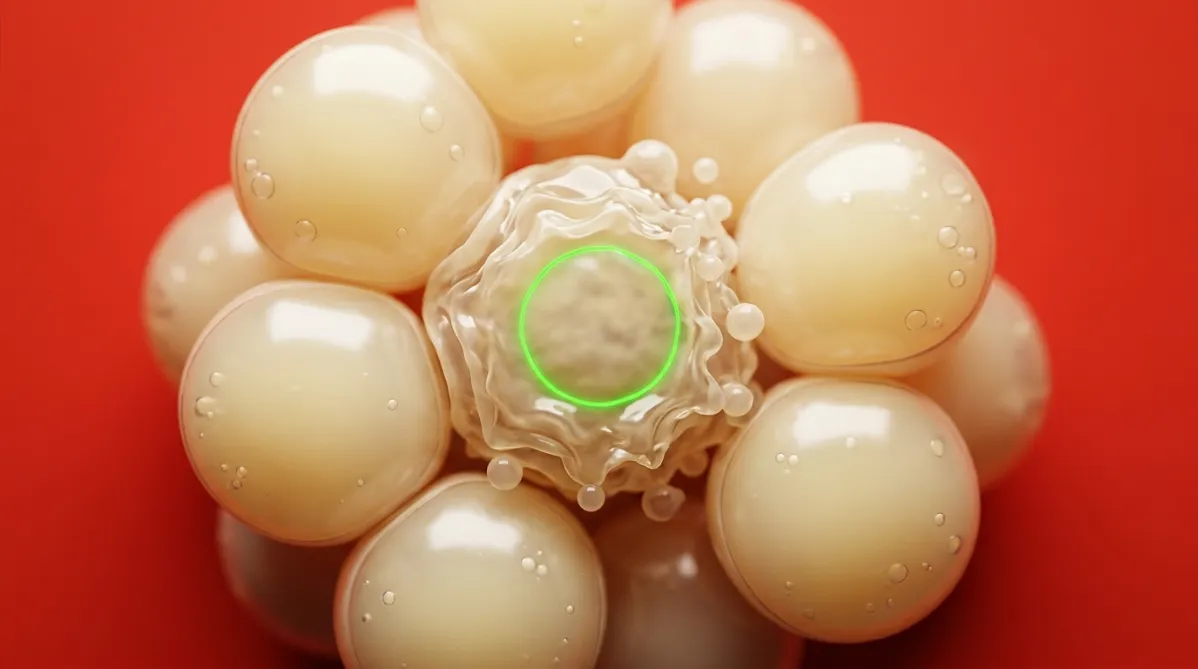
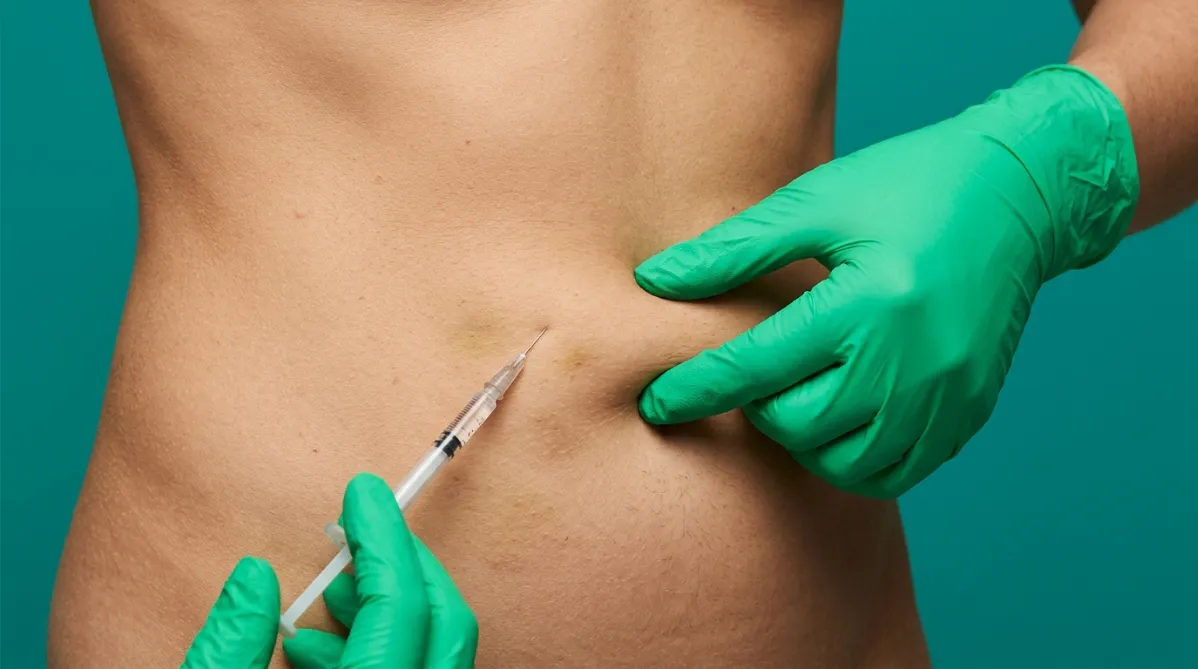
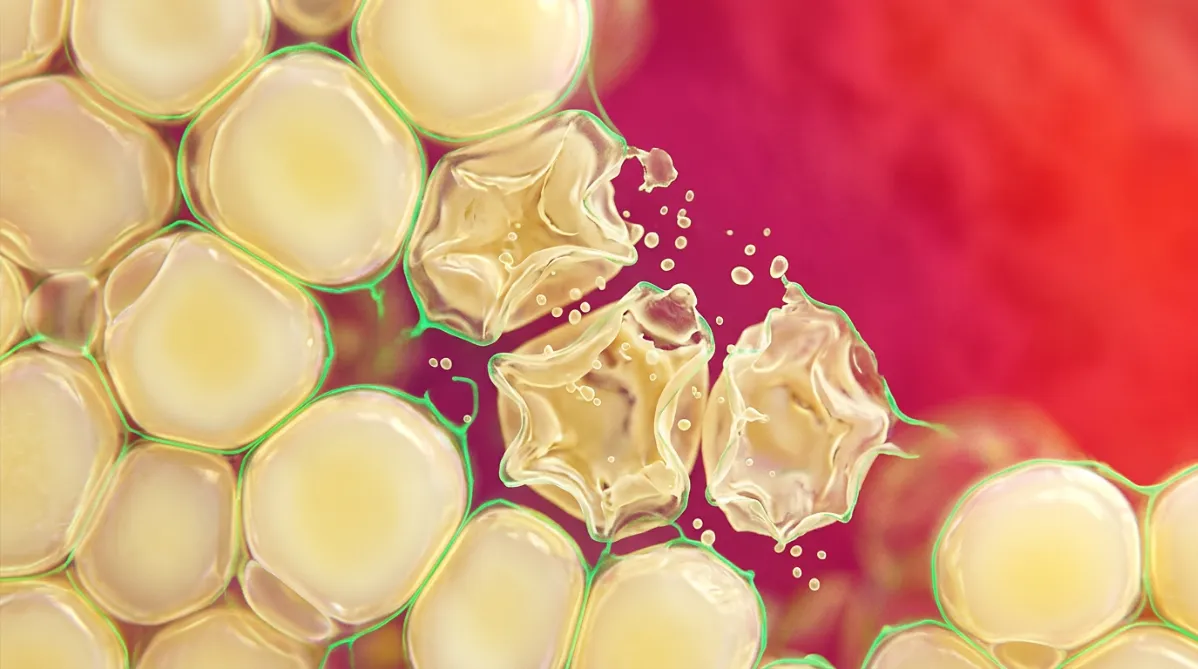
CBL-514 is an investigational small-molecule injection designed to trigger fat-cell (adipocyte) apoptosis and shrink a treated pocket of abdominal fat. A 2025 single-blind, placebo-controlled Phase 2 trial in Aesthetic Surgery Journal randomized 76 people and reported large ultrasound-measured fat-volume losses versus saline, with no meaningful change in mean body weight. The results are interesting, but the design has real limits. This hub maps what the trial shows, what it cannot show, and where to go deeper.
Not medical advice. CBL-514 is investigational and is given by trial investigators, not self-administered.
What CBL-514 is (and is not)
The correct name is CBL-514. "CL-514" is a common typo. The compound comes from Caliway Biopharmaceuticals (New Taipei City, Taiwan). It is delivered as subcutaneous injections into a treated area, which in this study was the abdomen. It is not a supplement, not an oral pill, and not an approved consumer product. It is not FDA-approved as of the paper. The only FDA-approved injectable for fat reduction the paper mentions is ATX-101 (deoxycholic acid, Kybella), and that is only for submental (under-chin) fat.
The papers do not disclose the molecule's chemical structure, so there is no ingredient list to analyze.
The primary source is Gold M, Schlessinger J, Goodman GJ, Dayan S, DuBois J, Ling YF, Sheu AY, Ho WWS, Chou YC. Aesthet Surg J. 2025;45(6):611-620 (doi: 10.1093/asj/sjaf032; ClinicalTrials.gov NCT04897412). It is open access: https://pmc.ncbi.nlm.nih.gov/articles/PMC12080885/.
The proposed mechanism: company-reported, nonclinical
The earlier Phase 2a paper (Goodman et al., 2022) was smaller and open-label, with no placebo group. It states that nonclinical work showed CBL-514 inhibits the cell-survival kinase DYRK1b, upregulates the apoptosis mediators caspase 3 and Bax/Bcl-2, and induces dose-dependent adipocyte apoptosis in vitro and in vivo. Those mechanistic claims are cited to unpublished, confidential Caliway reports.
The mechanism is therefore a hypothesis from the sponsor's nonclinical work. It was not demonstrated in humans in this trial. It also describes local fat-cell death, not a higher metabolic rate, not calorie burning, and not whole-body weight loss. A biohacker's "fat-burning" framing is the wrong model here.
How the Phase 2 trial was built
- Design: randomized, single-blind, parallel-group, placebo-controlled, run February 2022 to March 2023 at 5 centers in the US and Australia.
- Randomization: 2:1 CBL-514 to placebo (normal saline).
- Blinding: participants only, using visual barriers. Investigators, site staff and the sponsor, including the medical monitor, were unblinded. This is not a double-blind trial.
- Sponsor role: Caliway was involved in study design, data collection, analysis and interpretation, manuscript writing, and the decision to submit.
- Eligibility: ages 18-64, BMI above 18.5 and below 35, weight at least 50 kg, abdominal skinfold of 3-8 cm, and normal liver, renal, cardiovascular and immune function.
- Weight stability rule: a deviation of 3 kg or more from baseline led to discontinuation.
Dose and schedule used in the trial
The dose was 2 mg/cm², with up to 600 mg per treatment. Each treatment involved 25 to 50 injections at the investigator's discretion, spaced 2.45 cm apart. Each injection delivered 2.4 mL of CBL-514 or an equivalent volume of saline. Participants received up to 4 treatments at 4-week intervals, then follow-up at 4 and 8 weeks after the final treatment. This is a trial protocol, not a consumer regimen.
How fat was measured
Fat was measured by ultrasound at four scan spots (4 and 10 cm to the right and left of an abdominal reference point). Three scans per point were averaged, and trained sonographers did the scanning. Volume was calculated as a cuboid: a defined 300 cm² treatment area multiplied by the average fat thickness. The authors also used 3D photography. The primary endpoint was the proportion of participants losing at least 150 mL at the 4- and 8-week follow-ups.
Who was actually in the data
130 people were screened, 81 enrolled and 76 randomized (50 CBL-514, 26 placebo). 75 were treated (49 CBL-514, 26 placebo). Of those 75, 38 completed the study and 37 did not, a non-completion rate of 49.3%. The reasons were loss to follow-up (6), participant withdrawal (7), weight instability (7), inability to keep the schedule (6) and adverse events (4).
The intention-to-treat (ITT) population was 76. The per-protocol (PP) population was only 30.
The CBL-514 group (n=50) averaged 46.3 years old, was 94% female and 86% White, with a mean BMI of 27.77. The placebo group was 80.8% female. The evidence applies mostly to women of moderate overweight with abdominal fat.
The efficacy numbers, with denominators
The authors say the trial met its primary endpoint and all secondary endpoints. The denominators shrink at follow-up because of missing visits, so read the percentages with that in mind.
At least 150 mL lost (ITT):
- 4 weeks: CBL-514 63.9% (23/36; 95% CI 46.22%-79.18%) vs placebo 17.4% (4/23; 95% CI 4.95%-38.78%); P < .001.
- 8 weeks: CBL-514 69.6% (16/23; 95% CI 47.08%-86.79%) vs placebo 0.0% (0/16); P < .001.
At least 200 mL lost (ITT):
- 4 weeks: 58.3% (21/36; 95% CI 40.76%-74.49%) vs 8.7% (2/23; 95% CI 1.07%-28.04%); P < .001.
- 8 weeks: 60.9% (14/23; 95% CI 38.54%-80.29%) vs 0.0% (0/16); P < .001.
Exploratory at least 250 mL: 44.4% (16/36) at 4 weeks and 52.2% (12/23) at 8 weeks in the CBL-514 group. No placebo participant reached it.
Mean change (ITT, least-squares): the between-group difference was −206.62 mL at 4 weeks (95% CI −276.09 to −137.16) and −216.28 mL at 8 weeks (95% CI −288.28 to −144.28), both P < .001.
PP population (30 people only): the between-group difference was −312.08 mL at 4 weeks and −276.83 mL at 8 weeks. This is a heavily filtered subset of completers, so it is likely to look more favorable than the ITT result.
Treatments needed: among the 28 CBL-514 participants who reached at least 150 mL, 12 did so after one treatment and 10 after two. That is 22 of 28 (about 79%) after one or two treatments. The largest single loss recorded was over 750 mL in one participant.
Weight did not change, which is the point
Mean body weight barely moved. CBL-514 participants showed +0.45 kg at the 4-week follow-up and +0.02 kg at 8 weeks, compared with −0.76 kg and −0.26 kg in the placebo group. The paper reports localized loss even in some participants who gained more than 1 kg (data not shown). That fits a local fat-volume effect, but it also means the scale is the wrong way to judge any benefit. It is not evidence of systemic fat burning.
Safety and limitations: read these before the headlines
Safety monitoring covered treatment-emergent adverse events, labs, vitals, ECGs, physical exams and injection-site reactions. Four participants withdrew because of adverse events. This hub does not reproduce the full adverse-event breakdown, so consult the paper's safety section for it.
Key limitations:
- Single-blind only. Investigators and the sponsor knew who got what.
- Sponsor involvement across design, analysis and publication.
- High attrition. About half of treated participants did not complete, and the PP set was only 30.
- Exploratory sample size with no formal power calculation, and no adjustment for multiple testing.
- Short follow-up: 8 weeks after the last treatment, so durability is unknown.
- Mostly women, so generalizing to men is weak.
- Indirect comparisons. The authors compare results with cryolipolysis studies (for example, 264.8 mL at 12 weeks in one and 39.6 mL at 2 months in another) and call the CBL-514 outcome "comparable to that achieved with liposuction." These are the authors' interpretations. The methods differ, and no head-to-head trial exists.
- Skin laxity was an impression from post-treatment images, not a formal endpoint.
- Investigational status. It is not approved, and there is no self-injection protocol.
Explore the CBL-514 series
- What is CBL-514? Does it burn fat?
- CBL-514 fat removal injections: What does the science say?
- How does CBL-514 work? Here's the science
- Does CBL-514 really burn fat? Here's what we know
- CBL-514 Dosages - what does science say?
Bottom line
In this Phase 2 trial, CBL-514 produced a clear, statistically significant local reduction in ultrasound-measured abdominal fat volume versus saline, and body weight stayed flat. The mechanism comes from unpublished company nonclinical work. The evidence base is small, sponsor-involved, single-blind and short, with heavy dropout. It looks like a promising signal that needs larger, longer, better-blinded confirmation, not a settled result.