CBL-514 Dosages - what does science say?
Read this first: CBL-514 is an investigational injectable studied in clinical trials. It is not an oral dose, not a supplement, not an approved product, and nothing here is a recommendation. The "600 mg" figure that circulates online is a per-treatment cap in a supervised trial protocol, tied to a specific injection volume, treatment area and schedule. It is not a serving size. (Note the spelling: CBL-514, not "CL-514".)
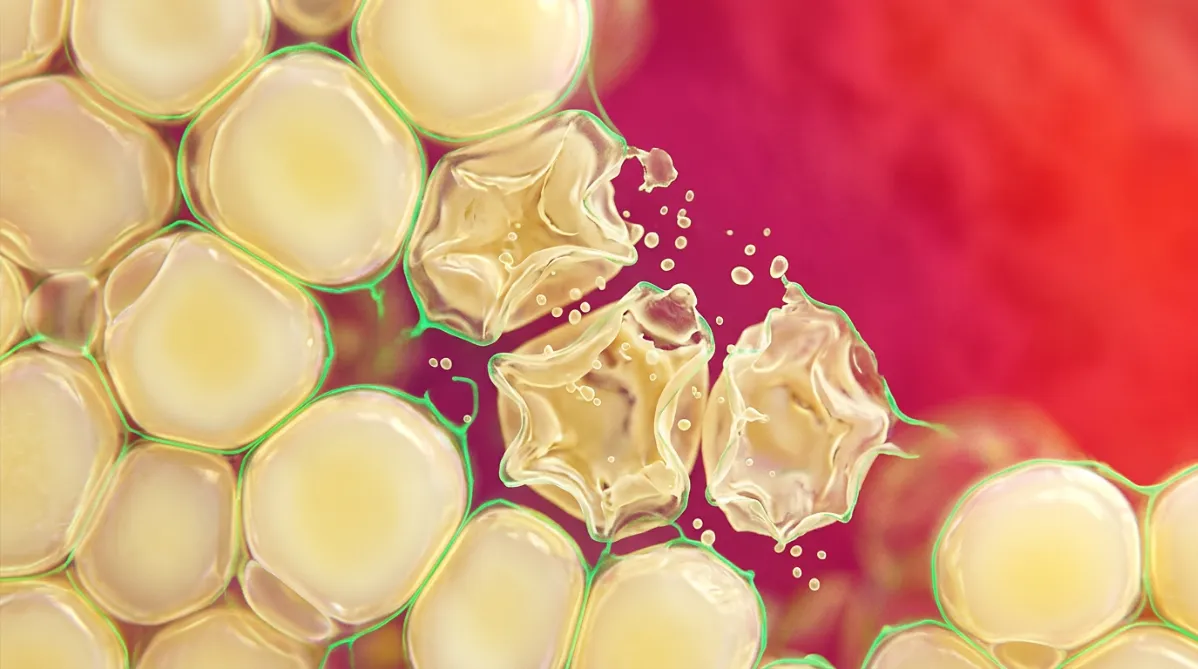
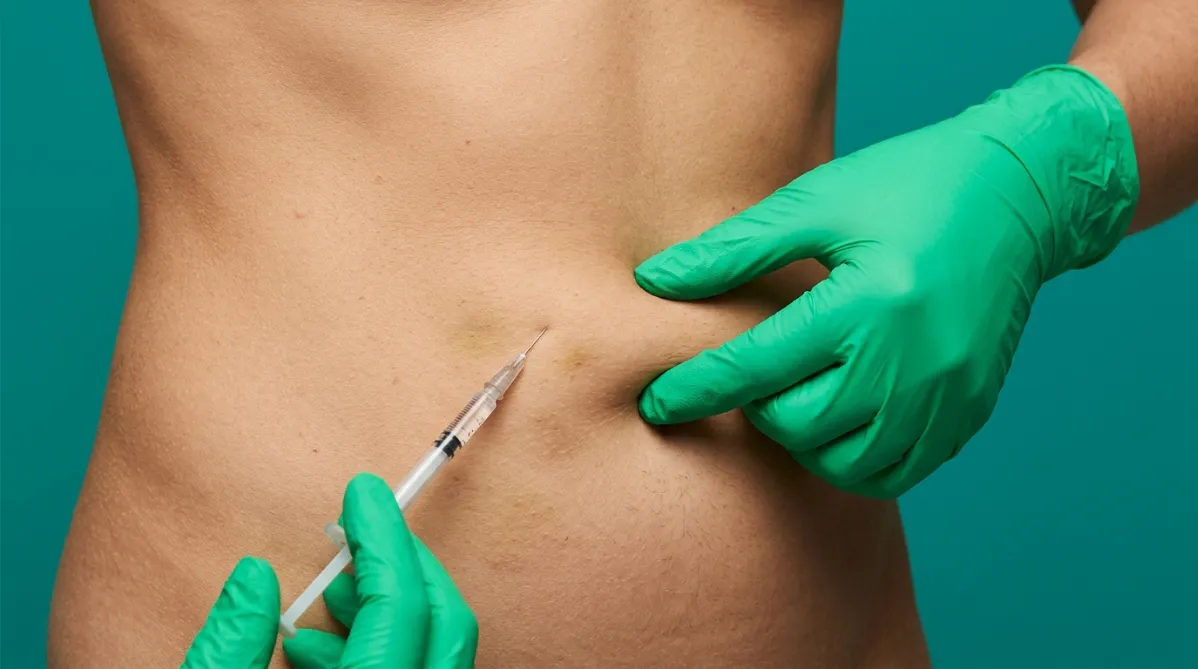
CBL-514 comes from Caliway Biopharmaceuticals and is described as a small-molecule injection lipolysis agent. In the papers, it is given as subcutaneous injections into the abdomen by trial investigators. The proposed mechanism, based on nonclinical work cited to unpublished company reports, is targeted fat-cell (adipocyte) apoptosis. It is not a higher metabolic rate, not systemic "fat burning," and not whole-body weight loss. The papers do not disclose the molecule's chemical structure.
Step one: the Phase 2a dose-finding study
The earlier study is Goodman et al., Aesthetic Surgery Journal 2022 (PMC9384315). It was open-label with no placebo, and small: n=43, split 7 / 18 / 18 across three dose levels.
The unit dose was expressed per square centimetre of treated skin, over a 150 cm² area:
| Dose level | Per-session total (150 cm²) |
|---|---|
| 1.2 mg/cm² | 180 mg |
| 1.6 mg/cm² | 240 mg |
| 2.0 mg/cm² | 300 mg |
Sessions used up to 60 injections at 2-week intervals. The mg figure is simply concentration per area multiplied by area. For example, 2.0 mg/cm² × 150 cm² = 300 mg.
The paper reports intention-to-treat (ITT) percent reductions for each dose group, and readers should go to the paper for those figures. The number most often quoted is 24.96%. That is a per-protocol (PP) result, for the 2.0 mg/cm² group, at the first follow-up, corresponding to −119.82 mL of fat volume. A PP number is a favourable subset: it counts only participants who followed the protocol closely. It should not be treated as the headline result for everyone who was enrolled.
Step two: the placebo-controlled Phase 2
The main paper is Gold et al., Aesthetic Surgery Journal 2025;45(6):611-620 (PMC12080885; PubMed; DOI). It was randomized, single-blind (participants only) and placebo-controlled, and ran at five centers in the US and Australia.
The unit dose stayed at 2.0 mg/cm². Almost everything around it changed:
- Treatment area: 300 cm² for the volume calculation, double the Phase 2a area.
- Injections: 25 to 50 per treatment, at the investigator's discretion based on how much abdominal fat was present.
- Each injection: 2.4 mL, spaced 2.45 cm apart.
- Cap: up to 600 mg per treatment (2.0 mg/cm² × 300 cm²).
- Schedule: up to 4 treatments at 4-week intervals, with follow-up at 4 and 8 weeks after the last one.
- Control: normal saline in an equivalent volume.
The comparator was saline placebo, randomized 2:1.
Why mg totals are not interchangeable
The jump from 300 mg to 600 mg does not mean the dose "doubled" in any biological sense. The per-area dose was identical at 2.0 mg/cm². Only the treated territory grew. Across the two trials, the area, the maximum injection count, the interval between sessions and the study design all differ. A total in mg only means something alongside area, volume per injection, spacing, schedule, and who delivered it and how.
That is why a supplement-style reading of "600 mg" is misleading. The number describes a ceiling for a clinician-delivered, area-based injection series. It says nothing about what an individual would absorb or tolerate outside that framework.
No head-to-head comparison of unit doses in Phase 2
The Phase 2 trial did not randomize participants to different unit doses against placebo. 2.0 mg/cm² was locked in based on the earlier work. So the placebo-controlled evidence supports one protocol, not a dose-response curve. The only multi-dose comparison is the small, open-label Phase 2a study, which has no placebo arm.
What the Phase 2 trial found at that protocol
The authors report that the study met its primary and secondary endpoints. In ITT analysis, 63.9% (23/36) of CBL-514 participants lost at least 150 mL of subcutaneous fat volume at the 4-week follow-up, versus 17.4% (4/23) on placebo. At 8 weeks it was 69.6% (16/23) versus 0.0% (0/16). Denominators shrank because follow-up data went missing.
The least-squares mean between-group difference was −206.62 mL at 4 weeks and −216.28 mL at 8 weeks. Fat volume was estimated from ultrasound at four points and a 300 cm² area, not measured directly.
There are important caveats:
- Of 75 treated participants, 37 did not complete the study (49.3%).
- The PP population was only 30 people.
- The sponsor was involved in design, analysis and writing.
- Investigators were unblinded.
- The sample size was exploratory.
- Body weight did not meaningfully change, so this is local fat-volume reduction, not weight loss.
Safety at the trial doses
Safety was tracked through treatment-emergent adverse events, labs, vitals, ECGs, physical exams, and injection-site reactions recorded as distinct events for each treatment. Local reactions at the injection site are the main theme to expect from a protocol with dozens of injections per session. Readers should check the papers for the exact incidence figures, including the rate of severe pain, rather than relying on summaries. Four of the 37 non-completers in Phase 2 left because of adverse events.
In Phase 2a, the study team used measures such as anesthetic, ice and antihistamine. That was study conduct, not advice. It tells you how investigators managed an investigational procedure, not what anyone should do themselves.
The papers also noted lipid signals in a few participants who had high baseline lipids. That is an observation in a small number of people, and it is not a proven metabolic side-effect profile. Nothing in these trials establishes systemic effects of CBL-514 either way.
The takeaway for biohackers
The science on CBL-514 dosing is narrow and specific. A small open-label study compared three per-area doses, and a larger but still modest single-blind trial then used one of them (2.0 mg/cm²) over a larger area with a higher per-session cap. Reading "600 mg" as a label dose misses all of that.
CBL-514 is not approved, not a consumer product, and this article is not medical advice.
More from this CBL-514 series
This article is part of our CBL-514 series. For the full Phase 2 trial overview, start here: CBL-514 Injection Lipolysis: A Phase 2 Map of the Evidence.