Biocracked
←

#peroxisomes

1 article
Approach 1, macro science, with Palette D, a bold color field.

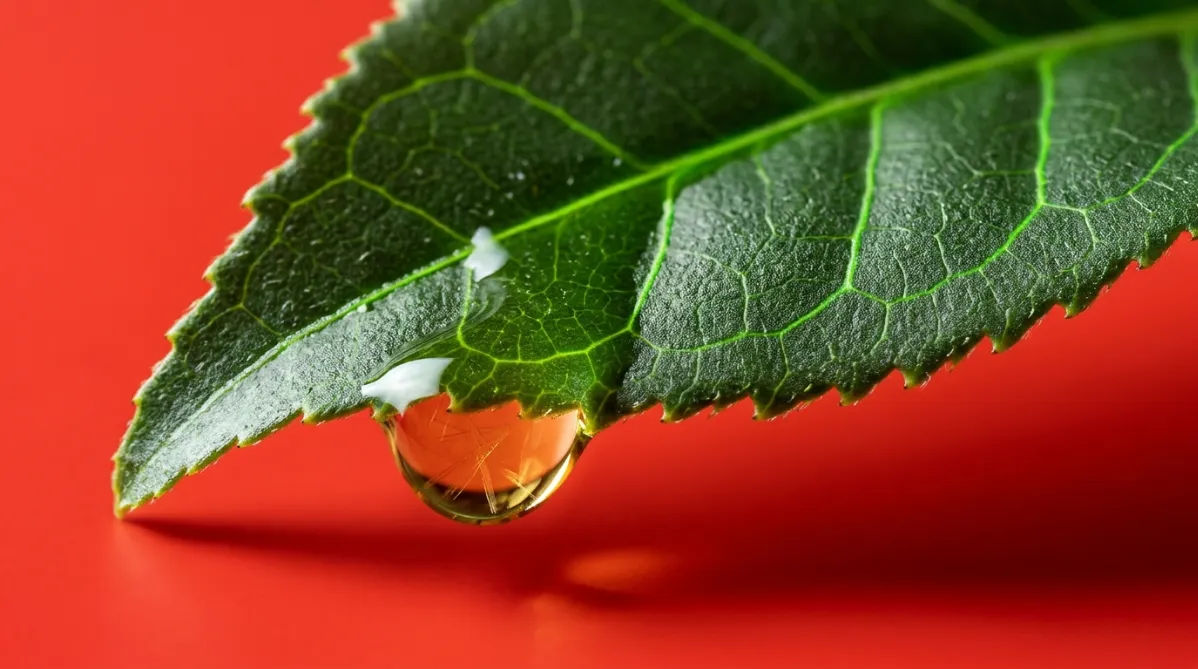
Extreme macro photograph of a single green tea leaf's surface and a freshly steeped droplet of tea clinging to its serrated edge. The droplet acts as a tiny lens, with faint crystalline EGCG-like needle structures visible inside it. Shot from a low, slightly oblique angle with a shallow depth of field. The backdrop is a smooth saturated tomato-red field that contrasts with the leaf's deep natural green, and a thin electric green highlight runs along the leaf's veins. Soft, bright studio light from the upper left gives crisp specular highlights on the droplet and small warm shadows on the red. The leaf's texture is fine and realistic, with visible veins and microscopic hairs. The mood is vivid, precise and curious, and the image contains no text, labels or logos.
longevity

Tiny Tea Polyphenol Dose Linked to Slower Aging in 11,000 Adults

BY NOVA CHEN ·

A new Aging Cell study found that even low intake of EGCG, the signature polyphenol in green tea, was linked to slower biological aging in nearly 11,000 NHANES adults. People with EGCG intake showed lower PhenoAge acceleration, lower mortality, and longer estimated residual life expectancy than non-consumers. In worms and senescent liver cells, the researchers traced the effect to peroxisomes, the organelles that build up and break down very long-chain fats. Blocking key peroxisome genes erased the benefits in both models. The human data are observational and the mechanism comes from worm and cell work, so this is a promising lead, not proof.

This page is available in