Biocracked
←

#mushroom-supplements

1 article
**Approach 1: Macro science. Palette C: Natural.**

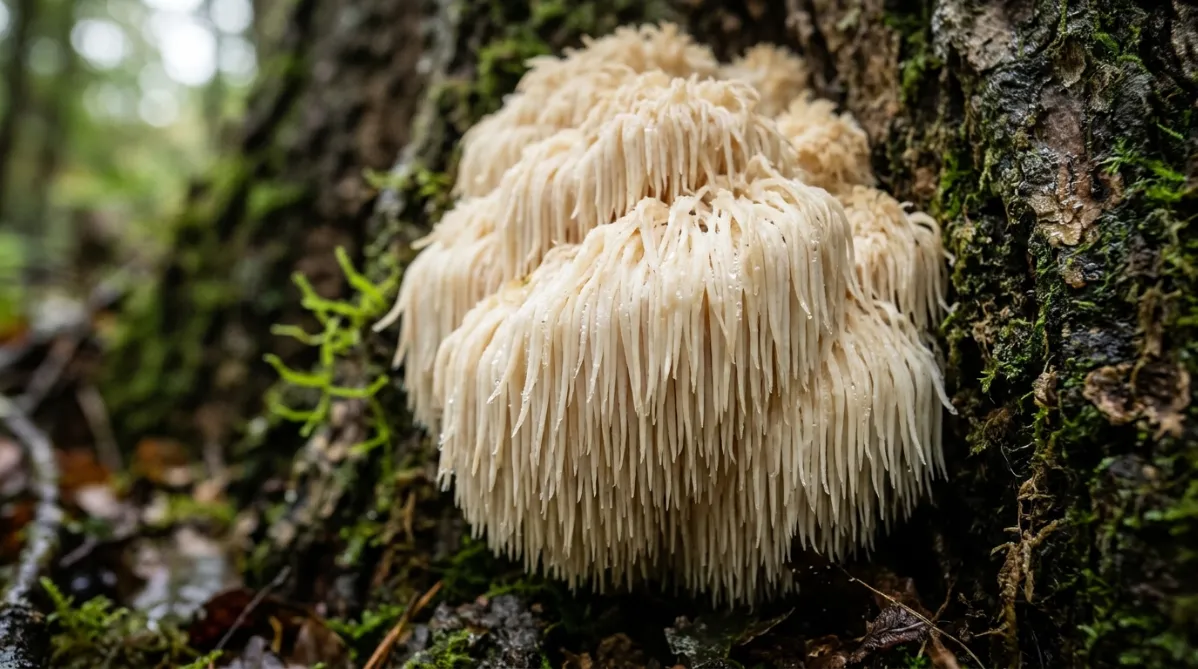
Extreme close-up of a fresh lion's mane mushroom (Hericium erinaceus), shot at a slight low three-quarter angle with a macro lens and shallow depth of field. Its cascading white-cream spines hang in dense, delicate strands, and the nearest tips are sharp and slightly translucent, with tiny beads of moisture. Behind it, soft out-of-focus oak bark and moss glow in green and brown. Diffuse overcast daylight from the upper left gives gentle shadows and a faint warm rim light on the spines. A few strands of bright electric green moss in the blurred background pick up the brand accent. The mood is quiet, curious and measured, the look of careful observation rather than hype. Photorealistic, with no text or labels.
supplements

2 g of Lion's Mane for 4 Weeks: What Happened to BDNF and Focus?

BY NOVA CHEN ·

Lion's mane is marketed as a brain-boosting mushroom, but what happens when 10 healthy adults take 2 g a day for 28 days? A new pilot study in Nutrients measured executive function and plasma BDNF, and nothing reached statistical significance. Effect sizes were small to moderate (flanker d=0.48, DCCS d=0.25, BDNF d=0.31), and the supplement was well tolerated. With no placebo group, a tiny sample, and industry ties disclosed, this is a hint rather than proof. Here's what the data can and can't tell you, and how to approach lion's mane if you're curious.

This page is available in